
WattEV adds megawatt chargers at its San Bernardino depot
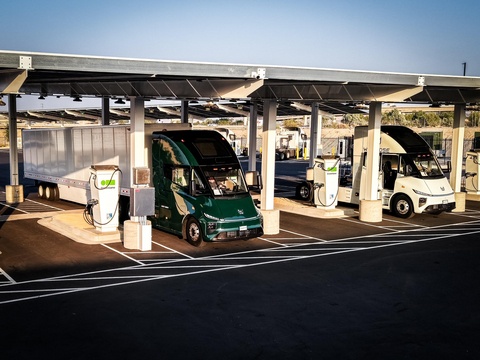
The above mentioned depot now has 11.5 MW of total charging capacity, 30 250kW CCS ports, and six 1.2MW MCS ports added to its existing 24 ports. “WattEV’s vertically integrated approach is what truly sets us apart in the charging and fleet electrification sector,” said CEO Salim Youssefzadeh.
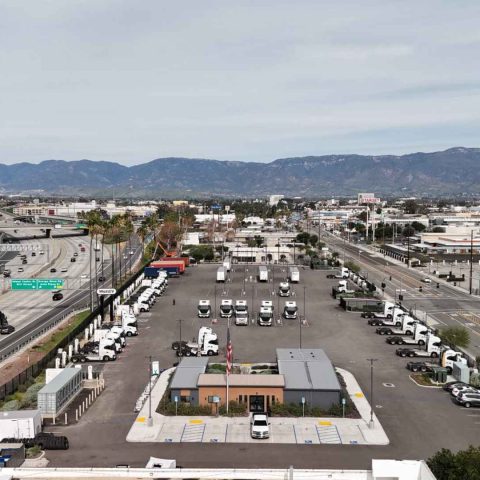
WattEV, the U.S.-based developer of electric truck charging depots, has recently increased high-speed charging capacity and an expanded number of charging ports at its busiest electric truck charging depot, located in San Bernardino, California. The San Bernardino depot is located adjacent to the busy Interstate 215, one of Southern California’s busiest freight corridors between the ports of Long Beach and Los Angeles complexes and Inland Empire freight distribution centers.
The above mentioned depot now has 11.5 MW of total charging capacity, 30 250kW CCS ports, and six 1.2MW MCS ports added to its existing 24 ports.
WattEV pushes on technology in San Bernardino
Indeed, the truck charging depot will now be able to charge up to 200 electric trucks per day while offering megawatt charging capability for trucks compatible with MCS standards. WattEV offers its well-proven Truck-as-a-Service as a turn-key solution for carriers and owner-operators, uses proprietary scheduling and routing software, and produces charging equipment using patented technologies.
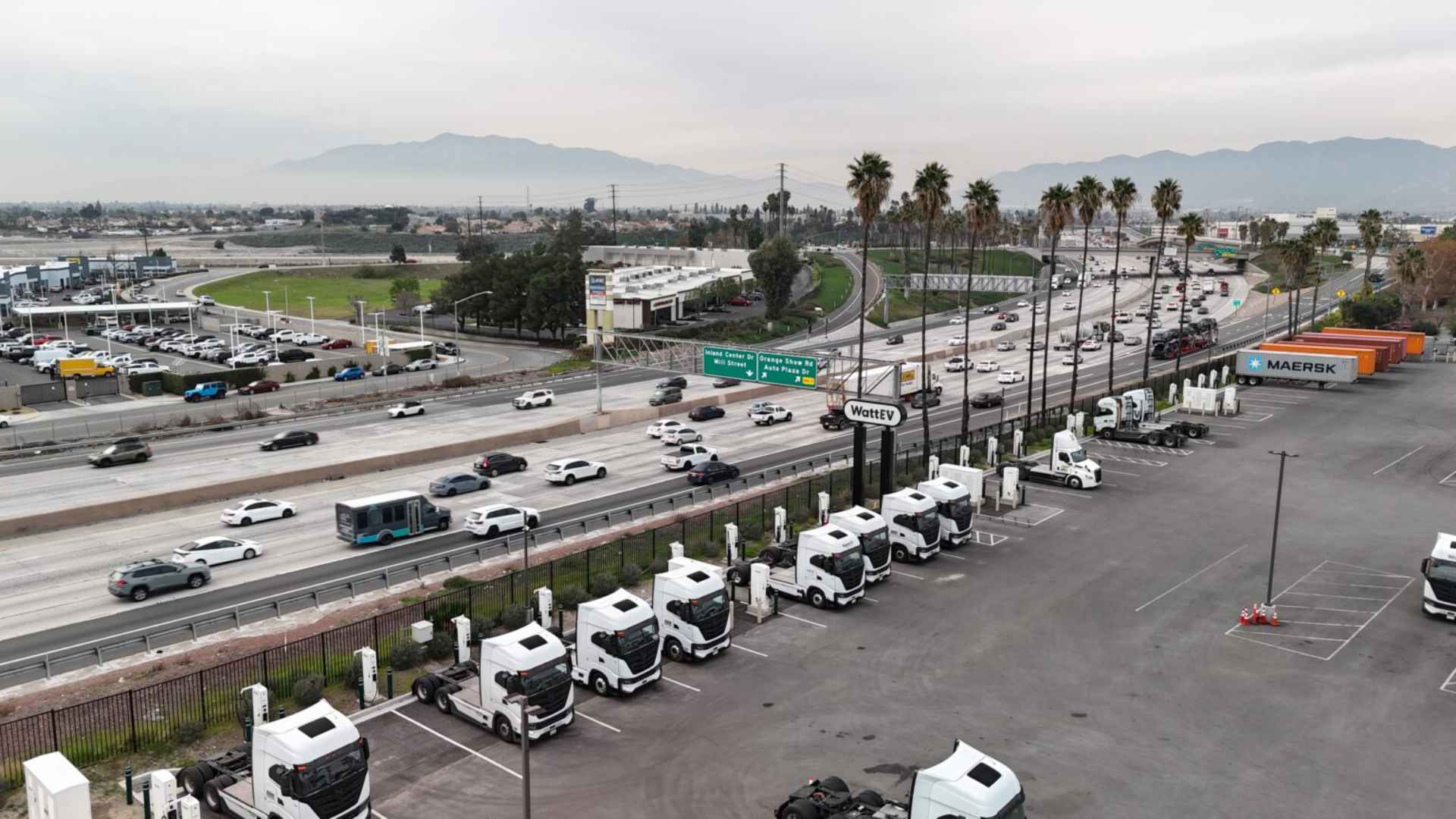
“WattEV’s vertically integrated approach is what truly sets us apart in the charging and fleet electrification sector,” said CEO Salim Youssefzadeh. “That model is now driving measurable results. At our San Bernardino depot, strong and sustained utilization – currently averaging approximately 700 MWh per month – has created the need to more than double the site’s capacity.”
WattEV CEO also added: “With the expansion, we’ve added 30 additional CCS connectors and six MCS connectors, significantly increasing throughput and future-proofing the site for next-generation electric trucks. San Bernardino sits at the center of some of the most freight-dense corridors in the country, and scaling this depot enables us to support real-world fleet growth with reliable charging, dependable operations, and infrastructure designed for long-term, commercial deployment.”