

“Megawatt charging is here to stay!”. Our interview with Antti Vuola (Kempower)
Antti Vuola, VP Products at Kempower, was one of the main speakers at the first edition of the Live Winter Days organized by the Finnish charging systems manufacturer. We had the opportunity to participate in the event in Sweden and meet Mr Vuola, whose vision about the future of electric industrial vehicle charging is quite clear and indeed very promising.

Antti Vuola, VP Products at Kempower, was one of the main speakers at the first edition of the Live Winter Days organized by the Finnish charging systems manufacturer. We had the opportunity to participate in the event in Sweden (here’s the full report) and meet Mr Vuola, whose vision about the future of electric industrial vehicle charging is quite clear and indeed very promising.
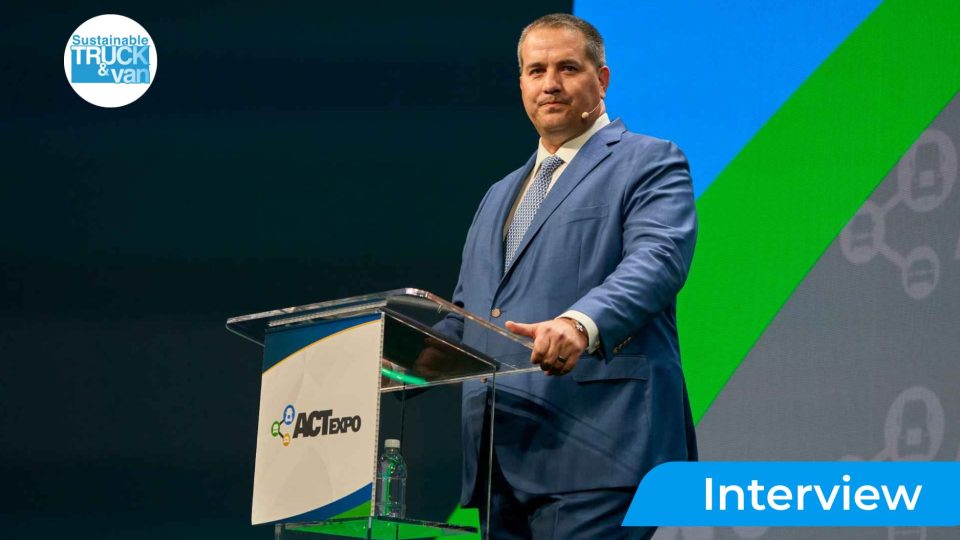
Kempower VP Products Antti Vuola speaking
What are the takeouts you get from this event?
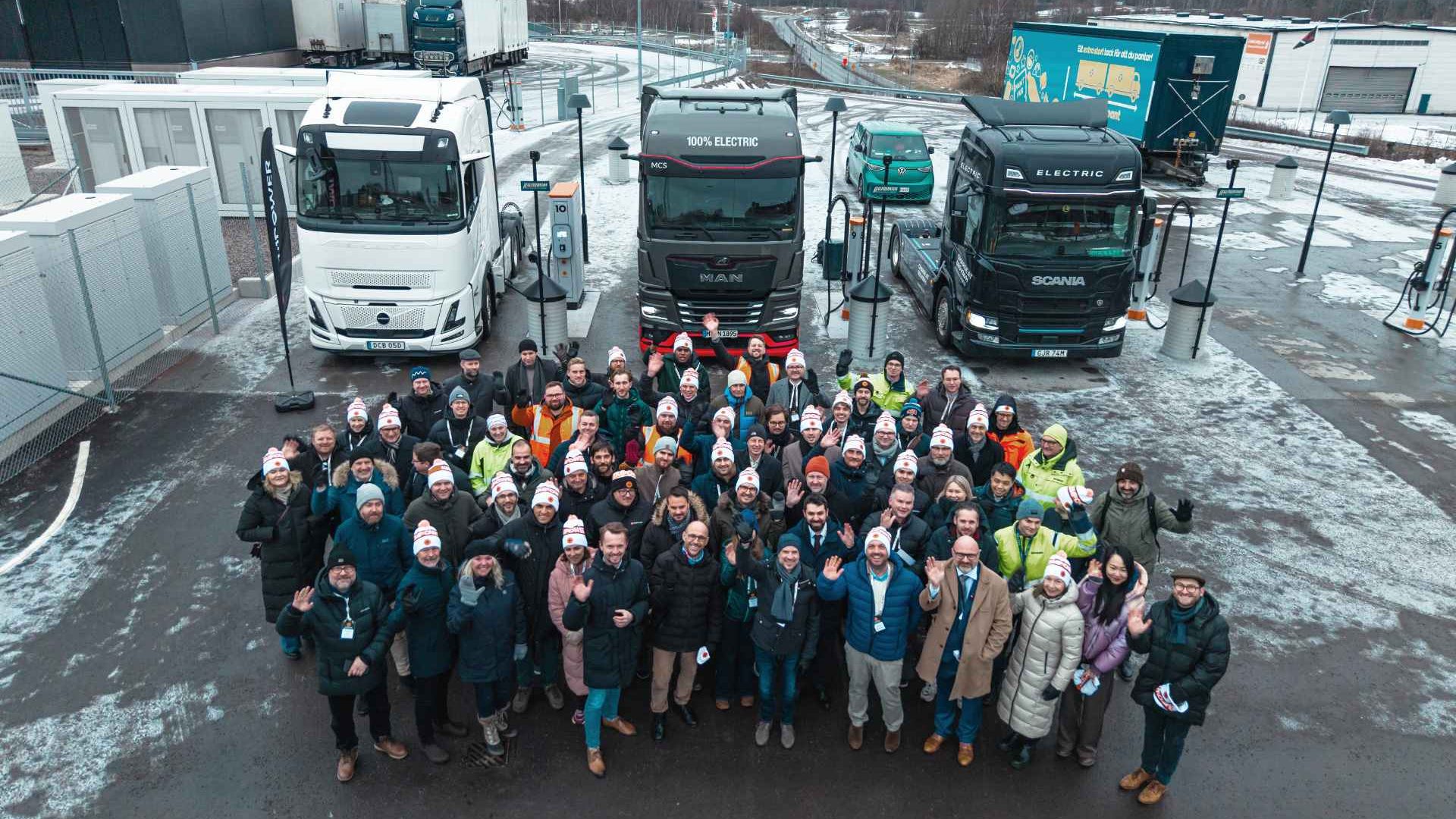
We wanted to promote what we have done so far as for the MCS technology. We were one of the first companies to launch the MCS and I still very strongly believe that we are leading the technology at the moment on the MCS side. It’s been huge work together with the OEMs to do interoperability tests to get everything running that. Then, it is important to underline that we are part of an ecosystem. That’s why we wanted to collect all the people together here in Norrköping. In other words, we did not want to simply show one charging event but rather get the voices out also from the OEMs and some of the CPOs over here.
How’s Kempower working with EU Truck makers in this regard? What’s their role to boost such technology?
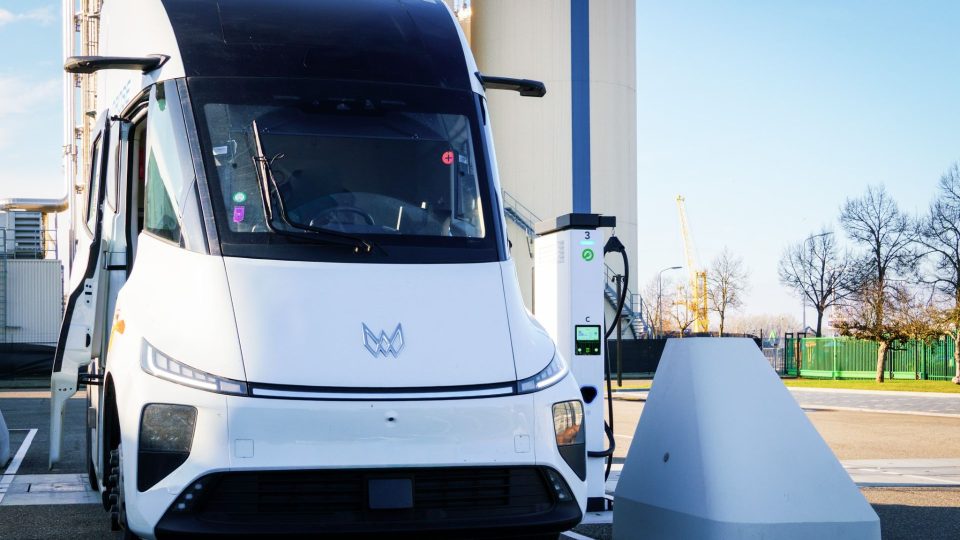
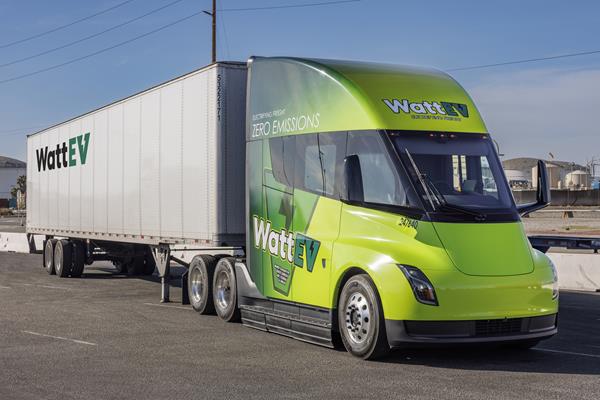
Of course, I can’t talk on behalf of them. I personally see that the players we are working with are very committed and they have kind of good targets to push forward. There are slight differences among the OEMs, with different timelines, for instance. Then, when we looked to the U.S., they seem to be a few years behind, compared to Europe. But now we’ve heard that the Tesla Semi is actually coming faster, so now perhaps the U.S. truck makers might be coming quite strong in big amounts of trucks out there, even faster than Europe. Finally, a big question mark is about Chinese players.
“We can charge all types of electric trucks”
Would it be good news for you if some more players, maybe new players, enter the market even in Europe?
This is a difficult question. I mean, we are looking into a world which is changing a lot. I mean, for us it doesn’t matter, we can charge all types of electric trucks, regardless of their country of origin. So, from our perspective, we are more than happy. The only issue is the need to carry out interoperability tests with all of the players, as it takes time.
How do you see the EU scenario, apart from the Nordics?
I am concerned. In Italy, for example, you have a grid connection issue that imply limitations on the grid. So, it’s very difficult to put any high-power chargers. It’s an adaptation trend. Somehow, it will happen, but it will maybe come a little bit later. Again, from our perspective, it would be nice to see heavy-duty transport electrification happening all over the place. Subsidies are very important in this regard, and we need the governments to push more than they have done so far, maybe.
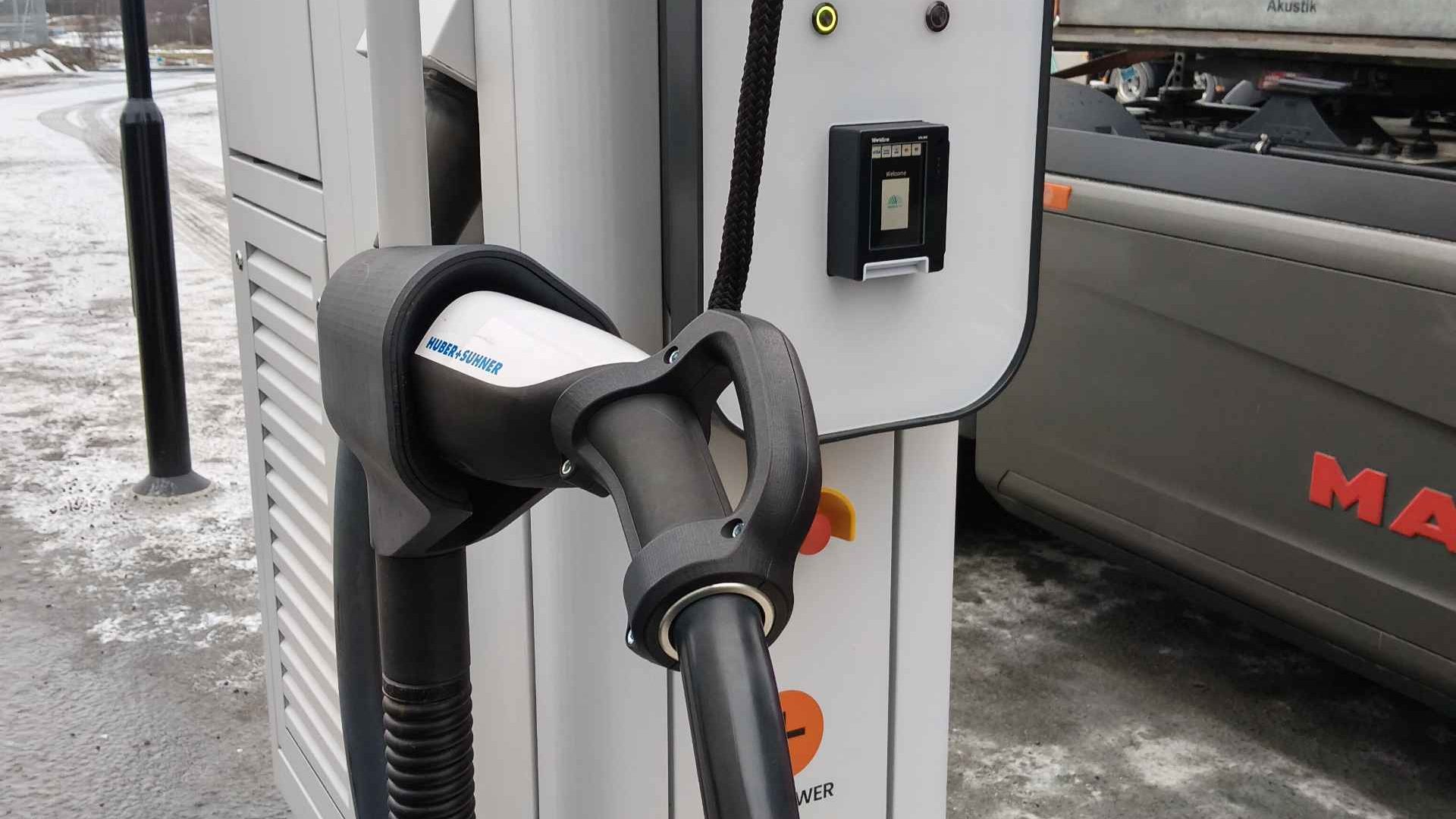
We see that charging hubs can be private, public or semi-public, as we are seeing here in Norrköping. From your standpoint, what’s the current trend in Europe?
We need public sites, of course, especially for long-haul transportation. I think that was quite clearly said, also during this event. Then, due to the cost of the electricity, it might be sometimes easier to charge a truck at the depot than go to a public site. Indeed, electricity cost is quite a big part of it. Of course, that might change a little bit when the cost of the vehicles comes down and the cost of the batteries as well. In other words, we need a double approach, with more depot charging coming, as well as overnight charging. Also, semi-public hubs like the one we’re seeing are a very viable option, in my opinion.
Technically speaking, is it more difficult to set up a megawatt charging system rather than a CCS, in terms of grid connection, power, and so on?
An MCS is just a satellite, of course bigger than CCS in terms of cabling. We are putting two 600kW power units together, as you saw. From that perspective, it does not make much difference for us. However, it makes a difference in terms of grid connection, how to get that one. I think Mr. Alfredsson (the owner of the company that hosted the event organized by Kempower in Norrkoping, ed) also said very nicely over here that if he had put two-megawatt chargers over here and he would charge simultaneously with those ones, the power would go to about two megawatts, resulting in huge peak power, so he would have to pay for that peak power.
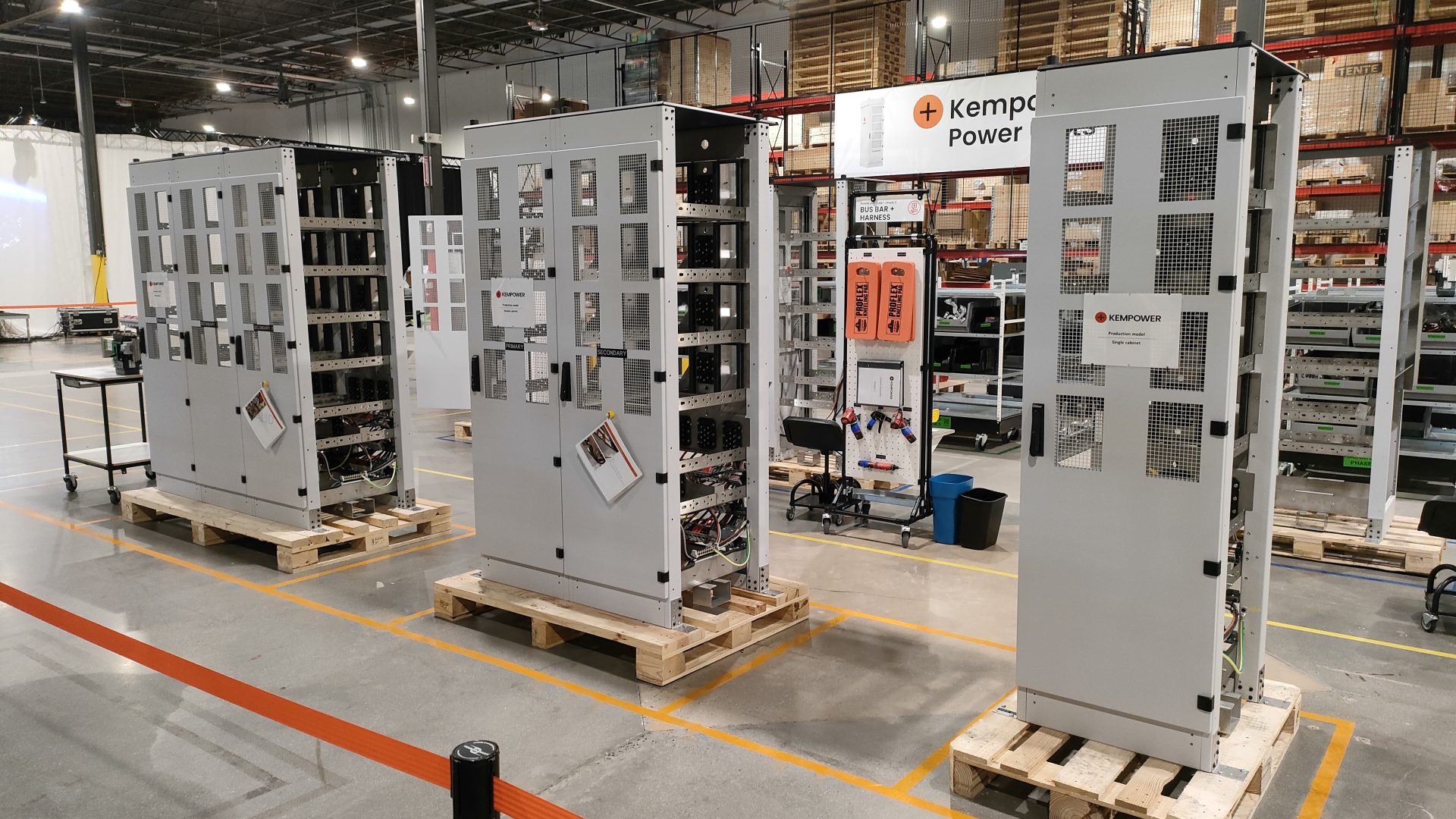
Kempower is ready to boost production in Europe and North America
Talking about production, is Kempower ready in Europe and in the U.S. for a boost in the market, in the electric truck market?
Absolutely. We have a production site in Finland to serve the European market, and a production site in North Carolina with plenty of capacity for North America. For that purpose, we can grow the business substantially. We still have quite big plans for the U.S. organizations. So, there is no need to imagine other facilities in Europe, now.
Do you believe the heavy-duty segment is still crucial for the business Kempower is bringing forward?
Yes. In future, a huge amount of energy will be delivered to trucks, perhaps two thirds of the energy for vehicles will be addressed to the truck side. That’s where our competence is going to lie and where our focus should be residing. Skills and competencies in the engineering side will be crucial in this regard. So, I think that truck charging is one of our key focuses, and that’s why we have put all our efforts also into the MCS development. We are pushing forward in that direction.