
Aurora and Charger Logistics plan to deploy up to 500 autonomous trucks in the US
Aurora and Charger Logistics have signed a preliminary agreement for the potential purchase of up to 500 driverless trucks, with deliveries expected between 2027 and 2028. The initiative builds on their existing cooperation and could significantly expand autonomous freight operations across the United States.
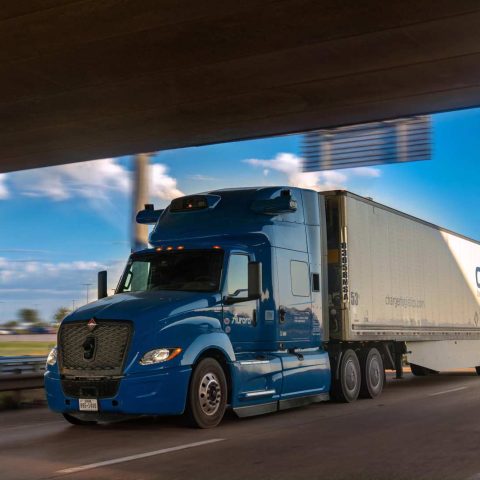
Autonomous trucking specialist Aurora Innovation has announced a new agreement with US transportation company Charger Logistics, marking a further step towards the large-scale deployment of driverless trucks. The two companies have signed a non-binding Memorandum of Understanding (MoU) under which Charger Logistics intends to purchase up to 500 trucks equipped with the Aurora Driver autonomous driving system.
According to the agreement, deliveries would take place over 2027 and 2028, with the vehicles deployed on existing and new high-volume freight routes, particularly in areas close to the US-Mexico border and across the United States.
The announcement follows an initial commercial agreement signed in July 2026, when Charger Logistics began integrating Aurora’s autonomous driving technology into its operations.
From the Dallas-Laredo corridor to a wider autonomous trucking network
Charger Logistics operates across the United States and Mexico, providing transportation and logistics services for several industries, including food and beverage, pharmaceuticals, automotive and retail.
The cooperation with Aurora initially focused on the Dallas-Laredo corridor in Texas, one of the carrier’s busiest freight routes. The company has since started autonomous operations along this corridor, gaining experience with the technology in real-world logistics activities.
According to Charger Logistics President Andy Khera, these initial operations have already demonstrated operational benefits, encouraging the company to consider a much larger deployment.
The planned expansion would allow Charger Logistics to increase its autonomous transport capacity while extending operations to additional long-haul routes. Another objective is to integrate autonomous trucking more closely with the company’s proprietary Transportation Management System (TMS), connecting vehicle operations with its broader logistics management platform.
The planned deployment would also benefit from Aurora’s second-generation autonomous driving hardware and trucks, which are part of the company’s strategy to scale its commercial operations.
Aurora’s Driver as a Service model
An important element of the agreement concerns the business model behind the planned deployment.
Rather than relying entirely on trucks owned and operated by Aurora, Charger Logistics intends to purchase and own the vehicles directly, while subscribing to Aurora’s Driver as a Service (DaaS) offering.
Under this model, the transport operator retains ownership of the physical assets, while Aurora provides its autonomous driving technology through a service-based commercial arrangement.
According to the two companies, this approach is intended to improve asset utilisation and reduce the total cost of ownership (TCO) for fleet operators. For Aurora, meanwhile, the model is designed to support business expansion without requiring the company to own the entire fleet of autonomous vehicles.