

Market shares, investments, electrification. Friedrich Baumann (MAN) takes stock of the current scenario
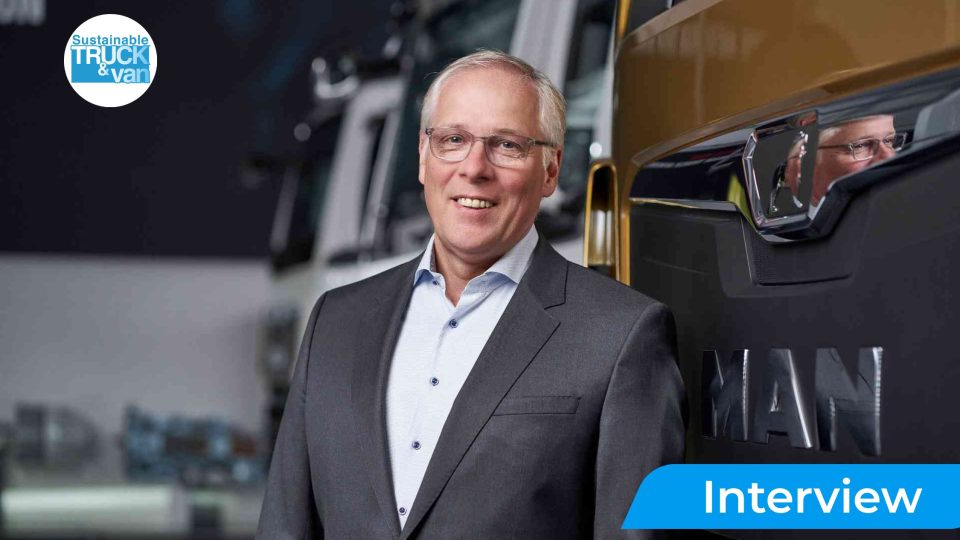
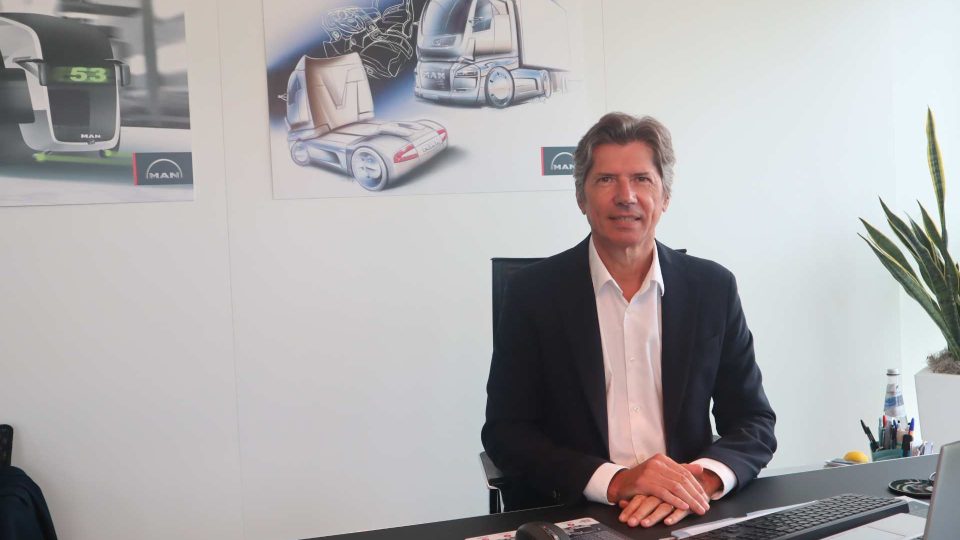
As the Italian branch of MAN Truck & Bus celebrated its 40th anniversary, we had the opportunity to have a chat with Friedrich Baumann, Member of the Executive Board at MAN Truck & Bus SE, as well as Head of Sales & Customer Solutions. We started from the celebrations for the milestone achieved by MAN Italia, and then the conversation dealt with some more international and global topics.
As the Italian branch of MAN Truck & Bus celebrated its 40th anniversary, we had the opportunity to have a chat with Friedrich Baumann, Member of the Executive Board at MAN Truck & Bus SE, as well as Head of Sales & Customer Solutions. We started from the celebrations for the milestone achieved by MAN Italia, and then the conversation dealt with some more international and global topics.
We’re here to celebrate the 40th anniversary of MAN Italia. What’s the meaning of this anniversary for the whole group? And what does Italy represent in the current geography of MAN Truck & Bus?
First, let me congratulate with the Italian team. And therefore, I’d like to underline a couple of things coming together at the same time. Number one, this very special occasion of 40 years in the market comes in a record environment of revenues and sales numbers, which is something very special for us. Therefore, you know, it’s not just celebrating the first 40 years, it’s even much more from my perspective than celebrating the performance in the market. It’s the first time now in 25 years that we have a double-digit market share in the truck area, both above 6 and above 16 tons.
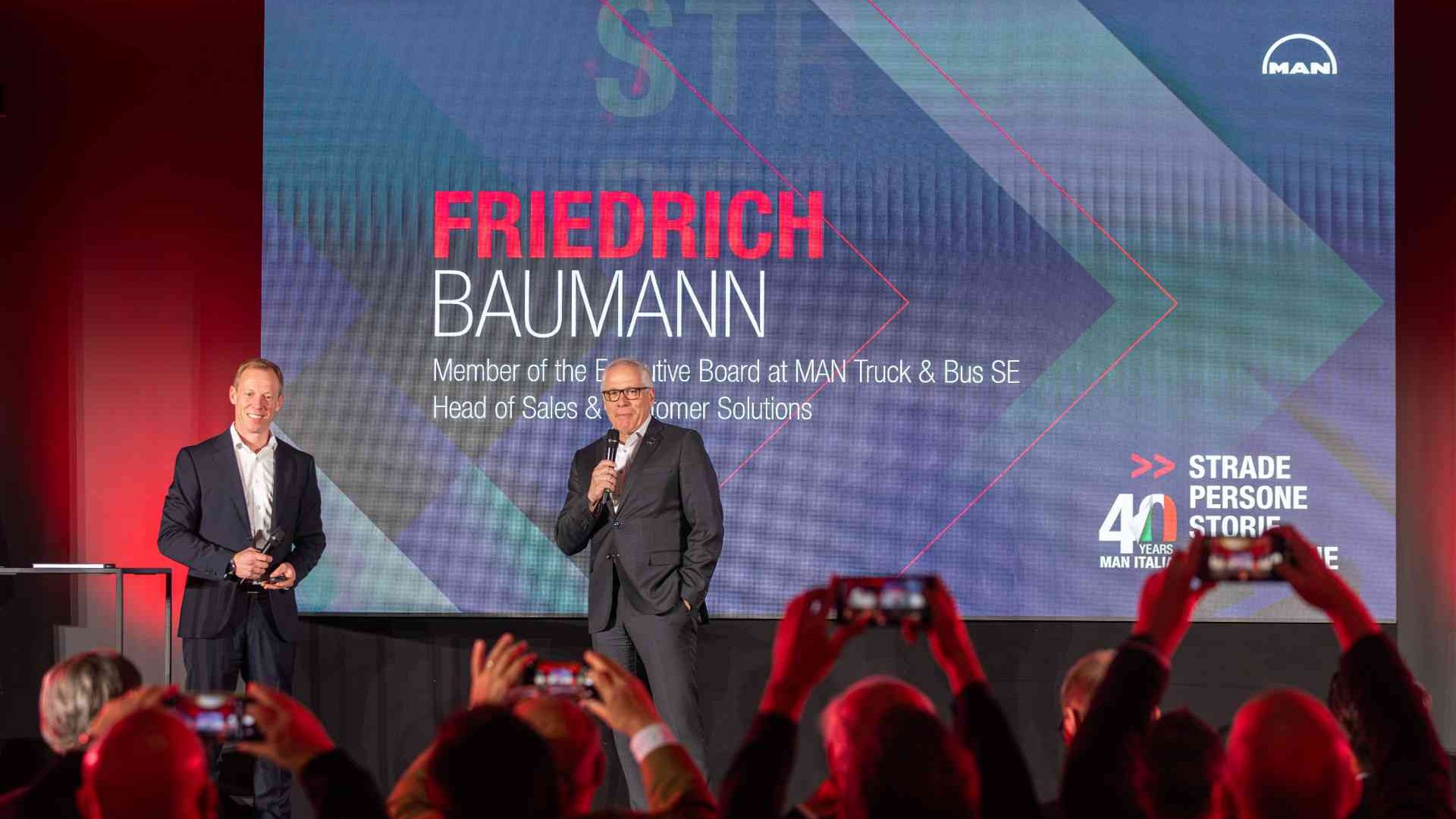
For us, this is very important because the Italian market means a lot to us. Traditionally, the Italian market is ranked somewhere between number three and five in Europe, based on where the economy is going. For us at MAN, it’s extremely important that we grow in the big European markets. It’s always a matter of strategy.
Would you add something more about it?
The key question is how to increase the number of vehicles in the market, so that we also put enough service business into the service shops. Some of them run us, some of them run with partners, some of them run by dealers. Indeed, when you get to a higher service level, you also start to attract more dealers into your network, and all of this must come together. We’re proud that we shifted from 280 to 400 vehicles for each workshop. This means that we are really creating a business for our partner and they can live with this.
MAN in 2025: the latest figures commented by Friedrich Baumann
Let’s talk about numbers, then. Despite the persistent weakness in demand for trucks, 2025 was a positive year for MAN, with sales and revenue growing by 6% and 3% respectively, while orders also recorded double-digit increases (30%). In your opinion, are these results due more to the efficiency of MAN’s products or to the company’s overall strategic vision?
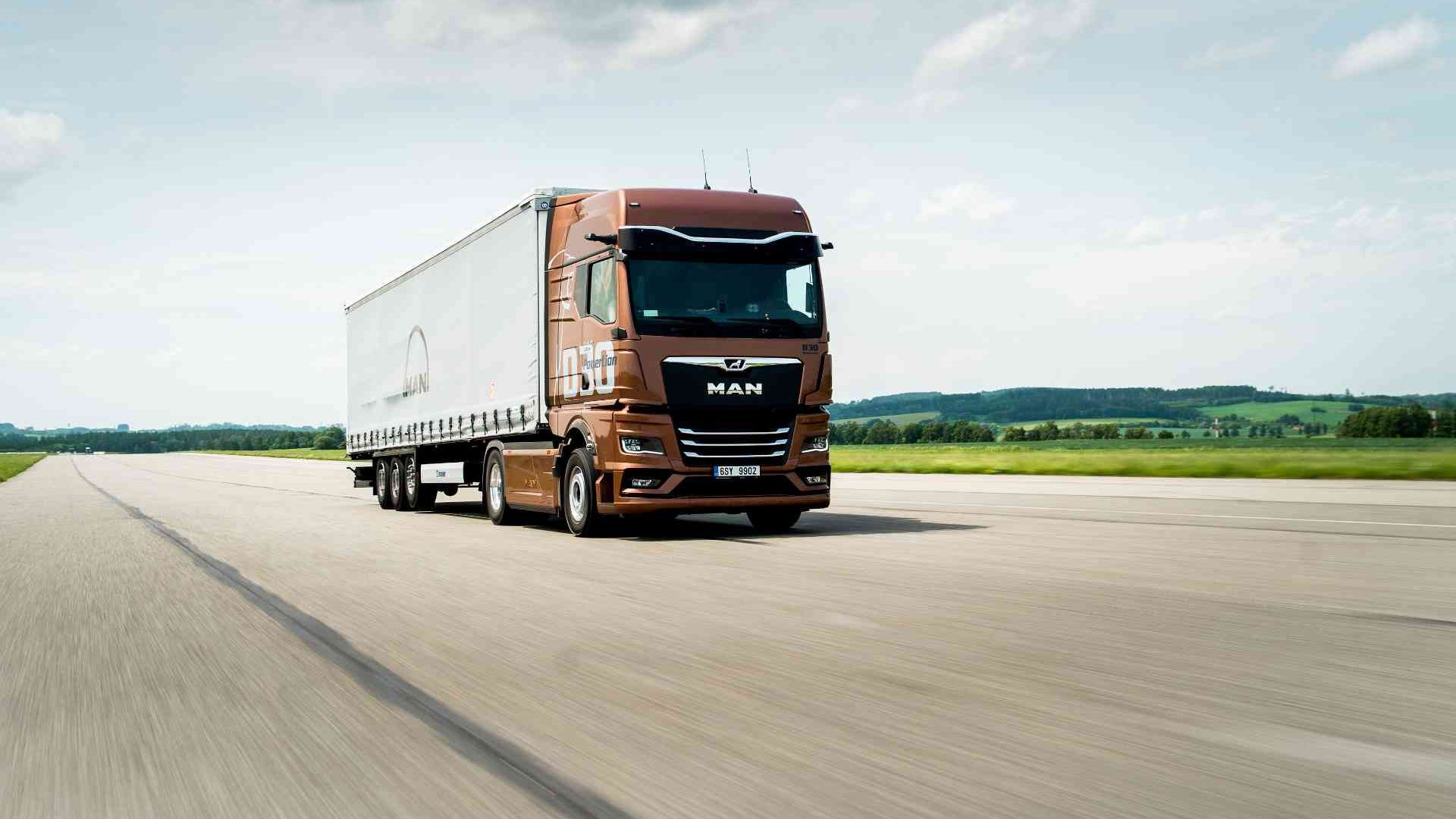
You know, I joined MAN in April 2022 under very special circumstances, as at that time when I joined, we couldn’t even build a single truck or bus because it was just shortly after the start of the Ukraine war and we were dependent single-sourced on wiring harnesses out of Ukraine. And at the time it was very severe and uncertain on how the next months would even look like. Now, sitting here today, and looking back over the past three years, I think with the partly new management team or executive board at MAN, we had one clear mission. We needed to become way more resilient as a company.
How do you do that?
On the one hand, by managing costs, both related products and also fixed costs in our operation, very diligently. But also trying to find ways to be able to grow in our business in a profitable manner. Those are exactly the aspects in which we put more attention. Now I can say we’re very proud that we have generated more cash in the last three years than in the previous 20 years. We are very stable in our profits, and we have a much brighter future ahead.
Looking at the figures, as for the truck business, we have been stable, however in a declining market in Europe. It means we’re growing in market share. On the bus side we have really put the bus also on a very stable and profitable basis. Now the van business is really our profitable growth story, and we will continue that path. Then, we have this little, let’s say, treasure unit, which is called engines and components, where a lot of people do not really pay that much attention to, but we have developed that into a billion-euro business in the meantime. All of this is supported by obviously very well-vested service and parts operation.
That distinguishes us significantly also within our own Volkswagen Group from the typical automotive thinking, as our customers do not just decide on the product they purchase. They make equally a decision on the service support they get because they’re so dependent on uptime of their vehicle, obviously.
MAN has just announced a $300 million investment plan in its service network, mainly targeting certain key markets, including Italy. How will the resources be allocated and what are the main goals of the plan?
We have heavily invested into own service locations all over Europe, 130 of them in Germany, another 120 in Europe. Of course, we also rely on service partners and dealers in many of the countries that have the same thinking and focus on providing this type of customer service. Then we have put major investments into our major logistics hub in Salzgitter. I mean we have 250,000 square meters under roof for parts distribution around the world.
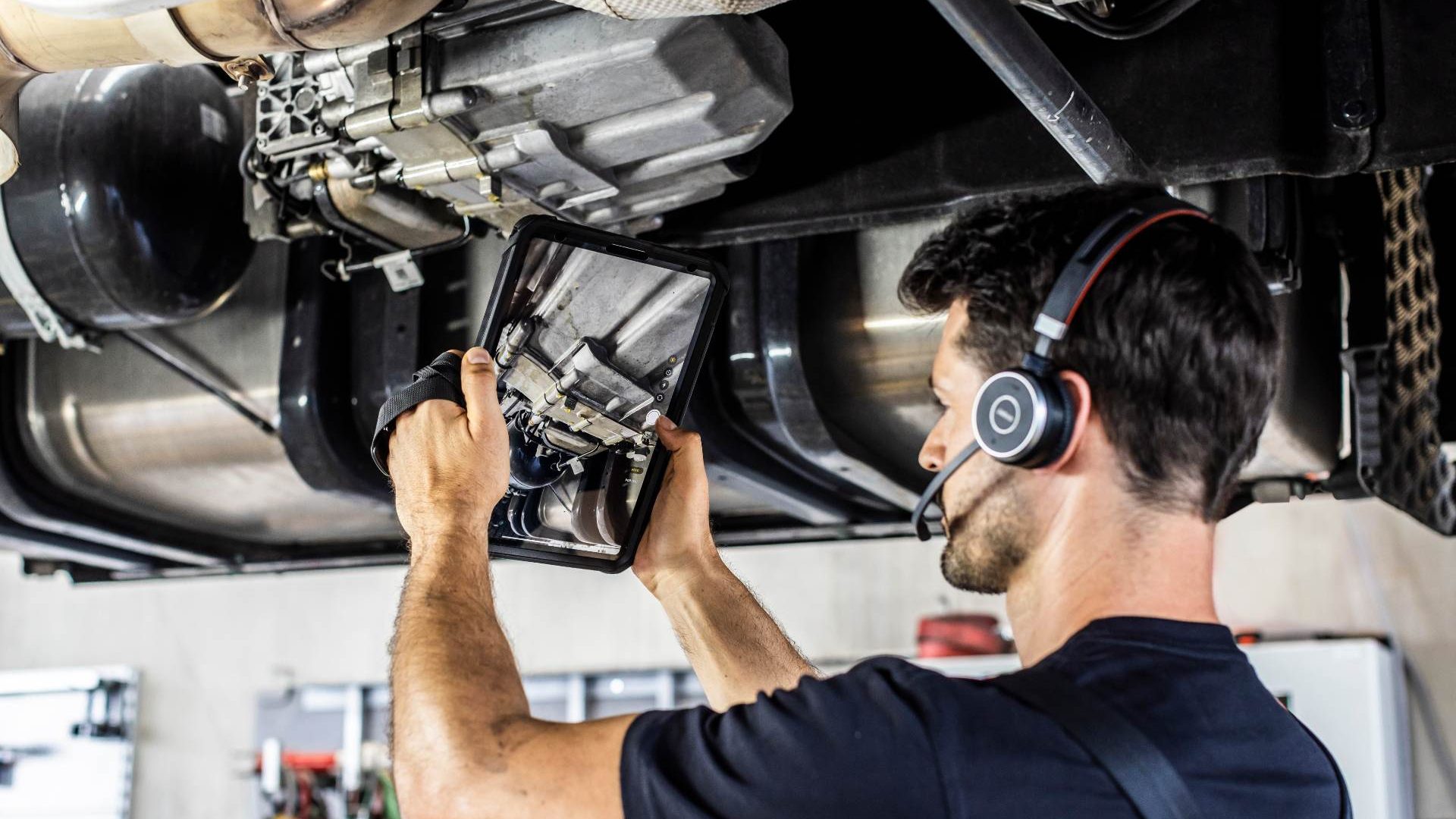
Then, as you said, we have also announced that we’ll invest about 300 million euros in 2030 in the service network. We took this decision because we’re going through the transformation into battery electric technology in the transport sector. That means you must invest in different tools and you have to invest into training, training, and more training to make sure that you can service that new technology in your network.
At the same time, we also want to even further invest in the network, get to more service locations so that we can provide service even closer to our customers and really upgrade many service locations and increase the number of service bays. Finally, I’m also convinced that if you make these types of investments, you become a more attractive employer, in times of mechanic shortage all over Europe, let’s say.
The hot matter of electric truck: another challenge for MAN
Electric trucks are traveling at different speeds in various European countries. Is this merely the result of an unclear EU policy, or is there more to it than that? And how are MAN electric models being integrated into the commercial offering?
We see that electric trucks are moving at different speeds across Europe and this is mainly to unclear EU policies, as well as to other factors. As I said, we are at the beginning of this transformation to BEV technology in the transportation sector. At MAN, we have one advantage: we have already gone through a major transformation on the bus side with our city bus business, thus learning quite a few lessons on what to do and potentially what not to do.
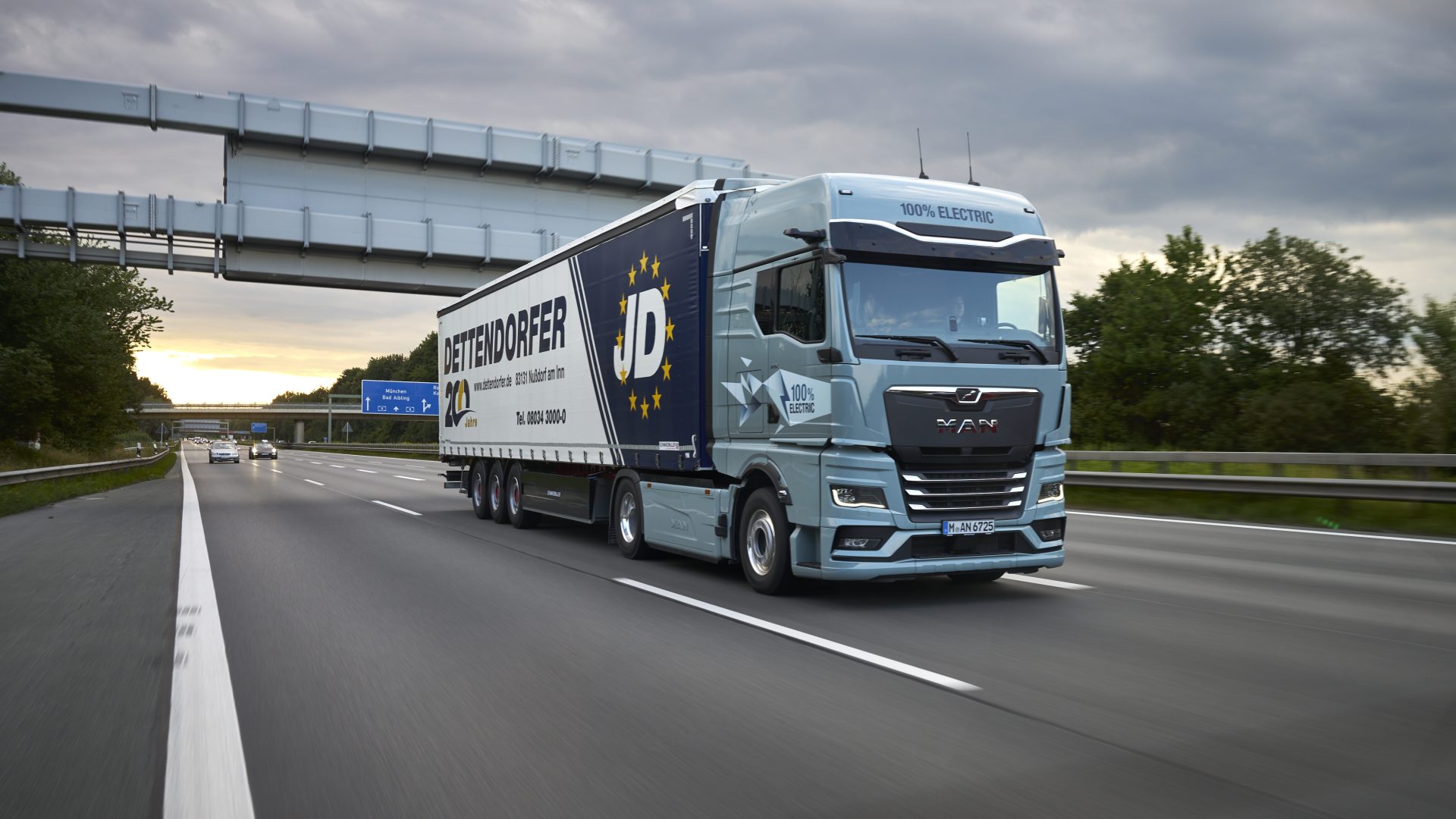
Right now, we have over 3,000 electrified city buses running in Europe already, and basically 70% of the tenders today in Europe for city buses are requiring BEV technology. On the truck side, obviously, the story is a bit more complex and challenging because we don’t have that public funding. What is decisive for our customers is TCO, and our customers are making an investment. Sometimes, let me say, they don’t want to buy electric trucks, but they have to buy electric trucks in order to be competitive and do business.
It’s a matter of courage, then…
There is, as usual, a group of customers which I would call the pioneers. They are heavily investing in e-mobility, and they see that it works for their business model. Let me give an example. Not too far away from Munich, there is a mid-sized fleet based on 110 to 120 vehicles, and about half of them are BEVs. The owner told me that he has figured out how to get enough grid by basically put enough charging capacity into his own locations. He also put photovoltaic panels on top; in this way he can better manage his energy pricing.
Also, most of his routes are below 500 km, so he also doesn’t have the range anxiety as much as maybe some others do. Therefore, he has figured out that he can provide BEV transportation at the same cost where others are with diesel. Then customers say if they have the choice between diesel and BEV, they want the green label. To sum up, in my opinion e-mobility is the true game changer in this business, as operators are suddenly in the position where they can manage their own energy cost.
We are living in complicated times geopolitically. To what extent do the international events of the latest weeks affect not only market dynamics, but also the industrial strategies of MAN Truck & Bus? And how is it possible to respond to situations like these?
We’d need a crystal ball. Personally, together with our head of the international business, I was in Abu Dhabi and Dubai the week before the Iran war broke out, and no one had any mentioning or thoughts about that this could happen. I mean, as for our strategy, it remains untouched, it only underlines right now, especially with the hike in diesel prices, that fuel economy will become even more of a decisive factor. What we also see is that the demand for vehicles in the Middle east has not yet cooled off. So, it seems that the economy still seems to be going in these countries, which is a very positive sign.
However, I think we need to be prepared that the relatively stable economic environment we, for example, see in several European countries may be endangered. To be clear, we potentially must deal with the fifth year of recession in Germany, and that is not very helpful either. I mean, we are well positioned in the market, but we could really use a bit more demand, and I don’t see this coming right now.