

Schaeffler announces 3,460 job cuts in Europe amid automotive industry slowdown
German automotive supplier Schaeffler has announced a new restructuring programme involving the reduction of 3,460 positions across Europe, including 2,660 in Germany. The measures respond to declining demand for combustion engine technologies, slower-than-expected electric mobility growth and increasing pressure on manufacturing costs.
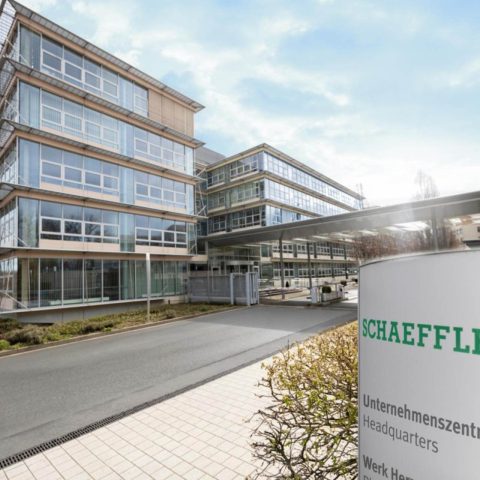

German automotive and industrial supplier Schaeffler has announced a new restructuring programme, including substantial workforce reductions and the closure of several production facilities across Europe.
The plan, presented on November 3, follows the restructuring measures originally announced in November 2024 and aims to address persistent challenges in the European automotive industry.
According to Schaeffler, declining demand for internal combustion engine components and the slower-than-expected transition to electric mobility have created overcapacity in production and development activities, requiring further structural adjustments.
Schaeffler to cut 3,460 positions and close five European sites
The new programme envisages a net reduction of 3,460 positions across Europe, including approximately 2,660 in Germany. The measures will affect 16 locations, with around 50% of the cuts involving production, 30% research and development, and the remaining 20% other functions.
Five facilities are scheduled for closure, including four in Germany: Dortmund, Morbach, Berlin and Schwalbach. The fifth is the Herstal production site in Belgium. Additional capacity adjustments are planned at facilities in France, Slovakia and Germany. The measures are expected to be implemented mainly during 2027 and 2028, in consultation with employee representatives.
Schaeffler expects the programme to generate approximately €300 million in annual earnings improvements from 2030, against estimated one-off restructuring costs of around €480 million.
The company is also considering temporary voluntary salary reductions across different management levels, including the Executive Board, to help limit the number of job losses.
The difficult transition between combustion engines and electric mobility
The restructuring highlights the challenges facing European automotive suppliers as the industry moves towards electrification.
Schaeffler’s traditional powertrain business is experiencing declining demand, while electric mobility is developing more slowly than initially anticipated in several markets.
The company’s latest financial results illustrate this situation. In the first nine months of 2026, Schaeffler recorded revenues of approximately €17.5 billion, broadly in line with the previous year at constant currency.
The E-Mobility division increased revenues by 4.6% at constant currency, reaching €3.87 billion, but still reported an EBIT loss before special items of €571 million.
The company also recorded approximately €240 million in extraordinary charges related mainly to declining volumes in electric vehicle projects involving European manufacturers, particularly in China.
Meanwhile, the Powertrain & Chassis division reported a 4.6% revenue decline at constant currency, reflecting weaker demand for combustion engine technologies.
Despite these difficulties, Schaeffler’s overall EBIT margin before special items improved from 4.2% to 4.5% during the first nine months of 2026, and the company confirmed its full-year financial outlook.
Diversification beyond the automotive industry
Alongside its restructuring programme, Schaeffler intends to continue implementing its strategy of diversifying beyond traditional automotive applications.
The group is increasingly targeting new business opportunities in areas such as humanoid robotics and defence, drawing on technologies and manufacturing capabilities originally developed for the automotive industry.
For Schaeffler, the challenge is therefore twofold: reducing excess capacity in established businesses while developing new activities capable of supporting future growth.