

Trailer refrigeration, Schmitz Cargobull’s S.CU dc90 unit at the heart of an integrated system
According to the company, the integration of components, from the vehicle to telematics to service, is what enables increased operability, optimized energy, and continuous temperature documentation, which is crucial for food, pharmaceuticals, and sensitive chemicals. The official presentation of Schmitz Cargobull's S.CU dc90 unit was held during an international press conference we attended.
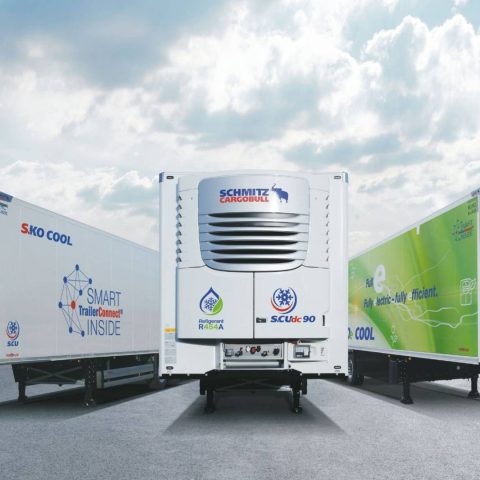
In temperature-controlled transport, reliability, traceability throughout the entire supply chain, and operational safety are what count. On this basis, Schmitz Cargobull is building its proposal, launched yesterday during an international press conference attended by journalists from around the world: an integrated ecosystem that combines the S.KO COOL refrigerated semi-trailers, the S.CU refrigeration units, the TrailerConnect telematics system, and tailor-made service packages.
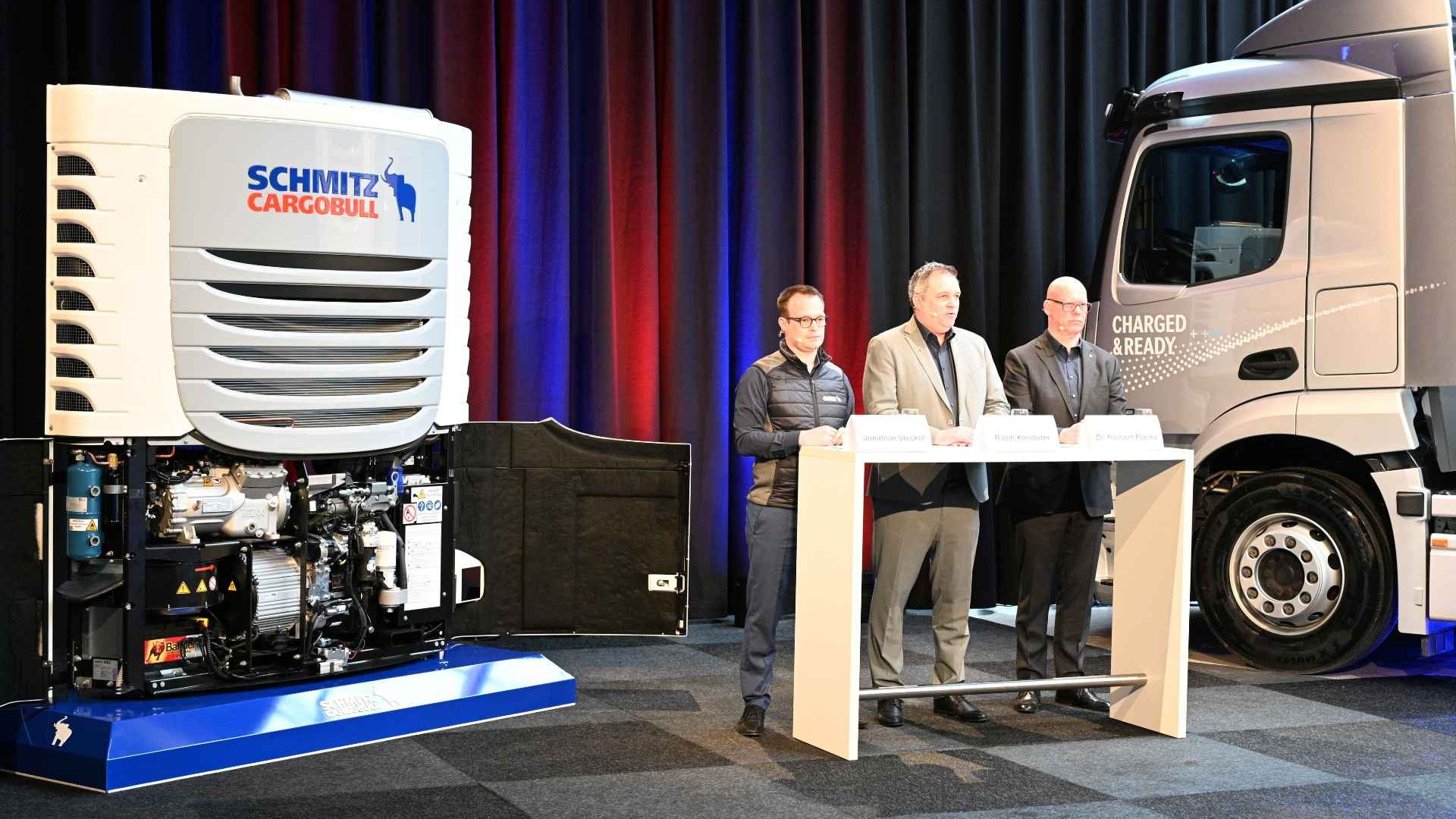
According to the company, the integration of components, from the vehicle to telematics to service, is what enables increased operability, optimized energy, and continuous temperature documentation, which is crucial for food, pharmaceuticals, and sensitive chemicals. “In temperature-controlled transport, reliability is the top priority,” emphasized Ralph Kleideiter, CSO of Schmitz Cargobull, explaining that customers are increasingly demanding “system solutions” rather than single products.

Schmitz Cargobull’s S.CU dc90 unit
The most significant technical innovation of 2026 is the S.CU dc90 (presented at Solutrans and officially launched yesterday), which replaces the previous S.CU dc85 in Europe. The new model was created with a clear objective: to increase performance while reducing consumption and environmental impact. Schmitz Cargobull claims up to 6% more refrigeration capacity and up to 10% less fuel consumption compared to the previous model. At an operational level, this would also translate into faster cooling times: for the company, the transition from +30°C to -20°C in the cargo compartment would take place about 30 minutes earlier than with the dc85, with a reduction of up to 21% in overall time.
Additionally, Schmitz Cargobull claims to be the first manufacturer in Europe to introduce the refrigerant R454A as standard in its S.CU modular system, in response to the prospect of a gradual reduction in EU quotas for refrigerants with high CO₂ equivalents, which could affect the cost of the previous R452A. The company highlights that the R454A has a significantly lower direct GWP and an 89% reduction in CO₂ equivalent compared to the R452A.
In terms of architecture, the S.CU dc90 uses an hermetic two-stage reciprocating compressor, designed to reduce maintenance and repairs in the refrigeration circuit. The optimized Hatz common-rail diesel engine remains, with an extended speed range, also compatible with HVO100 fuel.
Advanced telematics functions for higher efficiency
As for the system efficiency, the matter also involves management. The S.CU units integrate telematic functions such as Cargosets and Remote Start, as well as proactive monitoring via Smart Service, which aims to detect faults and anomalies in real time, suggesting corrective actions before they result in vehicle downtime. In addition, Schmitz Cargobull includes a 24-month Full Service contract as standard, comprising TrailerConnect and the main maintenance and repair activities, with modular extensions.
Last but not least, there is also a proposal that bridges the gap to electrification: both the S.CU d80 and the new dc90 can be ordered with an ePTO-ready interface, allowing electric operation when the tractor supports it, without the need for additional high-voltage batteries on the semi-trailer. In the absence of electricity, the system automatically switches to diesel, a logic designed for mixed fleets and operational continuity.