

HDV CO2 amendment, ACEA: “Only the first step, faster review is required”
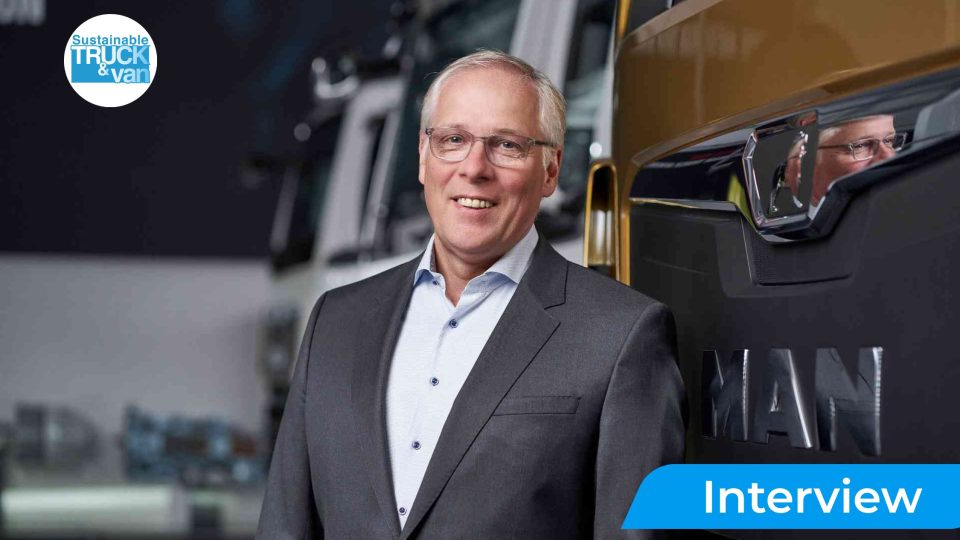
"The commercial vehicle industry is firmly committed to decarbonisation, and we have been investing heavily in zero-emission technologies for years", said Karin Rådström, President and CEO of Daimler Truck and Chair of ACEA’s Commercial Vehicle Board. "We very much welcome the latest move of the European Institutions. The fact that exceeding our CO2 targets will be credited in the future is a fair and important corrective step. But it is not enough to ensure the transition toward CO2-neutral transport. We urgently need a comprehensive review of CO2 regulations so that the ambitious reduction goals are linked to infrastructure rollout and economic viability for our customers".
The targeted amendment to the Heavy-Duty Vehicle (HDV) CO2 Regulation is now formally adopted, following the decision taken a few days ago by the EU Council. Of course, ACEA welcomes the agreement, but at the same time underlines the need to further review the current decarbonization path involving heavy-duty vehicles.
“The newly adopted amendment corrects an overly restrictive design flaw in the current rules by adjusting the emission credit calculation mechanism for the reporting years 2025 to 2029. Manufacturers will now be able to generate emission credits when their new vehicle emissions fall below the legal 2025 – 2029 target of -15%, rather than being measured against an artificial linear emissions-reduction trajectory”, stated ACEA.
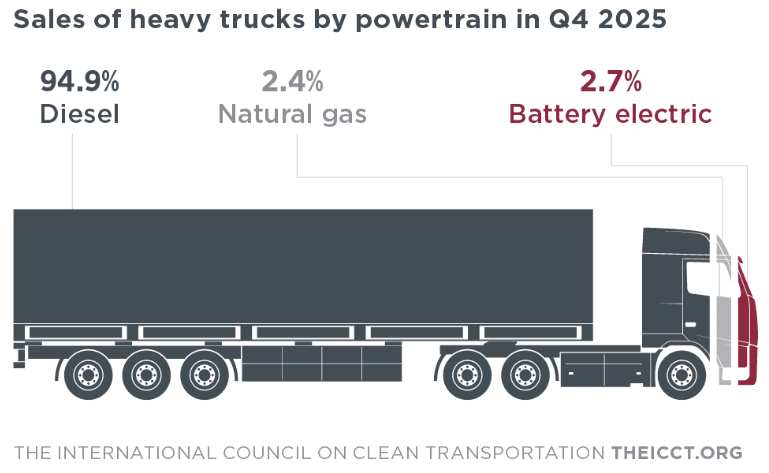
“This flexibility helps smoothen the transition toward the significantly more demanding 2030 targets, without altering legal obligations”. However, despite the welcome procedural fix, the transition to zero-emission HDVs is progressing too slowly, as in 2025, zero-emission vehicles accounted for just 2.0% of heavy-duty truck (>16t) registrations and 14.8% of medium-duty trucks (3.5 – 16t) in the EU. “Dedicated charging and hydrogen infrastructure for HDVs remains grossly insufficient, energy costs remain too high, and the business case for transport operators is fragile at best”.
The proposals issued by ACEA
ACEA stresses that while this amendment is a necessary step, it is narrow in scope and does not:
- Change the targets. The amendment does not revise, lower, or reopen the ambitious HDV CO2 targets for 2030, 2035, or 2040, fully preserving the regulation’s overall ambition and the long-term decarbonisation pathway.
- Solve the infrastructure deficit. The proposal does not address the structural lack of enabling conditions. It introduces no demand-side measures, provides no strengthened Alternative Fuels Infrastructure Regulation (AFIR) obligations, and offers no new financial support to accelerate the deployment of vital infrastructure for the ZE transition.

“The commercial vehicle industry is firmly committed to decarbonisation, and we have been investing heavily in zero-emission technologies for years”, said Karin Rådström, President and CEO of Daimler Truck and Chair of ACEA’s Commercial Vehicle Board. “We very much welcome the latest move of the European Institutions. The fact that exceeding our CO2 targets will be credited in the future is a fair and important corrective step. But it is not enough to ensure the transition toward CO2-neutral transport. We urgently need a comprehensive review of CO2 regulations so that the ambitious reduction goals are linked to infrastructure rollout and economic viability for our customers”.