

What’s MAN doing to reduce greenhouse gas emissions in production
According to the company's newly published Sustainability Report, MAN is approaching its Science Based Targets initiative (SBTi)-validated goal of reducing site-related emissions by 70 per cent compared to 2019 levels by 2030.
According to the company’s newly published Sustainability Report, MAN is approaching its Science Based Targets initiative (SBTi)-validated goal of reducing site-related emissions by 70 per cent compared to 2019 levels by 2030. Indeed, the German truck maker has increased its share of renewable energy through self-generation, long-term Power Purchase Agreements (PPAs), and the procurement of certified green electricity.
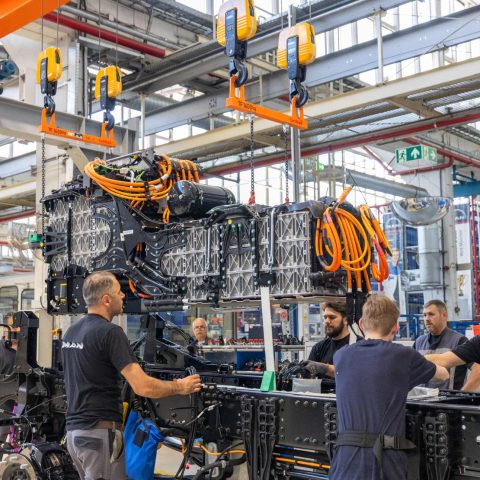
In Munich, MAN is also preparing for the construction of a geothermal energy facility in order to progressively replace fossil-based heat and sustainably improve the greenhouse gas balance at its largest production site. MAN is also driving the gradual electrification of its inbound logistics and, in 2025, issued tenders for the deployment of battery-electric trucks on an initial approximately 40 routes covering up to 165 million kilometres annually. Series operation has been under way since the beginning of this year. The Bavarian truck maker has just celebrated one year of electric truck series production at the company’s plant in Munich.
MAN’s working to make production greener: CEO Vlaskamp speaking
“The greatest lever for climate action lies in vehicle operation – and that is precisely where we are accelerating electrification. At the same time, we are demonstrating within our own sphere of influence that we deliver on our commitments: at our company sites, we have reduced emissions by 67.9 per cent since 2019. And we are also electrifying our own transport processes – from inbound to outbound. This is how we make climate action measurable: in business operations, in the use phase, and along the value chain,” explained Alexander Vlaskamp, CEO of MAN Truck & Bus.