

Windrose validates megawatt charging with partner Autel in the Netherlands
The deployment features a modular megawatt configuration combining three MaxiCharger DS480 high-power charging cabinets connected in parallel to form a 1,440 kW system. “We are proud to partner with Autel to successfully complete MCS charging. MCS will be a cornerstone of next-generation long-haul electrification, enabling scalable and ultra-fast charging for the future of zero-emission freight,” said Wen Han, CEO of Windrose.
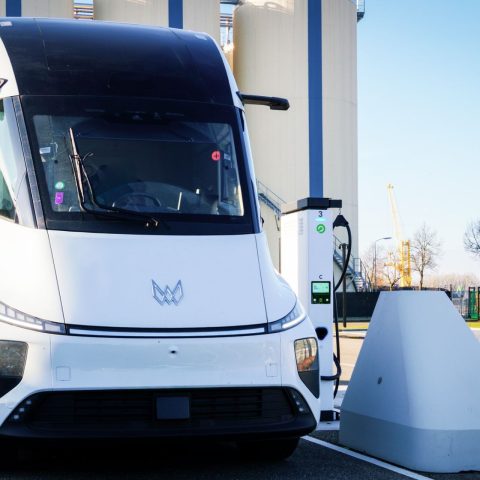
Windrose and Autel Europe have recently announced the successful completion of a real-world Megawatt Charging System (MCS) charging session at the Mega Charging Hub of a prime customer of Revolt in Roosendaal. The deployment features a modular megawatt configuration combining three MaxiCharger DS480 high-power charging cabinets connected in parallel to form a 1,440 kW system.
The dispenser is capable of delivering up to 1.2 MW output through the MCS interface with a maximum current of 1,500 A. In addition, the system integrates liquid-cooled cable technology, coordinated power conversion, and stable communication architecture. According to the companies, the successful session demonstrated reliable interoperability between the Autel charging infrastructure and the Windrose electric truck platform under real operating conditions.
Beyond megawatt-level infrastructure projects in Europe, Windrose and Autel are also advancing heavy-duty charging deployments in Australia, further supporting the electrification of long-haul transport operations.
Statements from Windrose and Autel on the megawatt charging project
“We are proud to partner with Autel to successfully complete MCS charging. MCS will be a cornerstone of next-generation long-haul electrification, enabling scalable and ultra-fast charging for the future of zero-emission freight,” said Wen Han, CEO of Windrose.
“Megawatt charging is not defined solely by higher power levels,” added Andreas Lastei, Vice President of Autel Smart Energy Europe. “It requires coordinated system design across power conversion, thermal management, communication stability, and site integration. Collaborating with vehicle manufacturers such as Windrose allows us to validate interoperability under real operating conditions and align infrastructure architecture with actual heavy-duty vehicle requirements”.