

“I tell you why ZF’s hybrid transmission can be a viable solution to decarbonize long-haul transport”
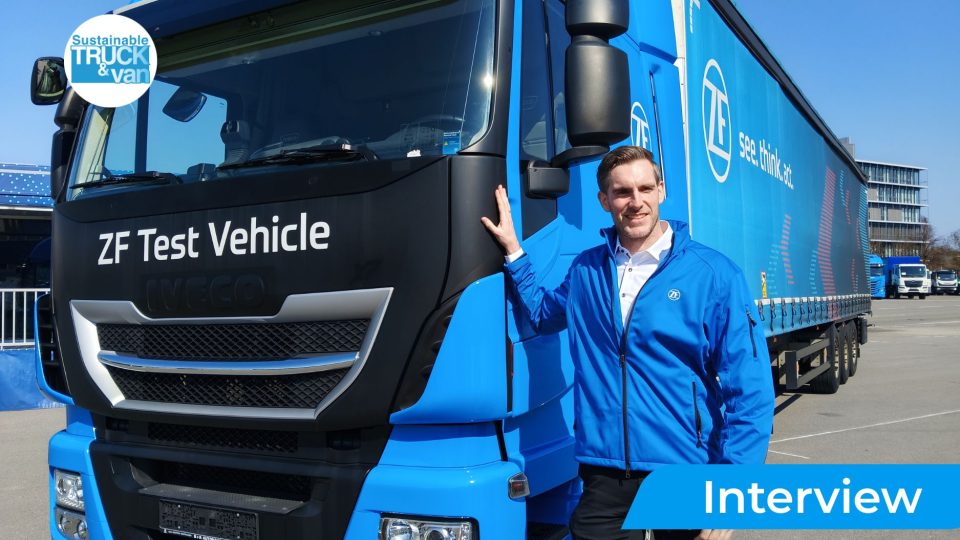
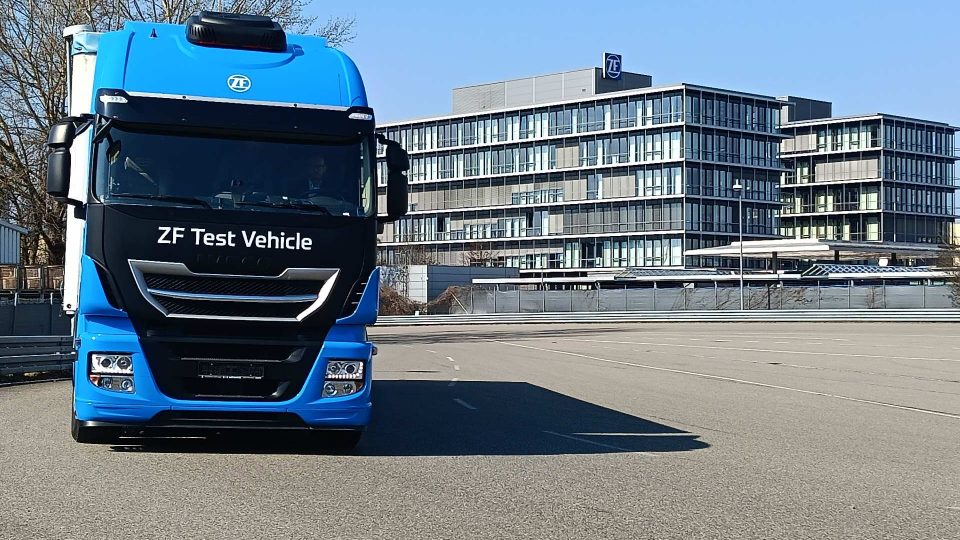
Last month, we have been invited to Friedrichshafen, home to ZF, for a very interesting preview: the practical application of ZF’s latest technological solution to facilitate the decarbonization of heavy-duty transport, specifically long-haul transport. We’re talking about the TraXon 2 Hybrid transmission, which consists of a conventional module and one equipped with an electric motor. There, we interviewed Christian Feldhaus, Vice President of Transmissions & Hybrids at ZF Commercial Vehicle Solutions.
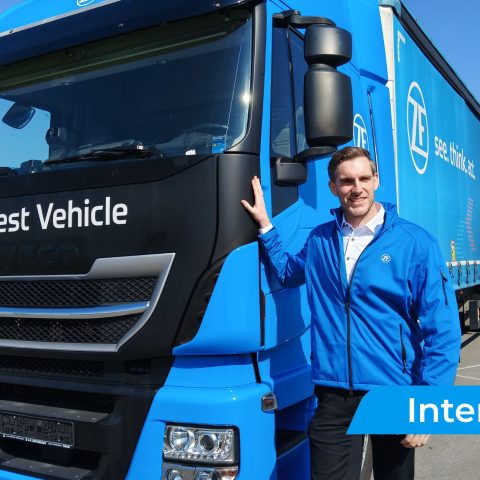
Last month, we have been invited to Friedrichshafen, home to ZF, for a very interesting preview: the practical application of ZF’s latest technological solution to facilitate the decarbonization of heavy-duty transport, specifically long-haul transport. We’re talking about the TraXon 2 Hybrid transmission, which consists of a conventional module and one equipped with an electric motor. There, we interviewed Christian Feldhaus, Vice President of Transmissions & Hybrids at ZF Commercial Vehicle Solutions.
ZF’s TraXon 2 Hybrid transmission
Mr Feldhaus, how could we define the TraXon Hybrid?
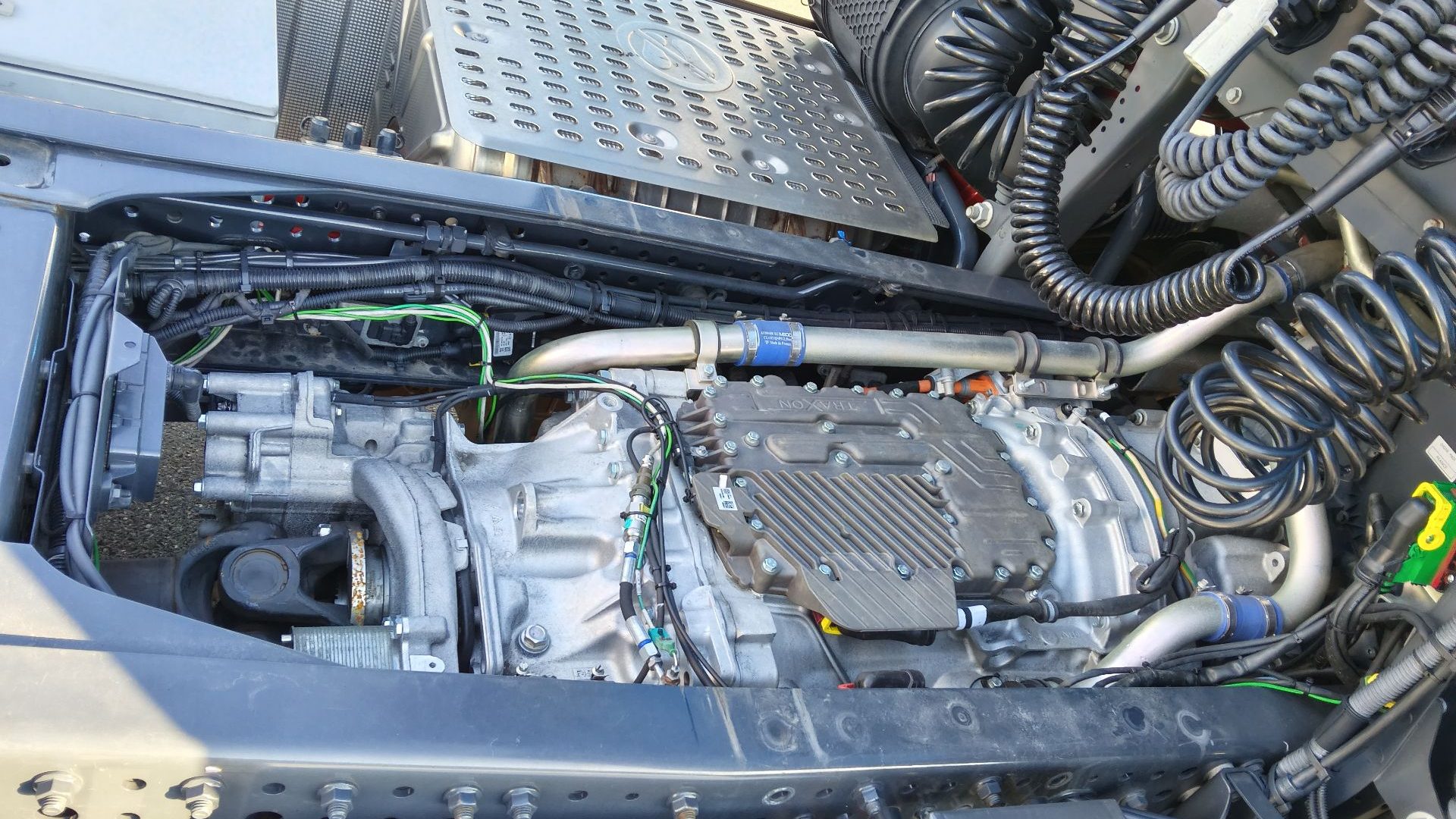
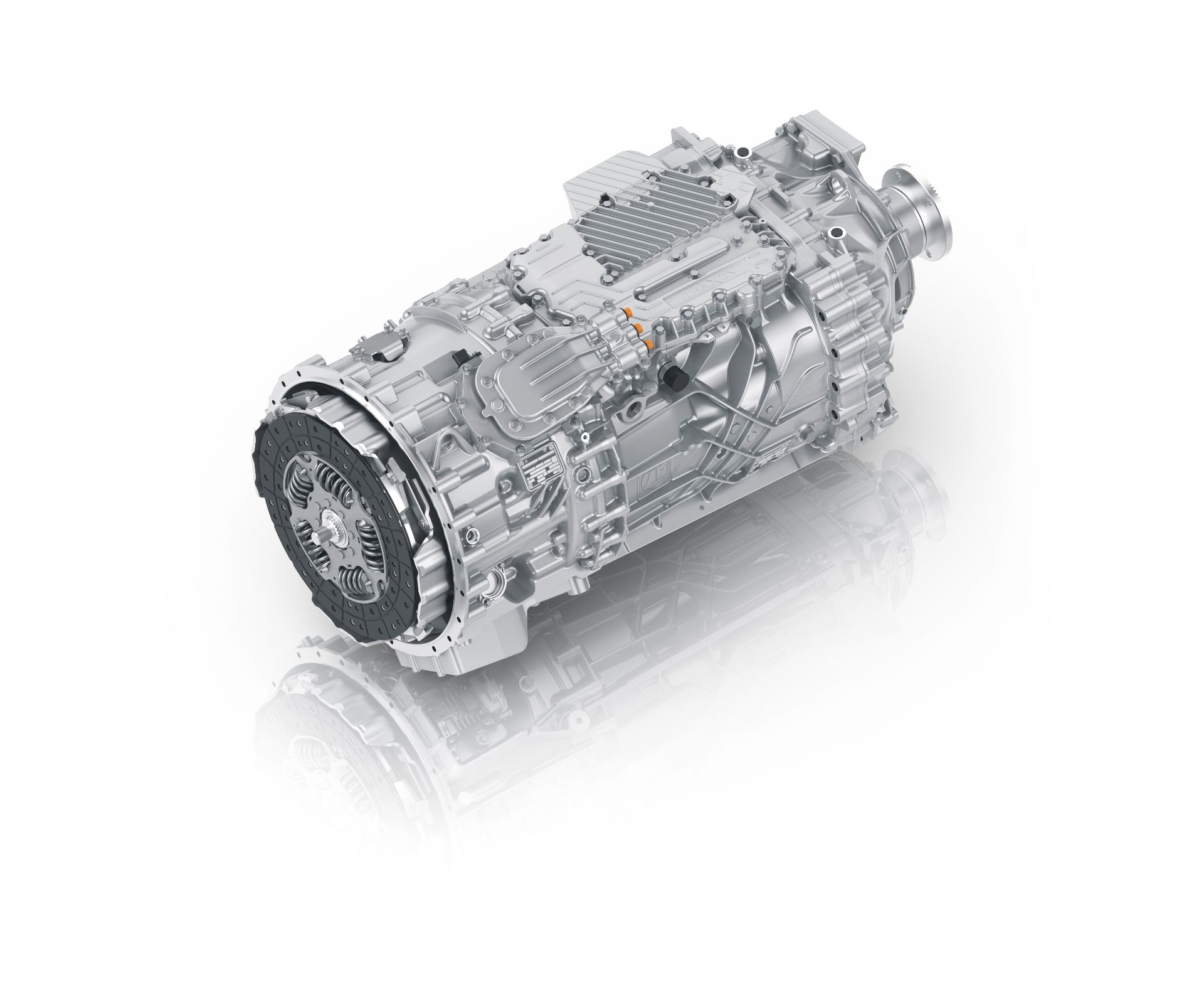
Let’s say it’s a standard configuration of a traditional powertrain with the add-on of the e-motor just in a sandwich position between transmission and clutch. The e-motor itself is made in-house by ZF, which decided roughly 12 years ago to invest in this technology, including the inverter, a silicon carbide model, which operates between 600 and 900 volts. Finally, the control unit of this hybrid module is integrated into the transmission control unit.
How will the new component be produced?
We have an existing business for TraXon transmissions on conventional powertrains. What we do is to assemble this base transmission on one line and then we have a second line for the hybrid module, if needed. For the latter, there will be a station to marry both base modules and obviously an end-of-line test to validate the additional features. Obviously, the OEM needs one additional station to install electric accessories like the inverter, or the battery pack. But for the OEM it’s important that the main architecture stays the same.
The importance of relying on in-house developed software
Why is software is so important in the development of this product?
For every propulsion system, software integration is key to making the product as most viable to the vehicle and also to the end customer. We want to make sure to have seamless integration and also operation of the powertrain and the vehicle itself. So, we make sure that the arbitration between e-motor, diesel motor, potentially electrical accessories and the whole system that’s managed well. In the end, we want to make sure that the driver at the end does not need to steer the system, but we or the software can steer the system in the most intelligent way to maximize savings and performance. We work very closely with the OEMs to achieve those targets.
Do you see this solution as feasible even for markets like North America or China, so outside Europe?
In North America, it’s complicated to give any forecasts. What I can tell you is that there are customer requests even in North America and South America for this kind of technology. If you talk about China, there we see a bigger speed for electrification on the small and medium ranges, while on the long ranges we see an issue in China that the OEMs are not able to penetrate the long-haul routes in China due to missing infrastructure. But motivation is also linked at the end to energy prices in these different countries. In Europe, we are four to six times higher, compared to China. Plus, the vehicle itself in China, for example, is heavily subsidized right now. Nevertheless, we see OEMs in China also looking into hybrid.
Is it possible that the TraXon 2 Hybrid may be also manufactured in other in other ZF plants in China or Brazil?
Absolutely. Depending on the market demand, we will localize where the market has a certain demand.
Will you advise your customer about the size of the battery pack, the inverter, or it’s just up to them, and ZF will provide all the possible solutions?
Of course, the final decision is taken by the OEMs, but we are kind of a consultant as well for propulsion technology. For example, the battery size is an active discussion we have received, because it is also a matter of overall weight of the truck.