

What if the future of heavy-duty road transport will be hybrid? ZF puts more than a bet on its TraXon 2 Hybrid
ZF presented to a very narrow group of journalists its vision for balancing economic and environmental sustainability in a transition that is proving to be highly complex. At ZF’s headquarters, we could discover the TraXon 2 Hybrid transmission, as well as drive a hybrid truck. Here's what we saw.
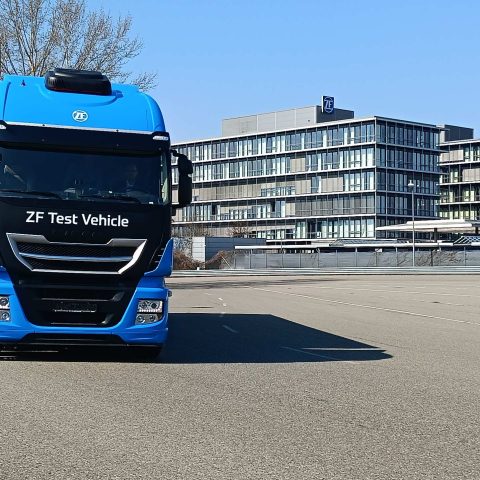
In Friedrichshafen, a quiet and bustling town on the German shore of Lake Constance, ZF presented to a very narrow group of journalists its vision for balancing economic and environmental sustainability in a transition that is proving to be highly complex. At ZF’s headquarters, we could then discover the TraXon 2 Hybrid transmission, as well as drive a hybrid truck, meaning one capable of harnessing the benefits of both internal combustion and electric power thanks to a powertrain that is complex only in appearance.
Indeed, ZF has been deeply affected by the ongoing transformation in the automotive sector. The company is trying to combine its expertise in the two core areas of the powertrain with a product still in its development phase, with the goal of actually bringing it to market in 2028.
ZF’s TraXon 2 Hybrid: the smart combination of already existing components
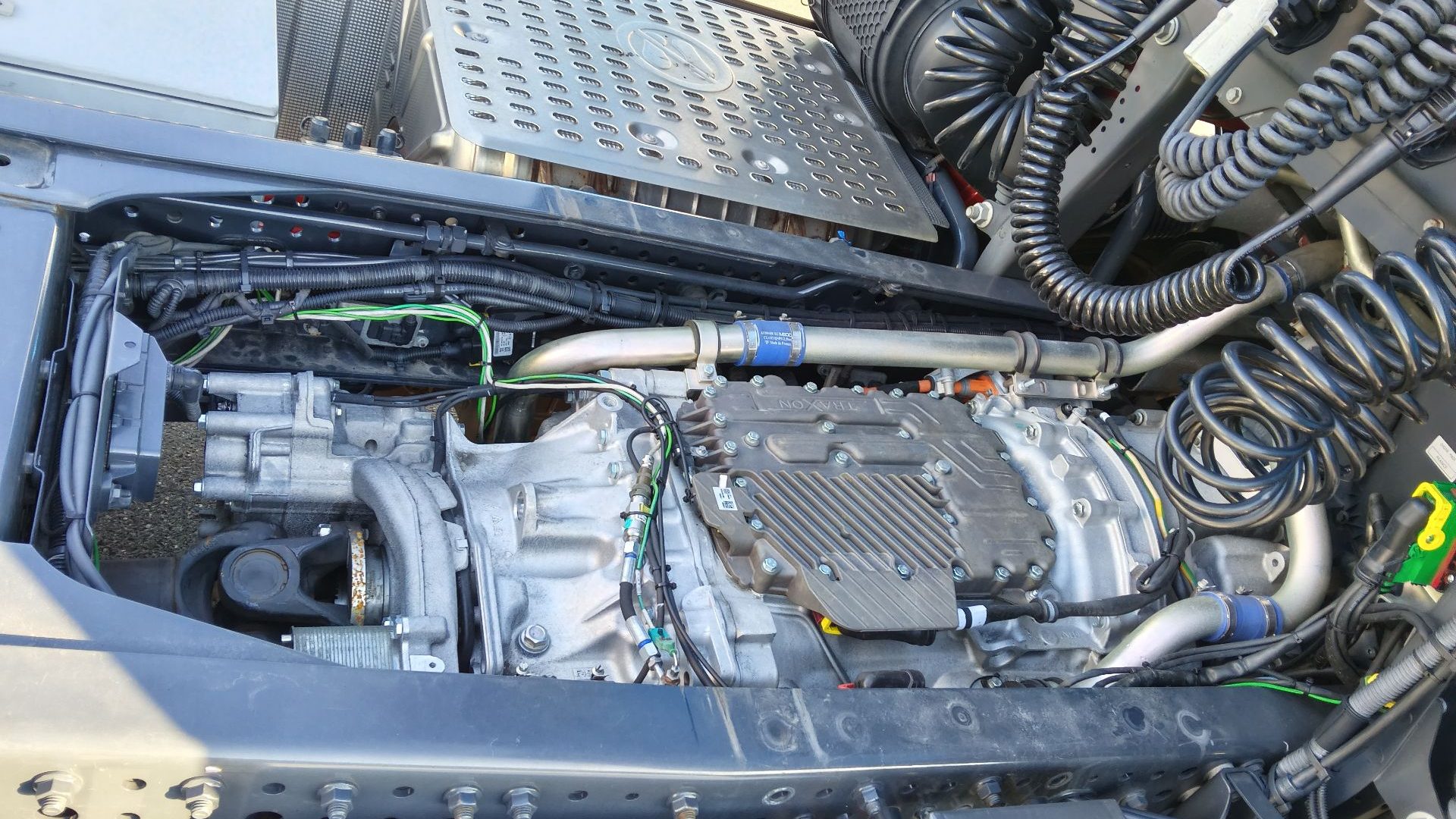
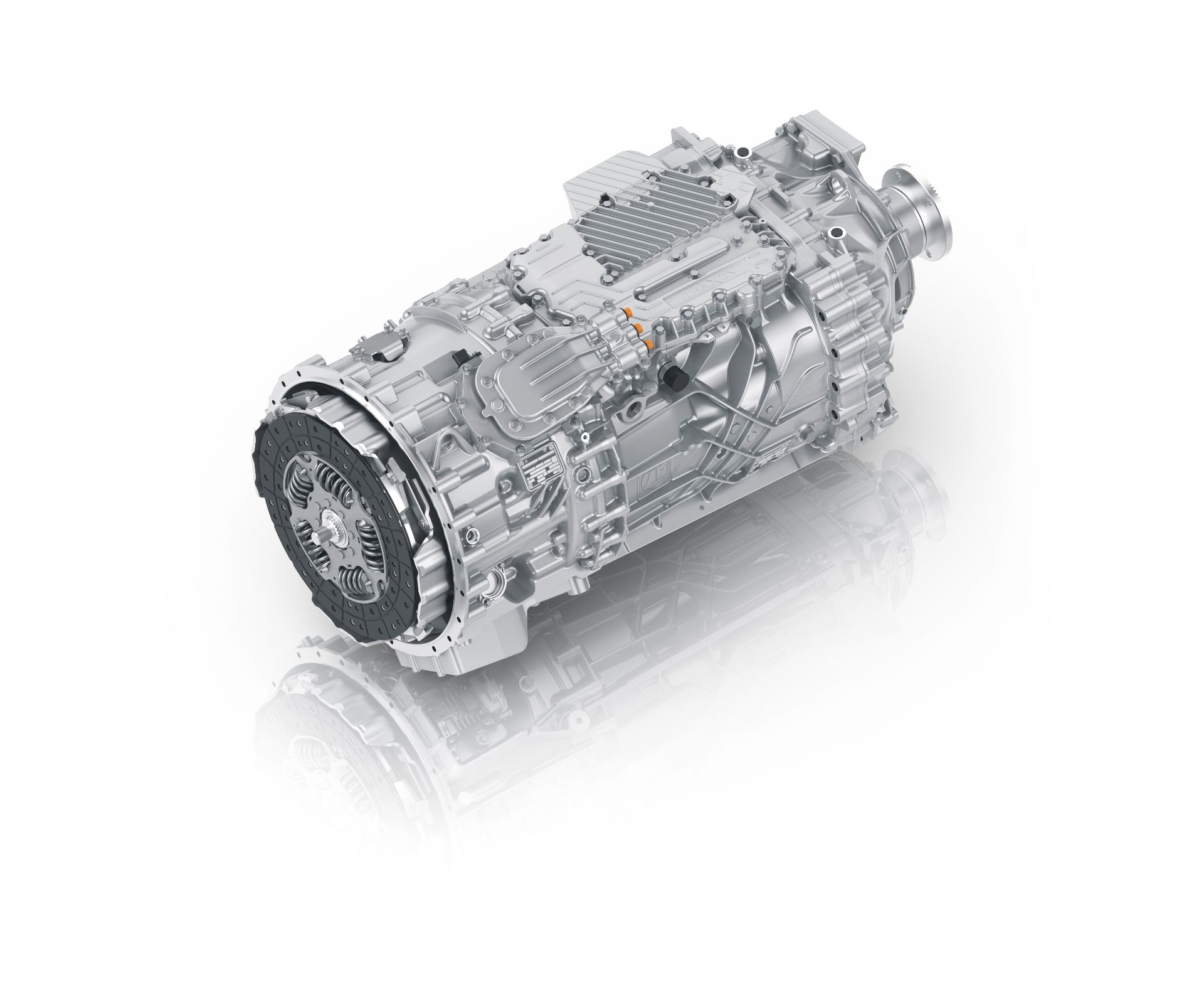
From a technical standpoint, we have seen nothing new. The TraXon 2 Hybrid, in fact, adds to the second generation of the TraXon heavy-duty transmission—of which over 1.5 million units have been produced since its 2014 launch— a hybrid module centered around an electric motor developed in-house by ZF itself, capable of delivering 225 kW (approximately 305 hp) of peak power and 190 kW (258 hp) of continuous power, with an architecture operating between 600 and 900 volts. The unit is mounted between the transmission and the clutch and is controlled via software by the same control unit as the conventional TraXon.
At the front end of the powertrain is, of course, an internal combustion engine, which can run on diesel, biodiesel, and potentially also on natural gas—either in liquid or compressed form. The electric unit, on the other hand, draws power from battery packs, the size and number of which can be adjusted according to operational needs.
The issue of the product initial cost
From an economic standpoint, however, the rationale behind what we might call ZF’s “hybrid operation” is clear: the initial delta cost of a hybrid truck, compared to a conventional counterpart, has been calculated at around 25 percent, with a return on investment estimated at less than two years. This is significantly lower, of course, than that of a current long-haul full electric vehicle. It is a way to allow even transport companies with limited budgets to embrace electrification, gradually learning its features and benefits.
In short, a gradual approach that, right now, is quite difficult to reconcile with the European Union’s guidelines. Specifically, the reduction—compared to 2019 emission levels—of 45 percent by 2030, 65 percent by 2035, and 90 percent by 2040. In short, there needs to be greater recognition at the European level of alternatives to fully electric vehicles for calculating emissions, or the adoption of different calculation methods. Otherwise, even the potential benefits of hybridization would risk remaining merely on paper. As a consequence, ZF has already begun lobbying the EU Commission for a revision of the roadmap’s key targets, in line with broader demands from the German automotive industry.
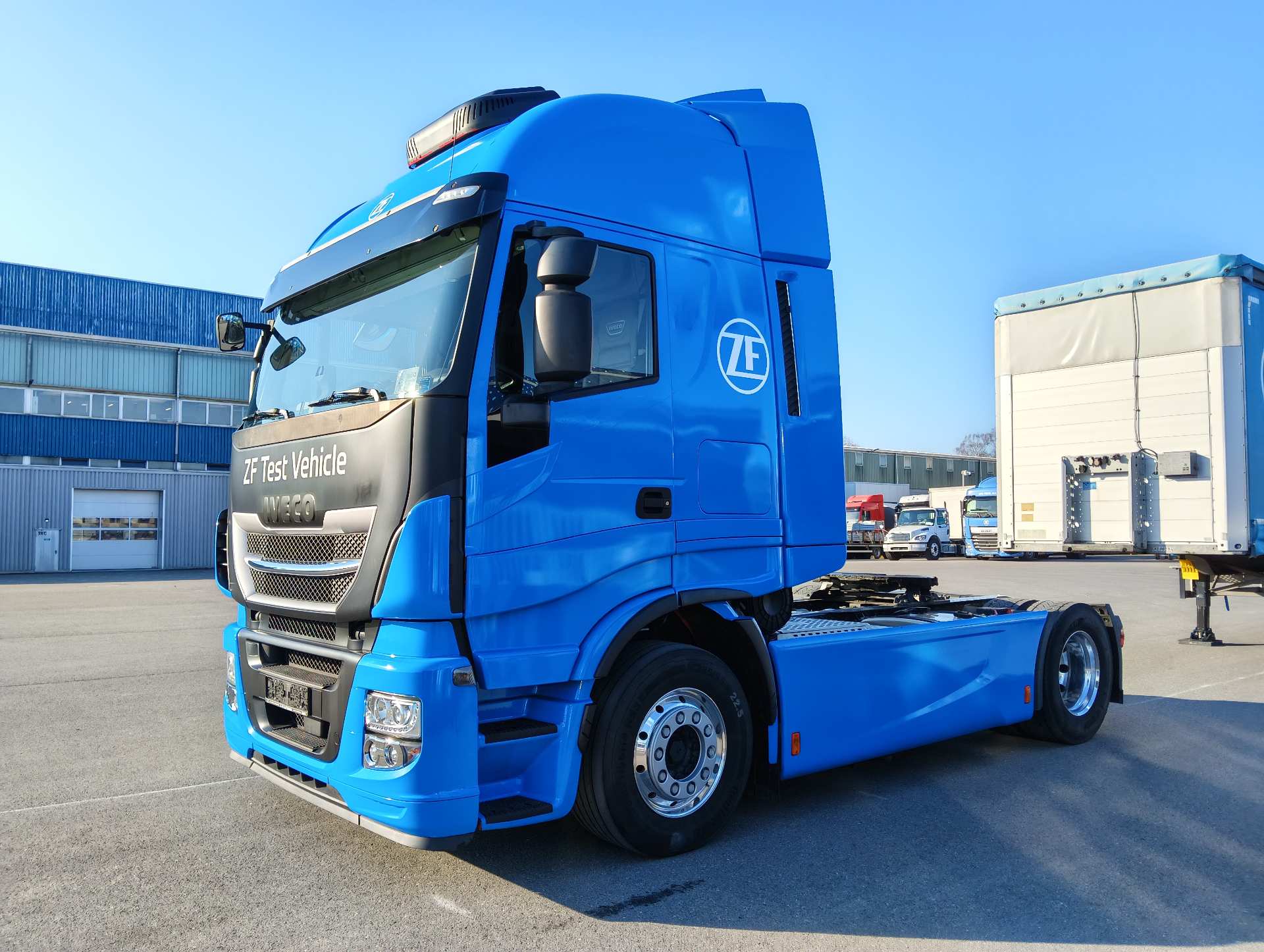
“Hybrid technology could replace a significant portion of diesel vehicles in long-haul transport, with interesting implications—in the more distant future—for the introduction of hydrogen-powered internal combustion engines,” ZF engineers told us in Germany.
As for the number of battery packs to be installed in order to provide power for the electric motor, ZF is also ready to provide consulting support on how many battery packs to install on the chassis, with the goal, of course, of not adding too much weight to the vehicle’s curb weight. Assuming a maximum capacity of 220 kWh for the traction batteries, ZF has calculated a reduction in CO2 emissions of just under 50 percent compared to a comparable diesel truck. A more realistic configuration with 100-kWh batteries, on the other hand, would result in a 28 percent reduction in CO2 emissions (these calculations are based on current VECTO regulations).
These emissions could decrease further if one also considers the possibility—though not likely, according to the ZF team—of downsizing the internal combustion engine. In short, this would involve installing an internal combustion engine with smaller displacement, as the vehicle is already equipped with an extra power boost provided by the e-motor.