
ACEA’s position paper on the Industrial Accelerator Act
“The risk of hollowing out the EU industrial base is real, and smart, targeted measures to support homegrown manufacturing are justified. But the scale of the challenge facing our sector must not be underestimated,” stated Sigrid de Vries, Director General of ACEA.
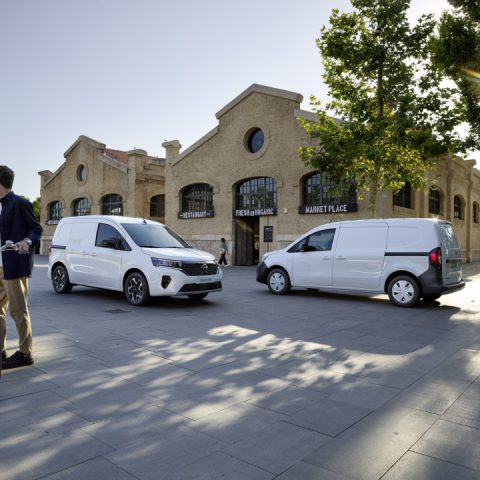
On July 1st, ACEA published a position paper reaffirming the industry’s support for the objectives of the Industrial Accelerator Act (IAA, not to be confused with the name of the German trade fair, by the way). The latter is the proposal to safeguard EU manufacturing and reduce dependence on other regions for clean technologies.
“The risk of hollowing out the EU industrial base is real, and smart, targeted measures to support homegrown manufacturing are justified. But the scale of the challenge facing our sector must not be underestimated,” stated Sigrid de Vries, Director General of ACEA. “The industry is facing a shrinking EU market, fierce competition, geopolitical instability, rising manufacturing costs and increasing regulatory requirements, while investing billions in electrification to meet ambitious 2030 targets. With a number of important tweaks, the Industrial Accelerator Act can become a catalyst for industrial strength. Importantly, the Act must also be firmly embedded in a comprehensive industrial policy,” added De Vries.
The EU action focus
In addition, ACEA suggests the IAA’s action to be focused on some given targets. Here are some of them:
- Making “Made in EU” benefits substantial enough to compensate for the costs of localising in Europe.
- Narrowing down the geographic scope to EU27 + the UK, whilst also protecting existing investments of European manufacturers in selected countries (Turkey, Morocco) in a targeted way.
- Introducing leaner and fairer rules of calculating “local content”, recognising the significant value added by vehicle manufacturers in vehicle production, and the important economic role of vehicles manufactured in Europe for exports.
- Setting realistic targets for EV batteries in line with the actual ramp-up of battery production.
- Finally, tailoring the proposal to the specific needs of various segments (cars, vans, trucks, buses) that have different value chain and cost structures and operate under different conditions.