

Over 6,300 new electric truck registrations in Europe in Q1, 2026. Here’s the latest ICCT report
The International Council on Clean Transportation (ICCT) published a new edition of our quarterly EU market monitor for heavy- and medium-duty commercial vehicles. Have a look at the latest data here.
All the charts in this article come from the newest ICCT report, downloadable here.
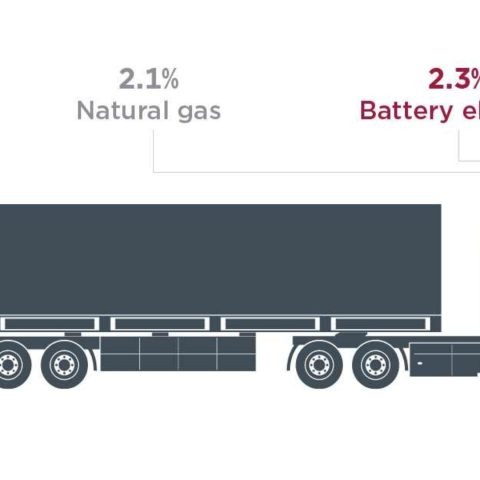
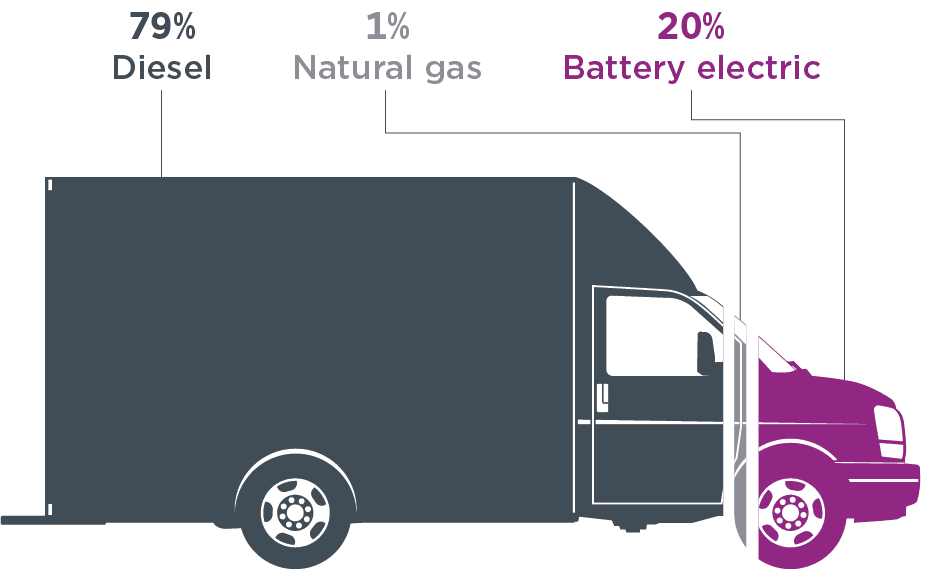
According to the latest ICCT report, over 6,300 new electric trucks were registered in Europe in the first three months of this year. This means 41% more compared to Q1, 2025. In the heavy trucks (>12t) the zero-emission market share nearly doubled from 1.4% to 2.3%, likely, supported by the first 15% CO2 target that came into effect in July 2025. In the medium trucks and vans (3.5–12t), nearly 1 in 5 trucks sold in Europe is now zero-emission (19.7% share).
Zero-emission heavy-duty trucks: the ICCT
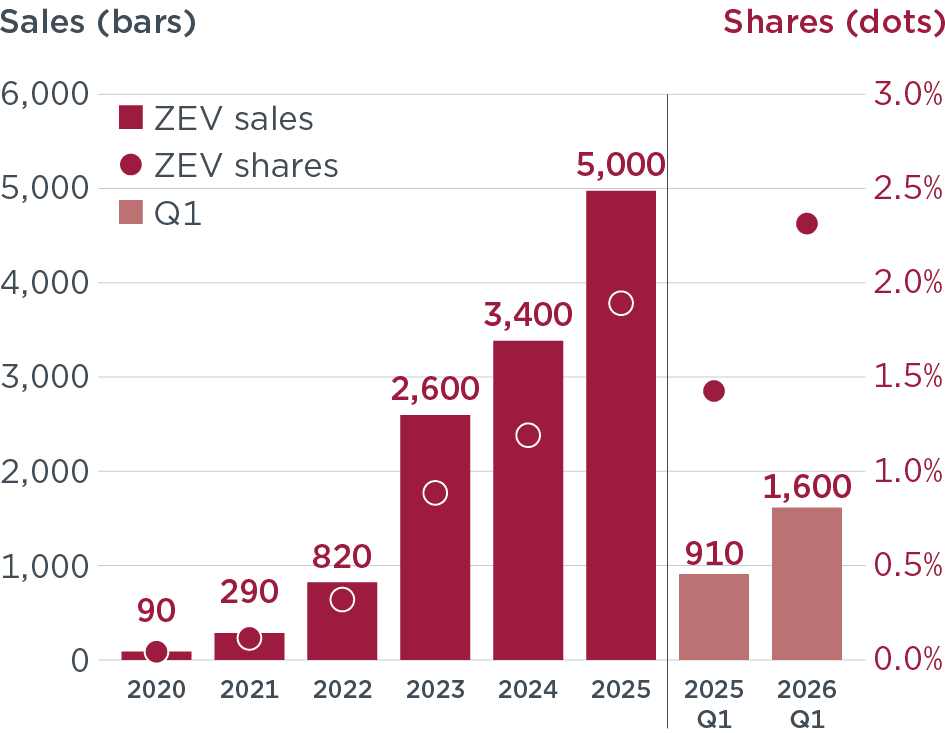
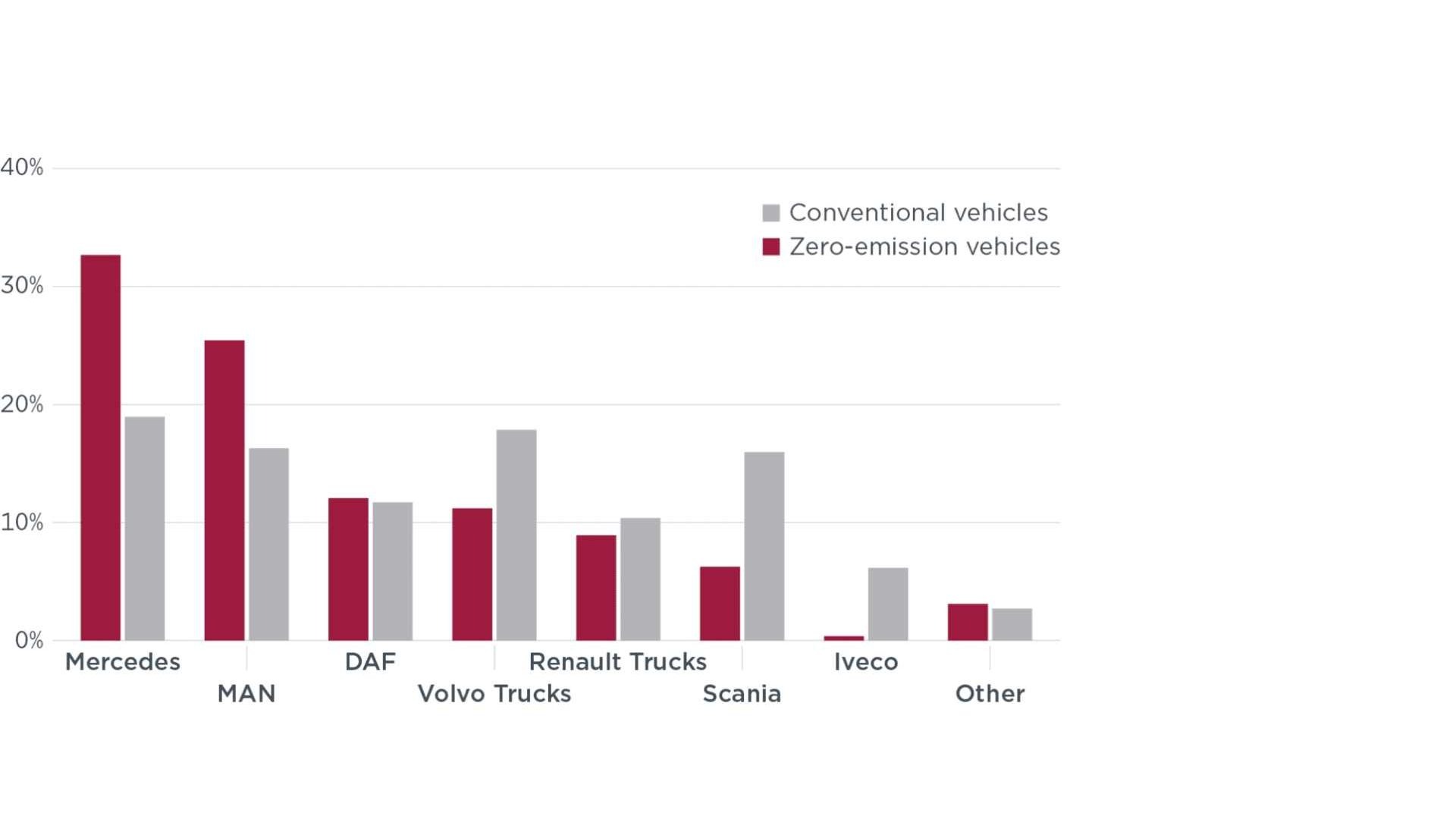
More into details, sales of ZE heavy trucks (with a weight above 12 tonnes) grew rapidly over the past year, nearly doubling from 900 in Q1 2025 (1.4% of all sales) to 1,600 in Q1 2026 (2.3%). Growth was likely bolstered by the introduction of the first CO2 reduction target for this segment in Q3 2025, of 15%. Mercedes remained the top seller of ZE heavy trucks in Q1 2026 followed closely by MAN, which saw a steady rise in sales of its electric TGS and TGX models over the last year.
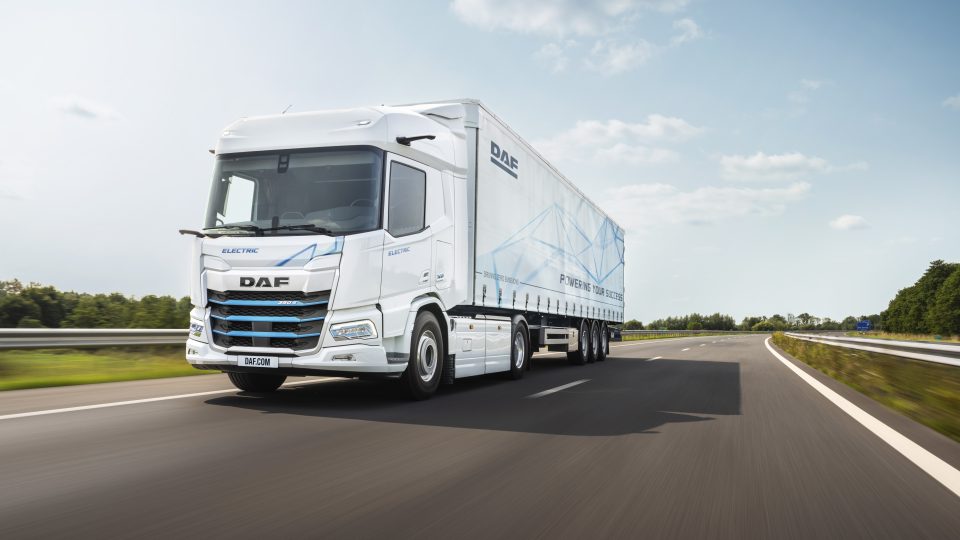
DAF and MAN made significant inroads in the sale of ZE heavy trucks in Q1 2026. DAF started series production of its electric XD and XF series in September 2025 and sold nearly 200 ZE heavy trucks in Q1 2026 (a 2.4% ZE sales share), up from just 12 sales in Q1 2025 (0.2%). MAN more than doubled its sales share of ZE heavy trucks in Q1 2026, reaching 411 sales (a 3.6% share), up from 130 (1.4%) in Q1 2025. Only Mercedes had a greater ZE heavy truck sales volume, selling 530 units in Q1 2026 (a 3.9% share), up from 95 sales (0.9%) in Q1 2025, driven primarily by the success of the eActros.
Sales of ZE heavy trucks increased notably in the Netherlands (338 sales, representing a 10.3% sales share), Sweden (125 sales, 9.7%), and Denmark (100 sales, 10.0%). Austria also saw significant growth. In March 2026, France announced subsidies of €60,000–€110,000 for ZE heavy trucks, set to take effect on June 1, 2026.
Zero-emission medium-duty trucks
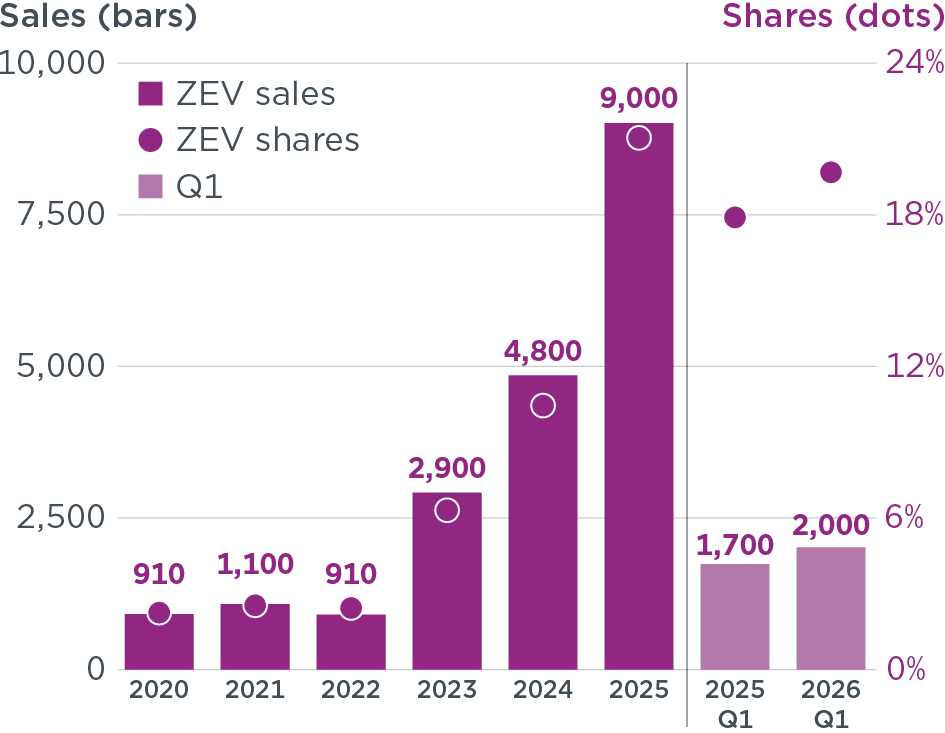
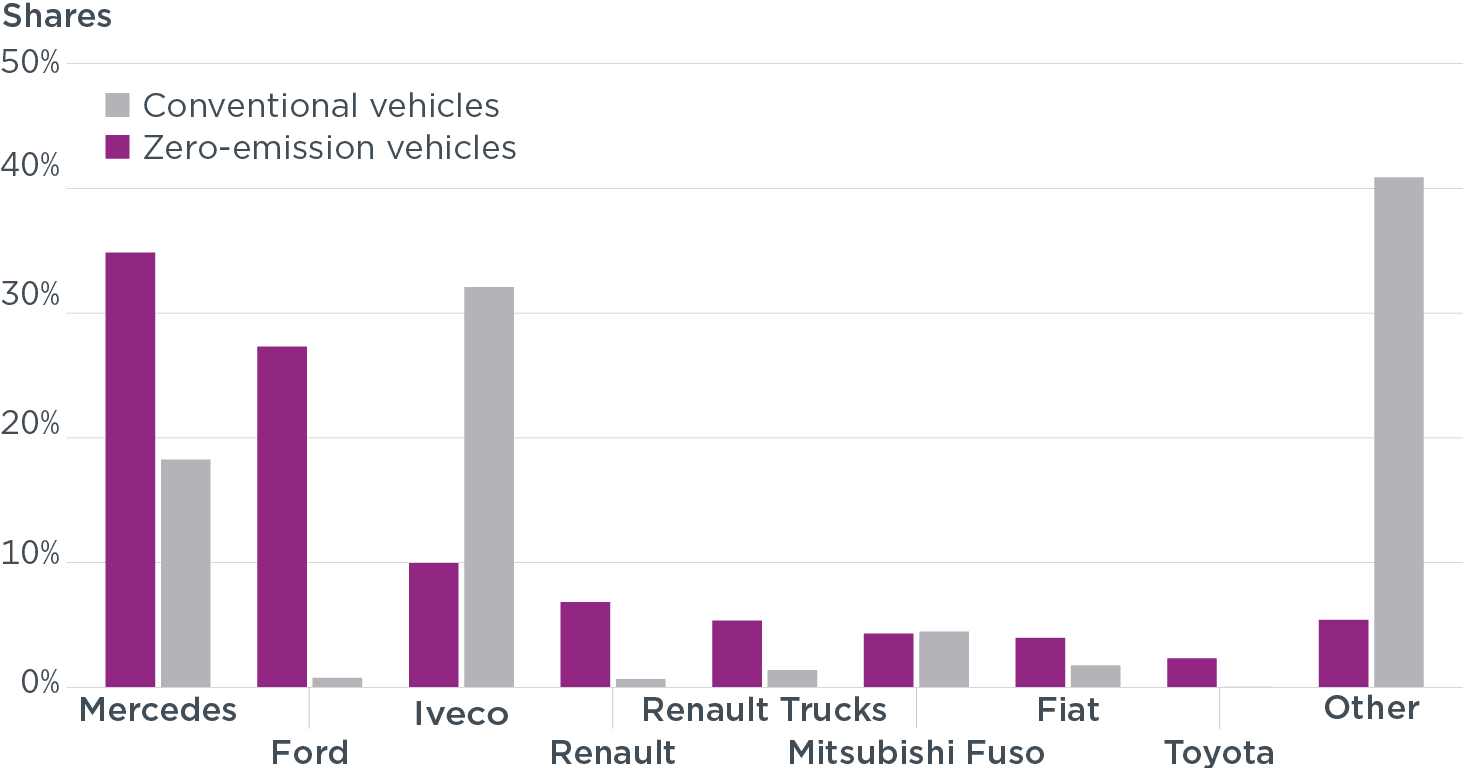
The growth rate of ZE medium truck and van sales decelerated. Sales volumes 2022 and 2025, rising from 900 sales in 2022 to 9,000 in 2025, but increased by just 16% in Q1 2026 relative to Q1 2025. The rapid market growth in this segment has been mostly concentrated in the van sector: over 64% of van sales were ZE in Q1 2026 compared with just 7% of medium truck sales. Continuing a trend from previous years, Mercedes, Iveco, and Ford comprised roughly 70% of the total ZE medium truck and van market. ZE sales shares remained particularly high in Denmark (57.7%), Sweden (60.7%), and the Netherlands (68.9%), each showed a with 2025 shares.
“To comply with the amended standards by 2030, sales would need to rise from 14,000 last year to around 65,000—a 35% annual growth rate for the next five years. The market has actually exceeded that pace in recent years, averaging around 80% annual growth between 2020 and 2025. What’s crucial is that the recent amendment to the CO2 standards has made it much easier for truck makers to earn credits. These additional credits allow manufacturers to miss their 2030 targets and not face any penalty for non-compliance. Prior to the amendment, we calculated that 32% of new trucks would need to be zero-emission by 2030 to comply—the amendment has reduced that share to 16%”, commented ICCT expert Eamonn Mulholland.