
Arcese adds five eActros 300 trucks to fully electrify Italian logistics route
Arcese and Cartiere del Garda have added five Mercedes-Benz eActros 300 trucks to the electric fleet operating between Riva del Garda and Arco, northern Italy. Together with an eActros 600 already in service, the six trucks will completely replace diesel vehicles on a 24/7 logistics operation.
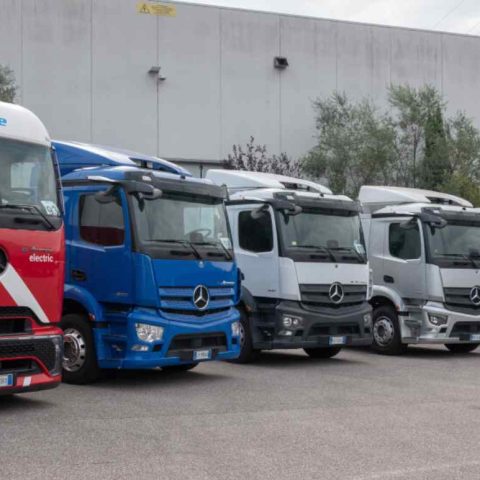
Italian logistics company Arcese has added five Mercedes-Benz eActros 300 electric trucks to the fleet serving Cartiere del Garda, expanding a project that began with the deployment of an eActros 600.
The six battery-electric trucks will now completely replace the diesel vehicles previously used for shuttle operations between Cartiere del Garda’s production plant in Riva del Garda and Arcese’s logistics hub in Arco, in the Trentino region of northern Italy.
From one electric truck to a fully electric operation
The latest deployment follows Arcese‘s purchase of its first Mercedes-Benz eActros 600, announced in 2024. At the time, the Italian logistics company was among the first customers in the country to order Mercedes-Benz Trucks’ battery-electric long-haul model.
The new vehicles therefore mark a significant step forward: rather than operating a single electric truck, Arcese and Cartiere del Garda are now electrifying the entire shuttle service between the two sites.
The route is particularly intensive. Operations run 24 hours a day, seven days a week, with approximately 13,000 complete trips per year, corresponding to around 26,000 truck movements along the local San Giorgio road.
Besides eliminating tailpipe emissions from the six trucks, the companies highlight lower noise levels as an important benefit, particularly because the service also operates at night and runs through populated areas in a region with significant tourism activity.
Charging integrated into daily operations
A key element of the project is the integration of charging into the trucks’ normal working cycle. The electric vehicles can recharge directly while operating at the loading bays, reducing the impact of charging time on vehicle availability.
This makes the project an interesting example of how battery-electric trucks can be introduced into an intensive transport operation when routes, charging infrastructure and vehicle schedules are planned together.