
MAN tests bidirectional charging for electric trucks: up to 350 kW fed back into the grid
The SPIRIT-E research project has demonstrated that electric trucks can supply energy to logistics depots, other vehicles and the public electricity grid. Using a MAN eTGX, researchers tested bidirectional charging at up to 350 kW, identifying potential energy cost savings for fleet operators.
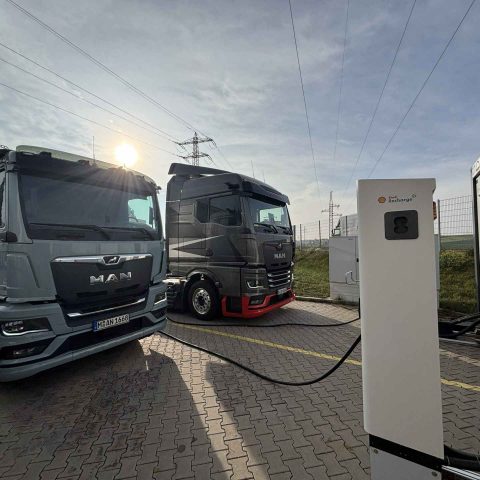
Electric trucks could become more than just vehicles powered by electricity. Thanks to bidirectional charging, their batteries could also serve as energy storage systems, supplying power to logistics depots or feeding electricity back into the public grid when needed.
This is the main finding of SPIRIT-E, a three-year German research project involving MAN Truck & Bus, the Technical University of Munich (TUM) and six other partners. The project, which ran from August 2023 to October 2026, tested bidirectional charging under real operating conditions at the premises of logistics company Schmid, near Regensburg, Germany.
The results, presented on October 30, demonstrate the technical feasibility of the technology while highlighting the economic and regulatory challenges that still need to be addressed before widespread commercial deployment.

What is bidirectional charging and how does it work?
Unlike conventional charging, where electricity flows from the grid to the vehicle’s battery, bidirectional charging allows energy to flow in both directions. An electric truck can therefore store electricity when it is available and subsequently supply part of that energy to other users.
There are three main applications:
- Vehicle-to-Site (V2S): electricity stored in the truck’s battery can be used to power facilities at a logistics depot, helping operators reduce peak electricity demand or make better use of renewable energy generated on site.
- Vehicle-to-Vehicle (V2V): an electric truck can transfer electricity from its battery to recharge another vehicle.
- Vehicle-to-Grid (V2G): electricity can be fed back into the public grid, potentially supporting grid stability or allowing operators to take advantage of fluctuations in electricity prices.
For transport companies, the technology could offer additional value from vehicles that spend several hours parked at depots, particularly when their daily operating schedules are predictable.
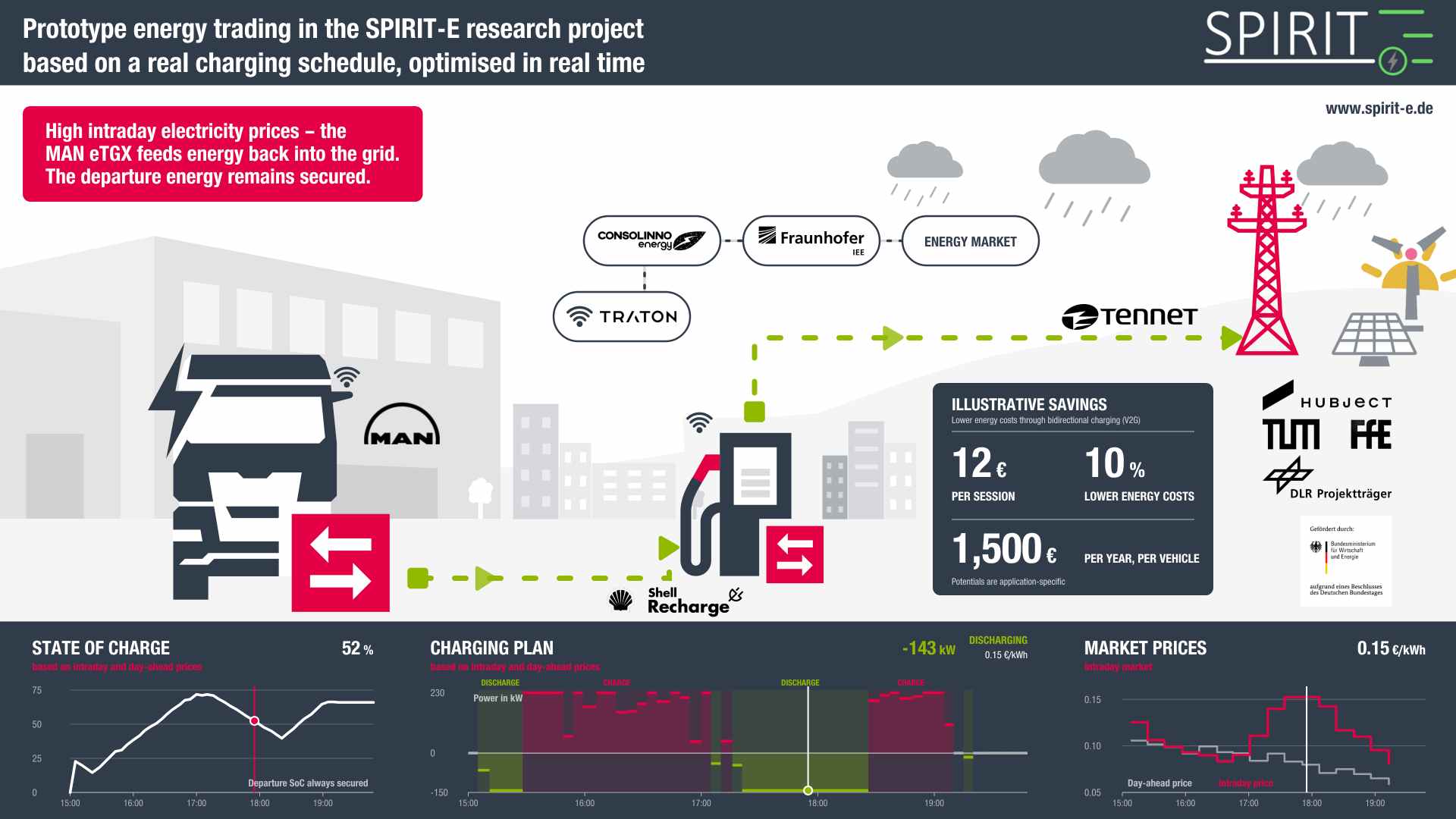
The SPIRIT-E project: a MAN eTGX feeding electricity back into the grid
The German researchers tested the technology using a MAN eTGX equipped with a battery providing 480 kWh of usable energy. Through a bidirectional DC charging station developed by project partner SBRS, the truck successfully supplied electricity to the depot’s local energy network and the public electricity grid, with a power output of up to 350 kW.
The project also demonstrated the possibility of charging other vehicles using energy stored in the truck’s battery. A key technical element was the implementation of the ISO 15118-20 standard, which governs communication between electric vehicles and charging infrastructure, including the exchange of information required for bidirectional energy flows.
Beyond the vehicle itself, the project involved integrating charging systems, depot energy management software, electricity trading platforms and grid operators.
Could bidirectional charging reduce operating costs?
According to calculations carried out within the SPIRIT-E project, intelligent management of the electricity stored in truck batteries could reduce energy costs by around 10% on average, with potential savings of up to 20% under favourable conditions.
However, these figures represent estimated savings rather than guaranteed results. Actual economic benefits depend on several factors, including electricity prices, annual mileage, depot charging infrastructure, vehicle downtime and the availability of renewable energy.
The researchers found that bidirectional charging could be particularly suitable for electric trucks operating less than 100,000 kilometres per year, especially those performing regular regional transport operations and returning to the same depot.
The project also explored electricity trading, simulating scenarios in which truck batteries are charged when electricity prices are low and energy is sold when prices increase. These trading activities were tested in a simulated environment, rather than demonstrated as a fully operational commercial service.
From technical feasibility to commercial applications
Although SPIRIT-E has demonstrated that bidirectional charging can work with heavy-duty electric trucks, several obstacles remain. According to the project partners, the main challenges concern grid connections, standardisation, integration between transport and energy management systems, and the development of viable commercial models.
MAN is now working towards introducing bidirectional charging capabilities into series production, although no specific launch date has been announced.
The results suggest that electric truck batteries could eventually become an active component of depot energy management, potentially reducing operating costs while providing additional flexibility to the electricity system. For fleet operators, however, the priority will remain ensuring that energy management activities do not interfere with the vehicles’ primary function: transporting goods efficiently and reliably.