
Daimler Truck survey: over 40% of fleet decision-makers see TCO advantage for electric trucks
More than 40% of fleet decision-makers surveyed by Daimler Truck consider electric trucks more economical than diesel vehicles in terms of total cost of ownership. However, charging infrastructure remains a major concern, with 61% of respondents questioning the predictability of charging availability.
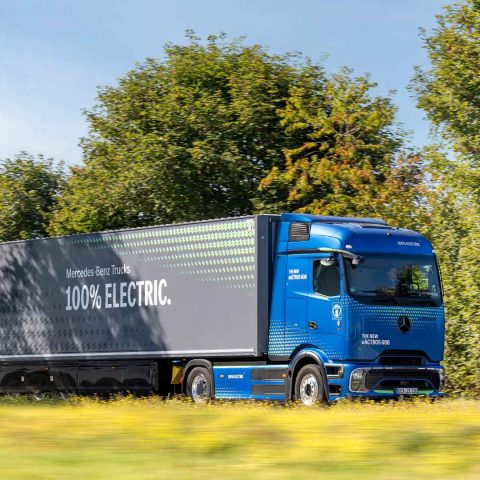
Battery-electric trucks are increasingly perceived as an economically viable alternative to diesel vehicles, at least according to a new survey published by Daimler Truck. More than 40% of the fleet decision-makers interviewed believe electric trucks offer a lower total cost of ownership (TCO), while another 16% consider the two technologies broadly comparable. Around one quarter of respondents still see an economic advantage for diesel trucks.
The survey involved 197 fleet decision-makers in Germany (71), the United Kingdom (64) and France (62), three of Europe’s largest commercial vehicle markets. Daimler Truck explicitly describes the survey as non-representative, meaning its findings cannot be directly generalised to the entire European transport industry.
Nearly one quarter of those interviewed already operate battery-electric trucks, suggesting that a significant proportion of respondents have direct experience with the technology.
Electricity costs are predictable, but charging availability remains a concern
One of the most interesting findings concerns the distinction between energy costs and access to charging infrastructure. Around two thirds of respondents consider electricity costs at least as predictable as diesel prices. However, 61% believe electric trucks are at a disadvantage when it comes to the predictability of charging availability.
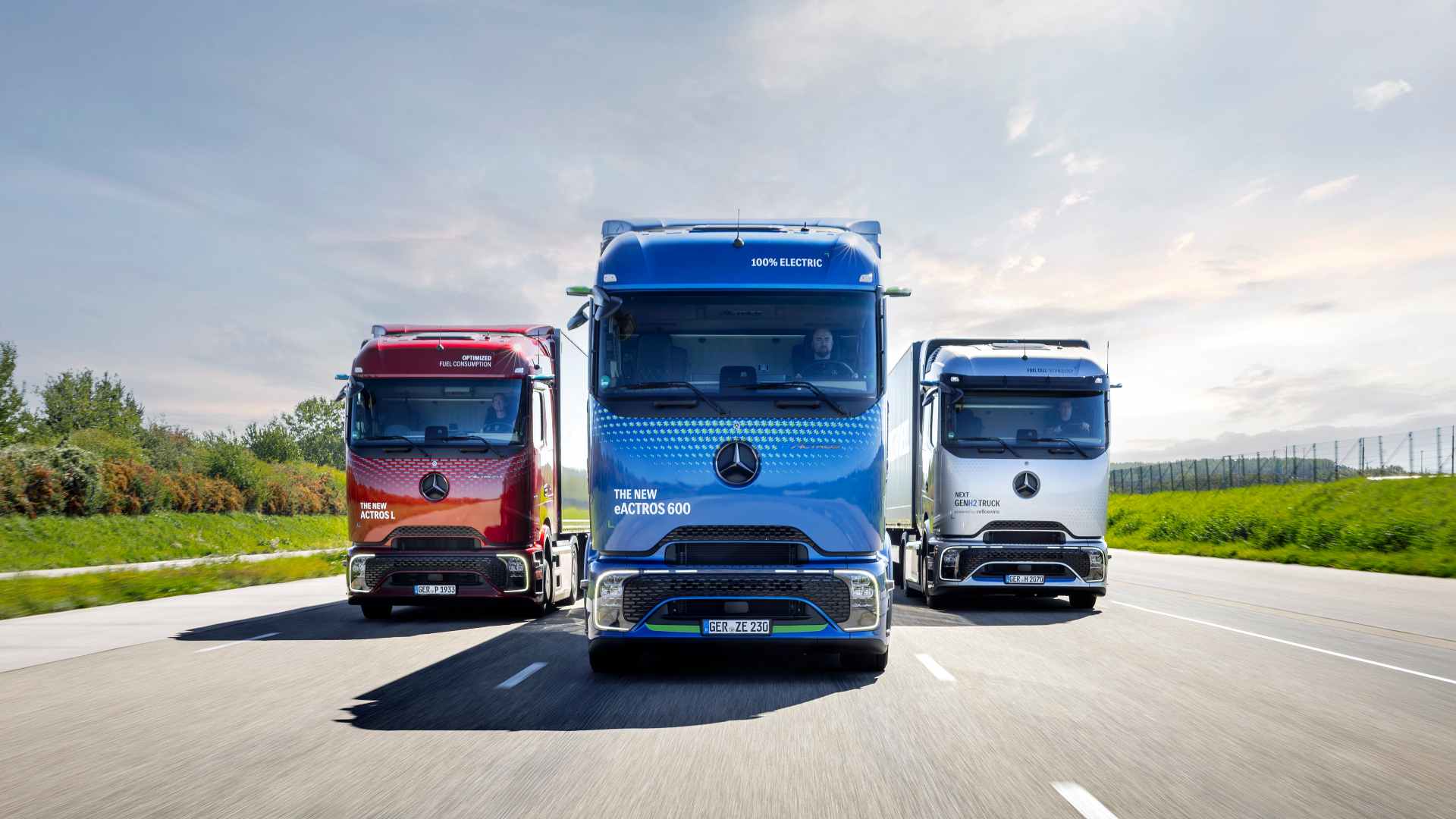
This highlights a critical issue for transport operators: economic competitiveness alone may not be sufficient to encourage the adoption of electric trucks if charging infrastructure cannot reliably support daily operations.
The findings also suggest that the availability of charging facilities, particularly for vehicles operating beyond depot-based or regional routes, remains an important factor in fleet investment decisions.
Electric trucks still account for a small share of the European market
Despite the relatively positive assessment of electric trucks’ operating economics, their actual market penetration remains limited. According to the figures cited by Daimler Truck, battery-electric heavy-duty trucks accounted for only 2% of new registrations in Europe in 2025.
The gap between the economic perceptions recorded in the survey and the actual adoption of electric trucks therefore remains substantial.
The results suggest that the discussion around electric truck competitiveness is gradually extending beyond vehicle acquisition costs to broader operational factors, including energy prices, charging accessibility and infrastructure reliability.
However, the survey reflects fleet managers’ perceptions rather than an independent calculation of actual ownership costs. Its findings should therefore be interpreted as an indication of changing attitudes towards electric trucking, rather than definitive evidence that battery-electric vehicles are already more economical than diesel trucks in every application.