

CATL launches TECTRANS II battery platform for electric commercial vehicles
CATL has introduced TECTRANS II, its next-generation modular battery platform for electric commercial vehicles. The system offers an energy density of 170 Wh/kg and, in its largest configuration, is designed to support up to 1,000 km of range and megawatt charging to 80% in 25 minutes.
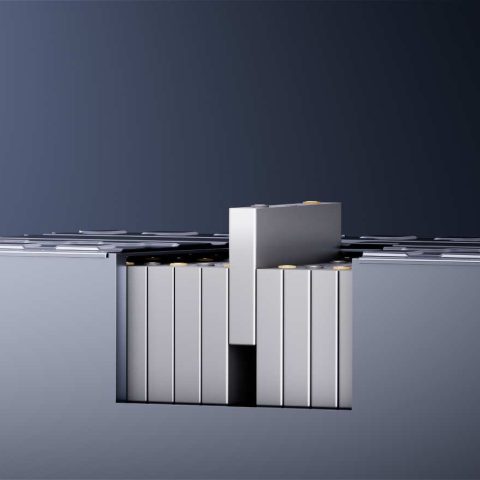
CATL has introduced TECTRANS II, a new modular battery platform developed specifically for electric commercial vehicles, with a focus on adapting battery capacity and technology to different applications without requiring dedicated systems for every vehicle.
Unveiled during IAA Transportation 2026 in Hannover, TECTRANS II is designed around standardised battery packs that can be combined in different numbers according to the vehicle’s energy, range and payload requirements.
The platform is compatible with both e-axle and central-drive architectures and supports conventional charging as well as battery swapping. CATL has also standardised external dimensions, electrical interfaces and communication protocols, with the aim of allowing future battery technologies and pack designs to be introduced without major changes to the underlying vehicle platform.
According to the Chinese battery manufacturer, this approach could shorten vehicle development cycles by 50% and reduce associated R&D costs by between 60 and 70%. These figures are CATL’s own estimates.
Up to 1,000 km and megawatt charging
TECTRANS II reaches a claimed gravimetric energy density of 170 Wh/kg, which CATL says is around 13% above the industry average. According to the company, the resulting weight reduction could provide approximately 600 kg of additional payload compared with a battery of the same capacity using the reference technology.
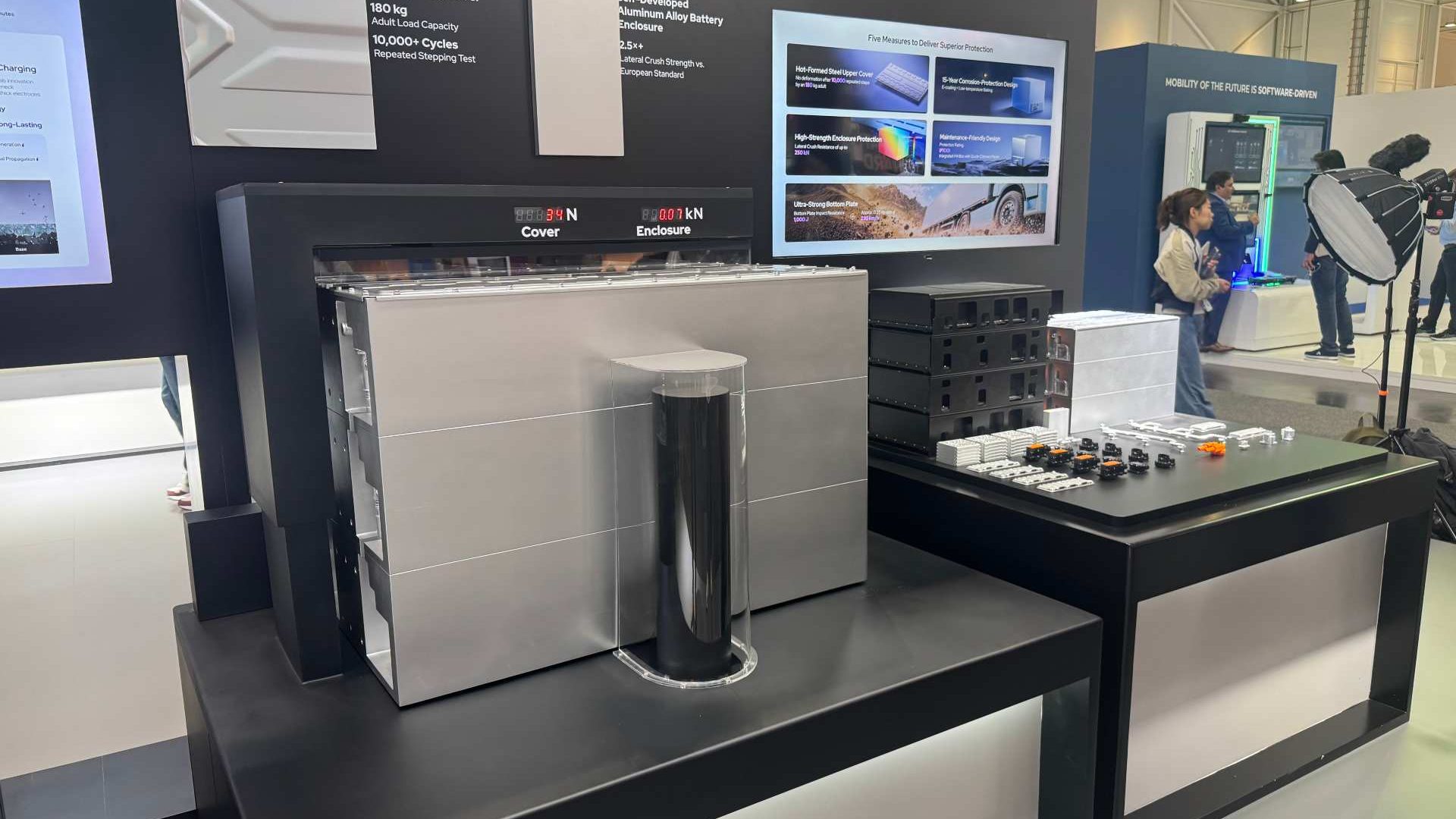
In its maximum battery configuration, the platform is designed to provide up to 1,000 kilometres of driving range. CATL also claims that megawatt-level charging can bring the battery to 80% in 25 minutes.
The company quotes system round-trip efficiency of 96%, enabled by what it describes as the world’s first full-tab, low-impedance design.
For heavy-duty trucks, CATL says TECTRANS II has been engineered for a 12-year or 1.5-million-kilometre service life, with 70% battery capacity remaining at that point.
A modular approach to safety and maintenance
CATL has also designed the battery around the particularly demanding operating conditions of commercial vehicles.
The enclosure combines a hot-formed steel upper cover with an impact-resistant bottom plate and extruded aluminium side protection. CATL quotes 1,000 joules of bottom impact resistance, lateral crush strength of up to 250 kN and corrosion resistance designed for 15 years of operation.
The battery management architecture uses independent branches, allowing a faulty section to be isolated while the remaining branches continue to provide power. The system also incorporates insulation fault diagnostics and multiple levels of cybersecurity protection.
Alongside the launch of TECTRANS II, CATL signed a new memorandum of understanding with DHL Group to develop so-called Green Freight Corridors in Europe. The companies intend to combine DHL’s transport operations with CATL’s battery technology and work with vehicle manufacturers on purpose-built electric vehicles and pilot deployments. The agreement expands on a partnership first established in 2024.