
Italy expands its e-truck charging network with new 400 kW hub near Parma
Ewiva has opened its second ultra-fast charging station in Italy specifically designed for battery-electric trucks. Located near the Parma Ovest motorway exit, the new hub in Noceto strengthens charging infrastructure along one of the country's busiest freight corridors.
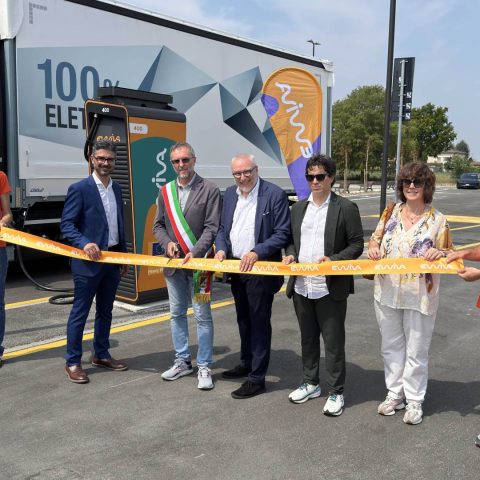
Italy’s charging infrastructure for heavy-duty electric vehicles continues to grow with the opening of a new ultra-fast charging hub in Noceto, near Parma. Developed by Ewiva, the charging point operator backed by Enel Group, the site is specifically designed to accommodate battery-electric trucks and represents another step towards supporting the decarbonisation of long-haul road transport.
The new facility is strategically located close to the Parma Ovest exit of the A1 motorway, one of Italy’s main north-south freight routes linking the country’s industrial heartland with central and southern regions.
A charging hub designed for heavy-duty transport
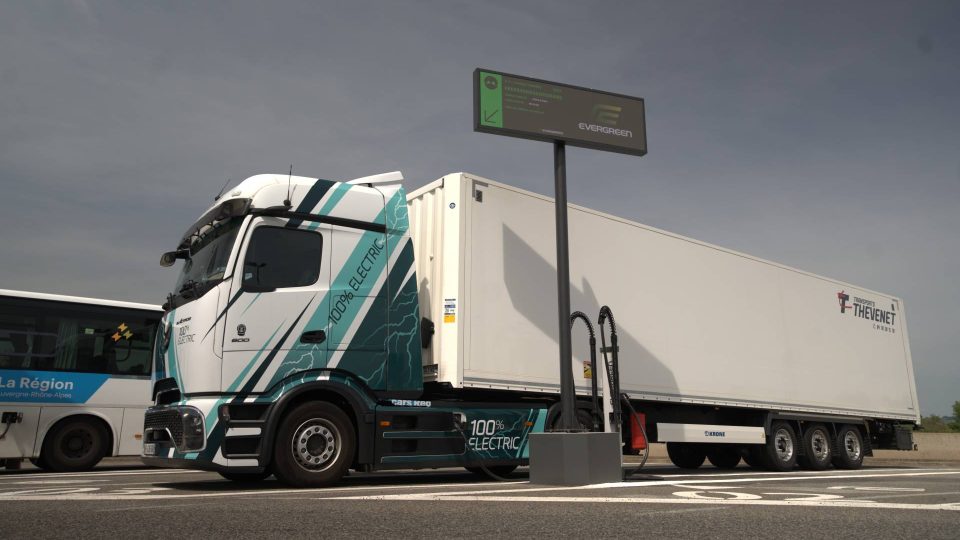
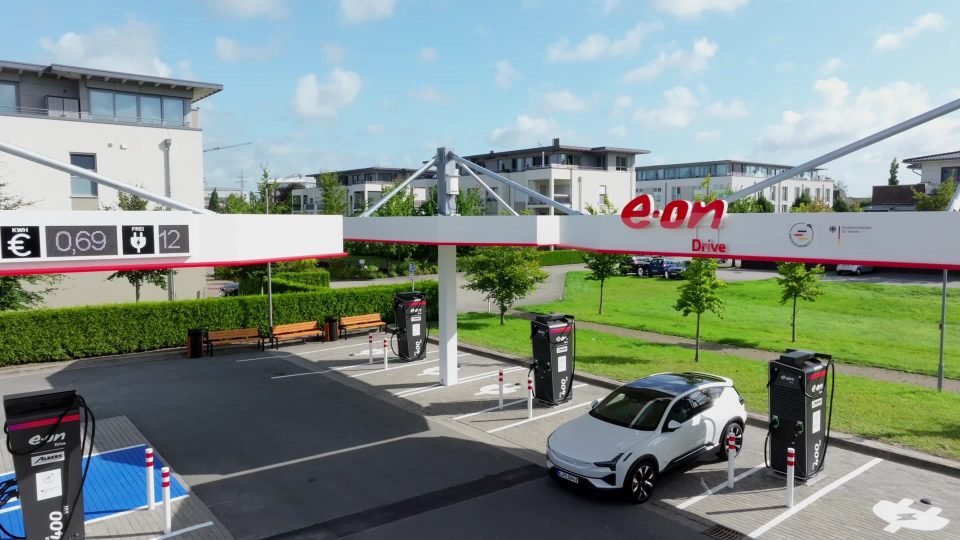
Unlike conventional charging stations primarily intended for passenger cars, the Noceto site has been developed to meet the operational requirements of commercial vehicles. The hub features four ultra-fast charging points delivering up to 400 kW for electric trucks, alongside four additional 300 kW chargers for passenger cars and light commercial vehicles. The layout includes drive-through charging bays measuring 20 metres by 4 metres, allowing articulated trucks and tractor-semitrailer combinations to enter, charge and leave the station without complex manoeuvres.
Strengthening a strategic freight corridor
The choice of Noceto is far from accidental. The Parma area sits at the centre of one of Italy’s most important logistics regions, where major motorway connections intersect with industrial districts, distribution centres and food manufacturing hubs.
By adding dedicated high-power charging infrastructure in this location, Ewiva is helping create the conditions needed to support the gradual deployment of battery-electric trucks on medium- and long-distance routes. The Noceto facility also becomes Ewiva’s second charging hub in Italy specifically developed for heavy-duty vehicles, following the opening of its first dedicated truck charging site in Piacenza.
Supporting the transition to zero-emission logistics
While the availability of electric heavy-duty vehicles continues to increase, charging infrastructure remains one of the key challenges for fleet operators considering the transition to zero-emission transport.
Projects such as the Noceto hub therefore play a strategic role beyond their local significance. They contribute to building a more comprehensive high-power charging network capable of supporting commercial transport across Italy and, ultimately, along the wider European freight corridors. As the market for battery-electric trucks continues to evolve, the expansion of dedicated charging infrastructure is expected to become an increasingly important factor in accelerating fleet electrification.