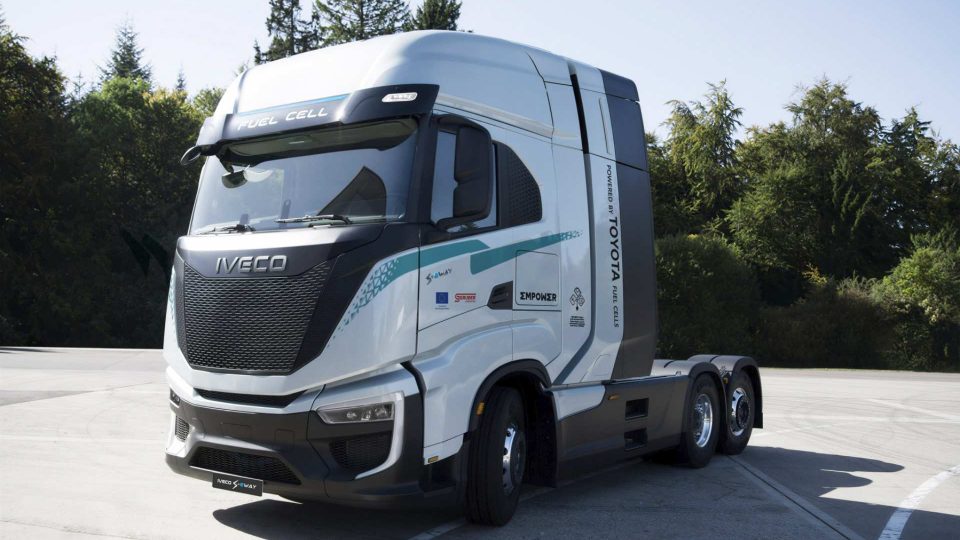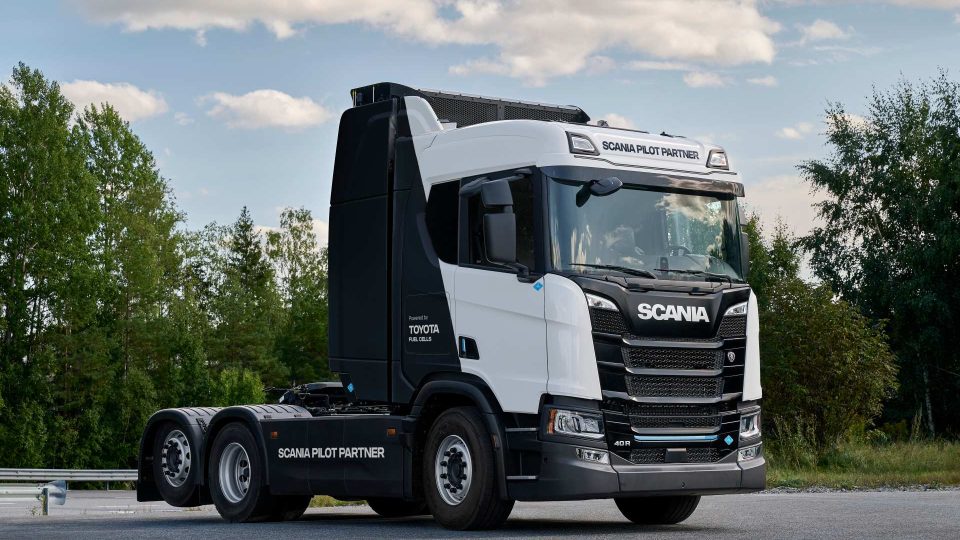


The H2Accelerate consortium releases a whitepaper on hydrogen-powered ICEVs
According to H2Accelerate, H2-ICEVs can help scale the roll-out of hydrogen refuelling infrastructure by driving early fuel demand, while providing a long-term zero-emission solution for very heavy load road and off-road applications, all while building on Europe’s existing knowledge and manufacturing base. Download the whitepaper here.
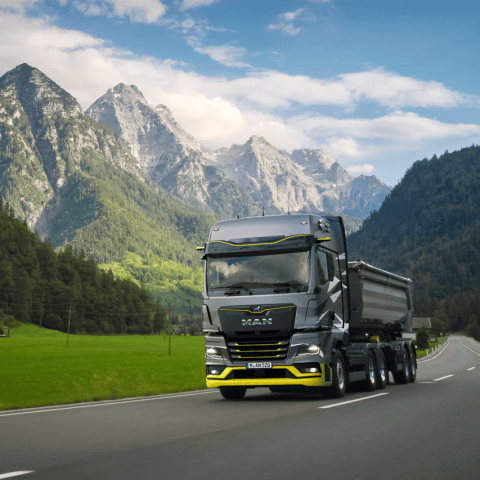
The H2Accelerate collaboration, with the support of other industry leaders, has published a new whitepaper outlining the role of hydrogen internal combustion engine vehicles (H2-ICEVs) in accelerating Europe’s zero-emission vehicle deployment. Here’s the link to the whitepaper.
According to H2Accelerate, H2-ICEVs can help scale the roll-out of hydrogen refuelling infrastructure by driving early fuel demand, while providing a long-term zero-emission solution for very heavy load road and off-road applications, all while building on Europe’s existing knowledge and manufacturing base. To leverage the opportunity of H2-ICEVs, Europe must provide the right support to enable large-scale adoption of these vehicles before the end of the decade.
The H2Accelerate on the role of hydrogen in the future of transportation
Indeed, hydrogen-powered ICEVs can now qualify as zero-emission vehicles under the updated Heavy-Duty Vehicles CO₂ standards, published in May 2024. Drawing on decades of expertise with conventional internal combustion engines, the automotive sector can repurpose existing manufacturing capacity, supply chains, and engineering expertise to scale H2-ICEV deployment.
As a result, H₂-ICEVs can achieve scaled deployment by the end of the decade and are projected to be the least upfront capital-intensive zero-emission technology until battery electric (BEV) and fuel cell electric vehicle (FCEV) markets reach higher maturity.
What EU institutions could do
Despite meeting the definition of zero-emission vehicle, H₂-ICEVs are not yet classified equally with other zero-emission technologies across Europe. H2-ICEVs have been excluded from incentivising mechanisms and, in some Member States, remain unable to refuel from existing HRS infrastructure due to existing energy taxation legislation. To unlock the full potential of H₂-ICEVs and accelerate decarbonisation, European policymakers should, according to H2Accelerate, ensure that hydrogen ICEVs are classified as zero-emission vehicles across all EU Member States, as well as ensure equal treatment of zero-emission vehicle technologies.
“Hydrogen internal combustion engines are emerging as a key component of Europe’s zero-emission mobility strategy. This technology can be deployed rapidly, at scale, and at a cost-competitive price with diesel equivalents, while supporting the growth of a pan-European hydrogen refuelling network this decade. With a level policy playing field, H₂-ICEVs can accelerate the decarbonisation of heavy-duty transport and support a widespread hydrogen refuelling network”, commented Hannah Bryson-Jones, Spokesperson for the H2Accelerate collaboration.