

In Italy, Acqua Sant’Anna transports bottled water with zero-emission Scania trucks
Three Scania electric tractors with 540 hp, 535 kWh batteries and a claimed range exceeding 500 kilometres. The partnership between Acqua Sant'Anna, Ballario Trasporti and Scania Italia brings electrification to bottled water transportation, with charging partly powered by solar energy. We visited Vinadio to learn more about the project and its future prospects.
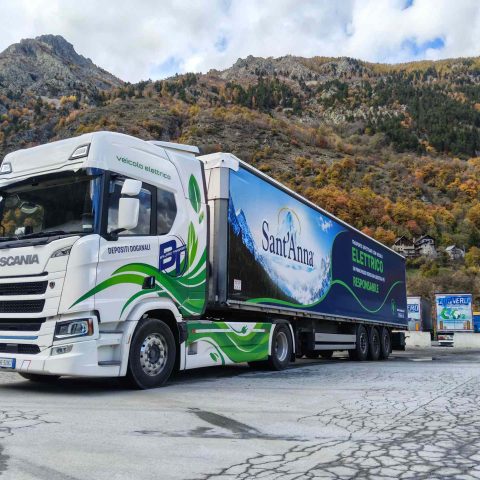

The bottled mineral water produced in Vinadio, a small town in Piedmont, northern Italy, close to the French border, needs to be transported elsewhere, as the site houses the production facility but no warehouse. For several months now, Acqua Sant’Anna, together with its logistics partner Ballario Trasporti, has been using three Scania electric trucks to transport bottled water from Vinadio to nearby logistics hubs.
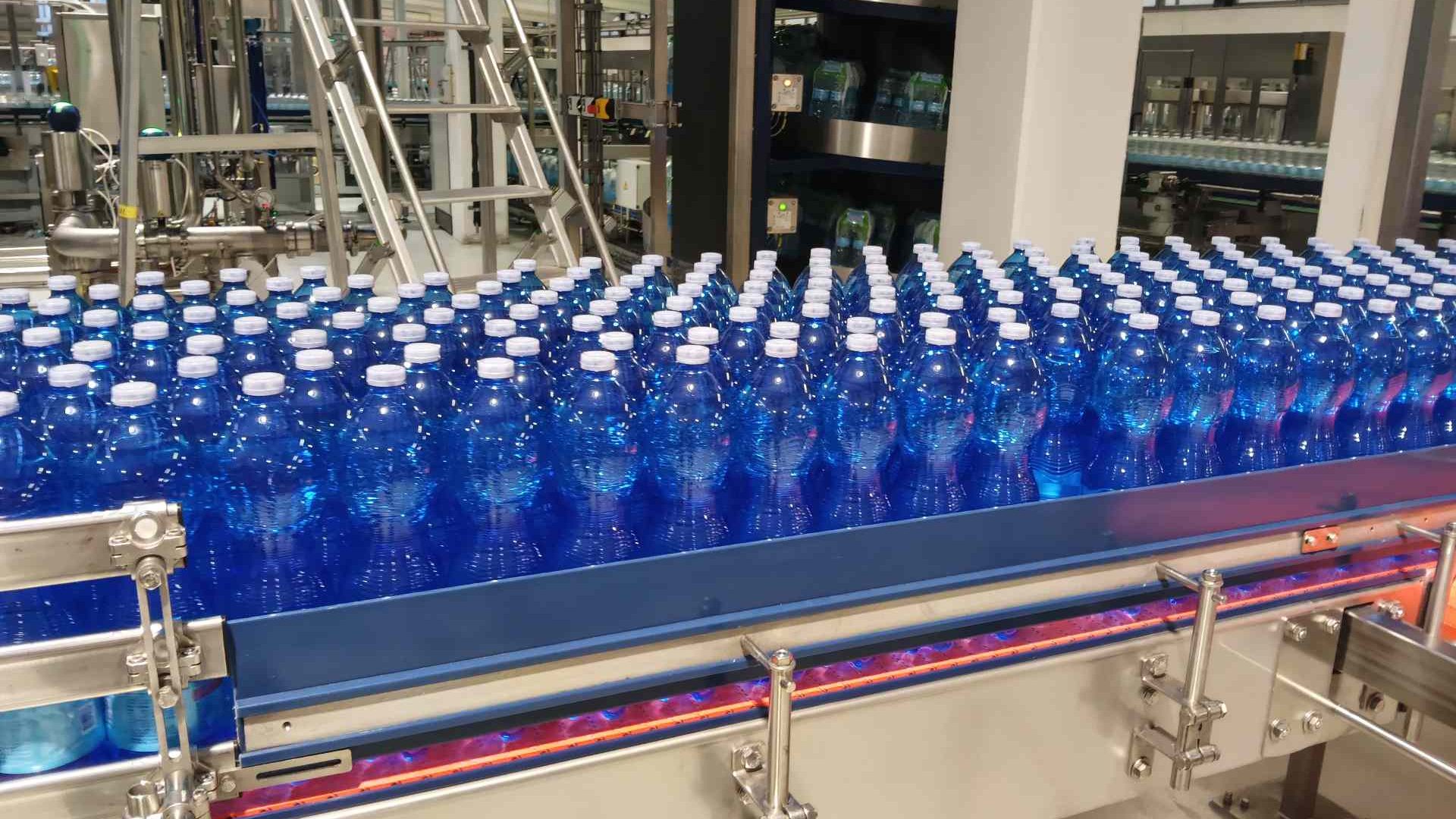
The initiative “aims to integrate electric propulsion into everyday transport operations through careful planning of routes and charging requirements”, as explained during the press conference officially presenting the project.
The operating environment is particularly significant. The Vinadio plant, located at approximately 1,000 metres above sea level, is the heart of Acqua Sant’Anna’s production activities, with volumes reaching 10,000 pallets per day, according to figures presented at the event. This production feeds a logistics network consisting of a central hub and 17 regional warehouses throughout Italy.
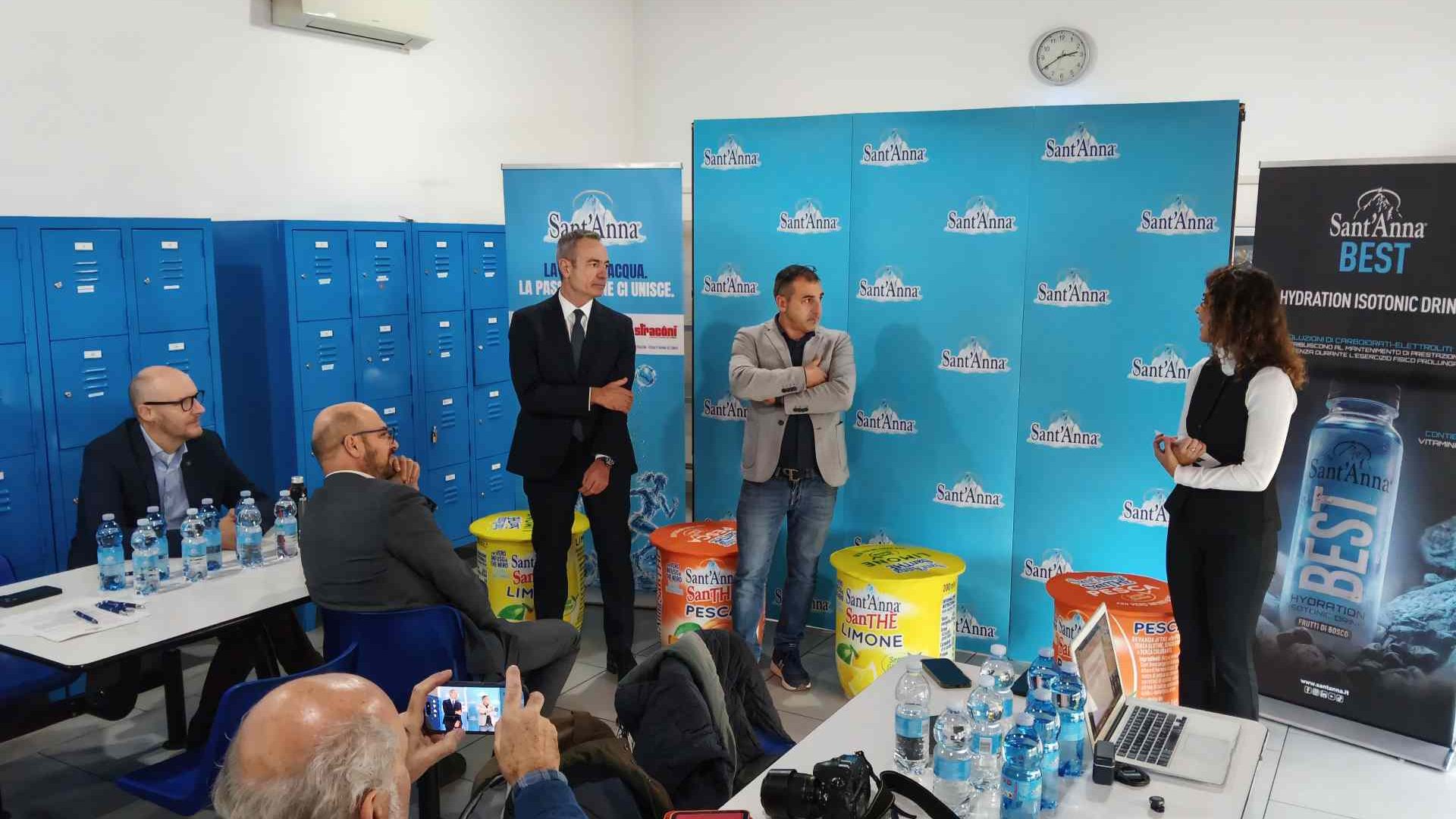
The introduction of electric trucks “is part of a broader reorganisation of our logistics operations, which already includes the use of rail and maritime transport”, explained Luca Cheri, CEO of Acqua Sant’Anna. “Our objective is to improve the integration of production and distribution activities, also in relation to the local area and its communities.”
Three electric Scania trucks with 540 hp and 480 kWh of usable battery capacity
From a technical perspective, as explained by Simone Martinelli, Electric Mobility Specialist at Scania Italia, the project involves three Scania 40 R 4×2 electric tractor units, equipped with a 400 kW electric powertrain, equivalent to approximately 540 hp.
The six battery packs provide a total installed capacity of 535 kWh, of which 480 kWh are usable. This configuration was selected following a detailed analysis of the transport missions, taking into account routes, payloads and operational requirements.
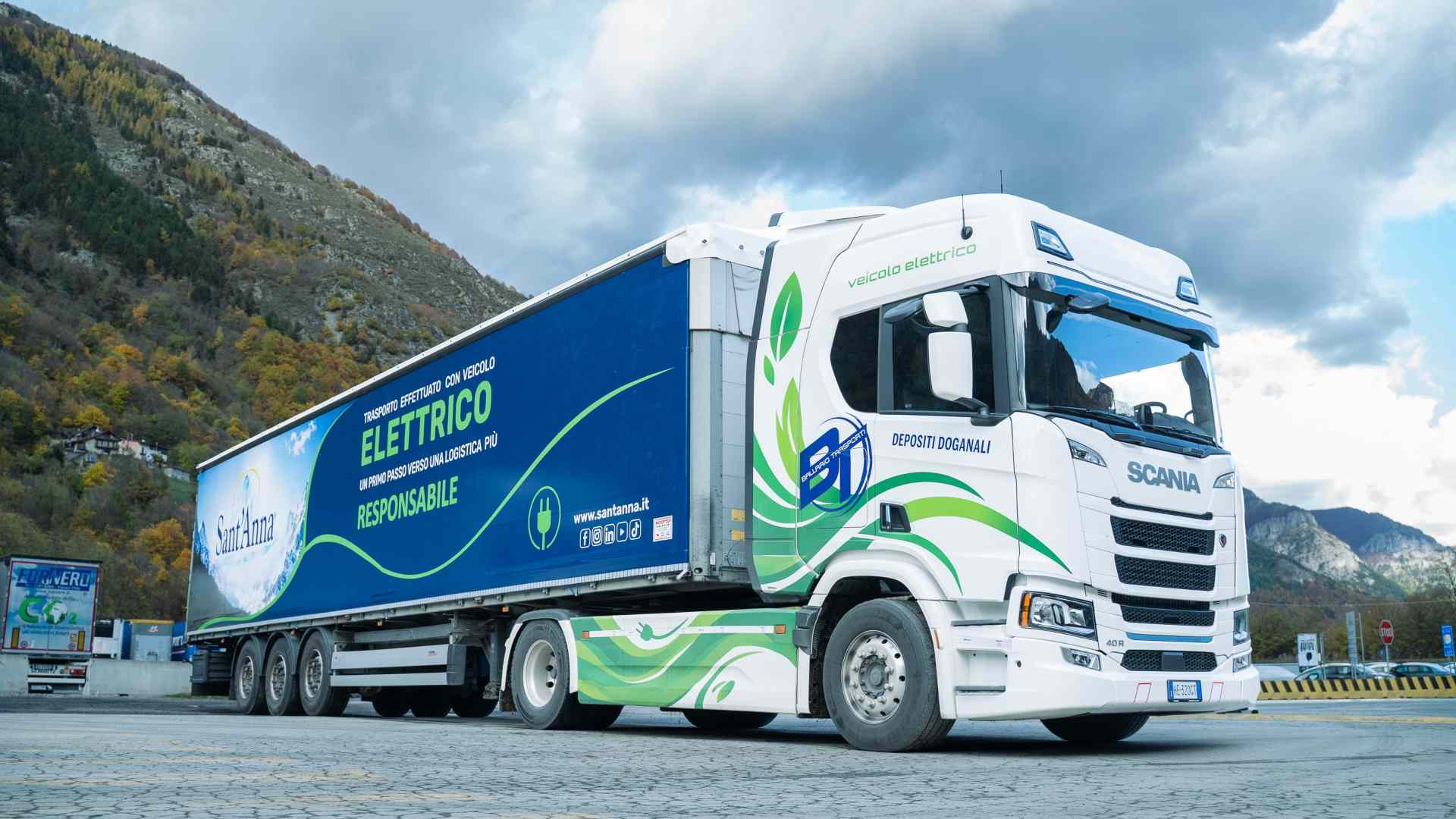
According to data provided by Scania, the vehicles have recorded average energy consumption below 1 kWh per kilometre, with a range exceeding 500 kilometres in this specific Acqua Sant’Anna application.
These results highlight the importance of correctly matching vehicle and battery specifications to the transport mission, particularly when heavy loads are involved.
An additional factor contributing to energy efficiency is the particular geography of the routes. The trucks leave the Vinadio production facility, located at approximately 1,000 metres above sea level, travelling predominantly downhill with full loads, allowing them to recover part of their energy through regenerative braking.
On the return journey, they travel uphill but without cargo, resulting in lower energy consumption than would be required when fully loaded. This combination is particularly favourable for electric propulsion and helps explain the efficiency levels achieved in this specific application.
Charging takes place at Ballario Trasporti’s main depot, which is also equipped with a photovoltaic installation contributing to the electricity supply for the vehicles.
Ballario Trasporti: electrification through cooperation
For Ballario Trasporti, the company responsible for transporting Acqua Sant’Anna mineral water, one of Italy’s most widely consumed bottled water brands, the initiative represents another step in the gradual introduction of electric propulsion into its operations.
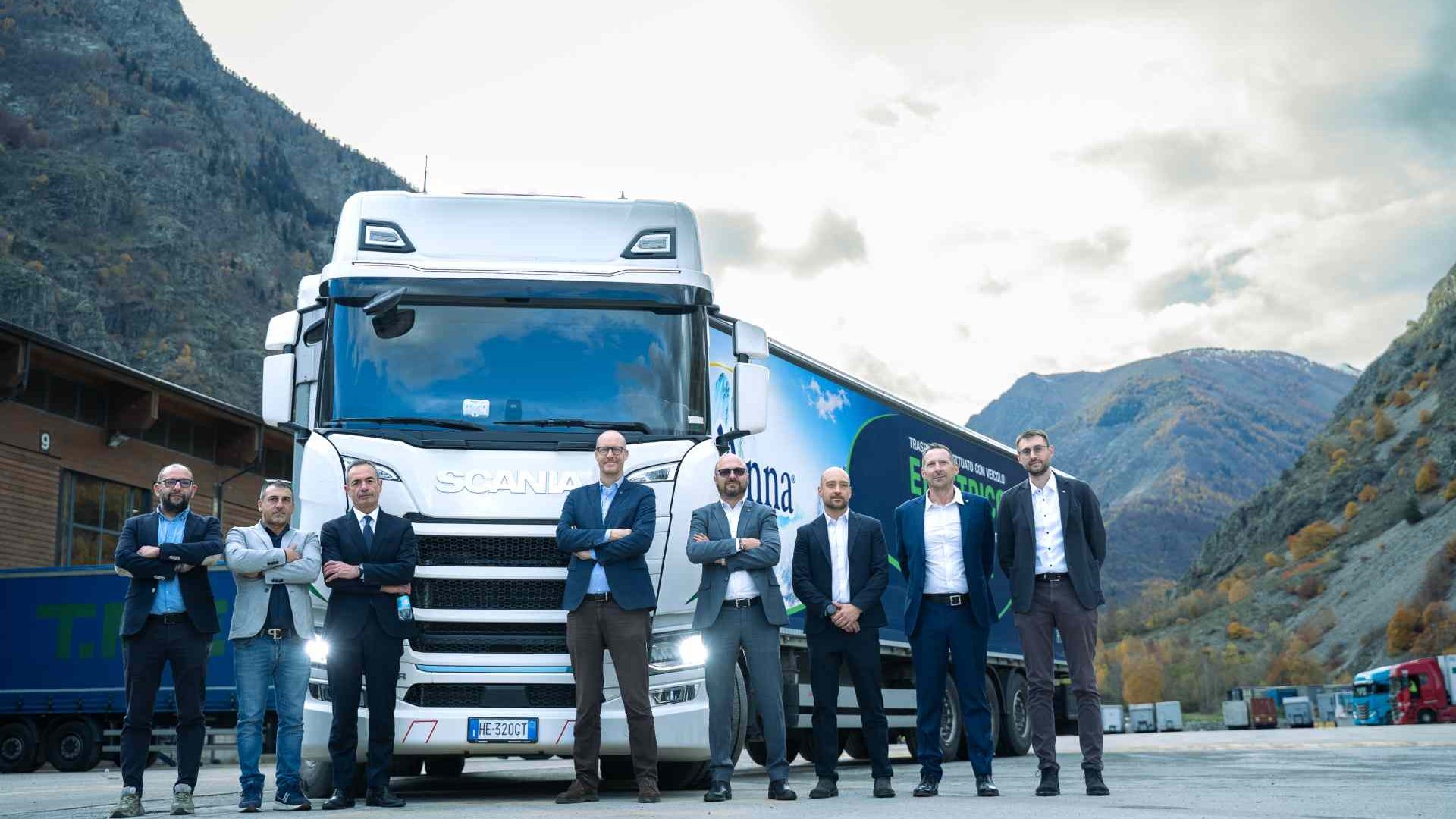
During the presentation, Giuseppe Bernocco, CEO of Ballario Trasporti, explained that the company’s fleet currently includes five electric vehicles. He also emphasised the importance of cooperation between the transport operator, its customer and the vehicle manufacturer in managing an investment that requires significant organisational efforts.
Scania is directly involved in this cooperation, having supported the transport operator in defining the routes and selecting the most appropriate vehicle configuration.
Fredrik Swartling, Managing Director of Scania Italia, reaffirmed the manufacturer’s commitment to the electrification of heavy-duty transport, highlighting the need to accompany the introduction of electric trucks with an adequate service and support network. As a matter of fact, Scania is currently working on strengthening this aspect of its business, both in Italy and in other markets.