

Kögel focuses on payload with new e-truck-optimized and lightweight trailers
Kögel is addressing payload from two different angles with its latest semi-trailers. The Light Plus e-optimized changes load distribution to better accommodate heavy electric tractors, potentially adding up to 4.3 tonnes of payload, while the new Cool Liteshell refrigerated trailer cuts around 700 kg compared with its predecessor.
How much payload can an electric truck actually carry? The answer does not depend solely on battery weight or the tare weight of the semi-trailer. How that weight is distributed across the axles of the complete combination can also become a limiting factor.
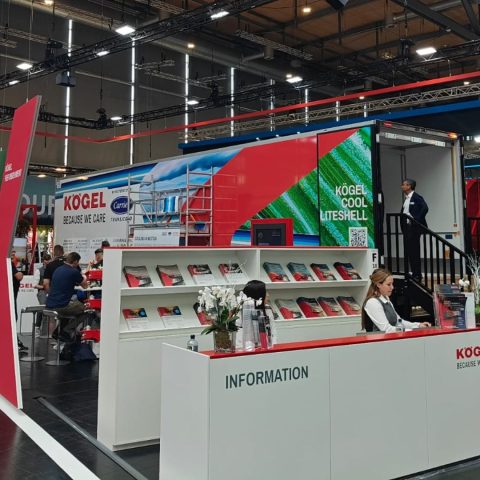
This was one of the points highlighted by Kögel at IAA Transportation 2026, where the German manufacturer presented solutions for refrigerated and general cargo transport, alongside an updated tipper for construction applications.
Potrebbe interessarti
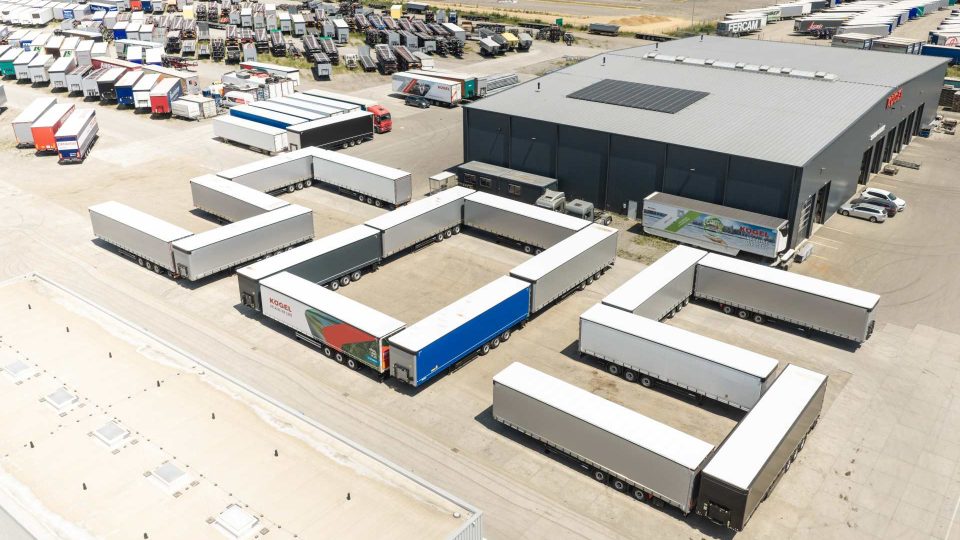
SOS-VECTO. Kögel is worried about the fines and shows it up with the trailers
“When you think about electrification, you have to consider what is in front and what is behind,” Maximilian Franz, Vice President Marketing and Communications at Kögel, told Sustainable Truck&Van during our visit to the company’s stand in Hannover.
He was referring in particular to the Light Plus e-optimized, displayed in combination with a Mercedes-Benz eActros 600 but designed to operate with electric tractors from different manufacturers.
Kögel Light Plus e-optimized: addressing axle load, not just weight
The batteries required by heavy-duty electric trucks increase tractor weight and can make the load on the drive axle the effective constraint on payload, even when the permitted gross combination weight would theoretically allow more cargo.
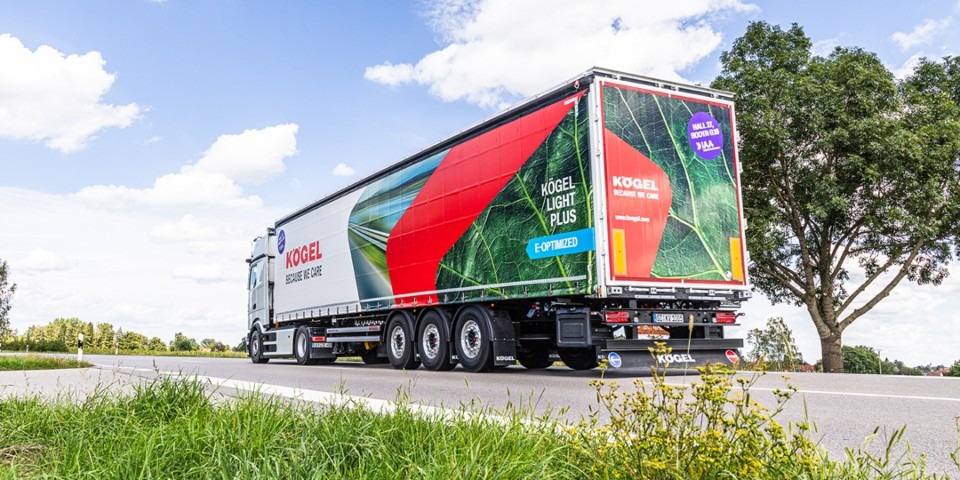
Kögel has therefore modified the geometry of its Light Plus curtainsider. The distance between the kingpin and the semi-trailer’s first axle has been shortened by 300 mm, changing the way weight is distributed across the combination.
According to the manufacturer, depending on the tractor and vehicle configuration, the solution can provide up to 4.3 tonnes of additional payload. Kögel also says the modification does not result in increased tyre wear when cornering. An e-optimized version of the Mega Light is expected by the end of 2026.
Cool Liteshell cuts around 700 kg
For temperature-controlled transport, Kögel is taking a more conventional route to increasing payload: reducing the trailer’s own weight.
First presented as a prototype at the previous IAA Transportation, the Cool Liteshell refrigerated semi-trailer is now commercially available. The vehicle displayed in Hannover is destined for rental company TIP.
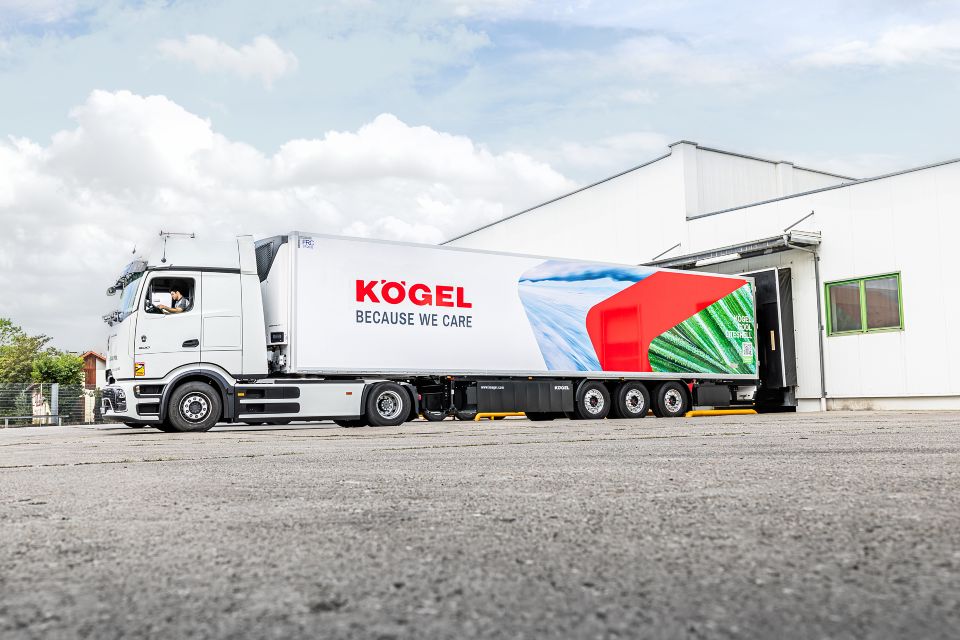
The sidewall and roof panels do away with the traditional external steel skin. Instead, the structure uses a thermoplastic polyurethane outer layer and polyurethane foam insulation, while the floor incorporates glass-fibre-reinforced components.
According to Kögel, the result is a weight reduction of around 700 kg compared with its previous refrigerated trailer, potentially turning that saved mass directly into additional payload.
Kögel also estimates a potential diesel saving of 0.30 litres per 100 km. However, Franz told Sustainable Truck&Van that the greater benefit comes when an operator can use the additional payload capacity to reduce the number of journeys required.
To help operators assess the impact under different operating conditions, Kögel has also made available a calculator taking into account factors including annual mileage, fuel consumption and the weight difference compared with the trailer currently in use.
The Cool Liteshell displayed at IAA was equipped with a Carrier Transicold refrigeration unit. Kögel does not manufacture the refrigeration systems itself, but integrates units supplied by specialist partners, allowing operators to select the most appropriate solution, including electrified refrigeration systems.
An updated tipper for construction and asphalt transport
Kögel also displayed an updated semi-trailer tipper, with a tare weight of 5.7 tonnes in its basic configuration.
The welded body uses wear- and corrosion-resistant steels. Depending on the configuration, the sidewalls range from 3 to 6 mm in thickness, while the floor ranges from 4 to 8 mm. The chassis is designed to combine low weight with the structural strength required during tipping operations.
A hydraulically operated tailgate removes the need for manual opening before unloading.
For asphalt transport, PIR rigid-foam insulation is available with either steel or aluminium cladding. Choosing aluminium reduces tare weight by around 150 kg compared with the steel version. A sliding roof, operated either manually or remotely, completes the configuration.
Kögel targets at least 80% recycled materials for future trailer
Kögel is also working with TSR and REMONDIS on a pilot semi-trailer using a high proportion of recycled materials. The project involves analysing steel, aluminium, wood and other materials that can be recovered from end-of-life vehicles.
During our visit to the stand, Franz told Sustainable Truck&Van that the ambition is for at least 80% of the materials used in the new trailer to be recycled, while maintaining the same quality standards expected from a semi-trailer manufactured using virgin raw materials.
That target still needs to be validated through development and testing. A prototype is expected within the next one to two years.