

Sweden, Stena Recycling gets funding to build new battery recycling plant in Halmstad
The Swedish Energy Agency decided to support the company by giving Stena about 6.8 million euros. The facility is expected to initially handle around 10,000 tonnes of batteries per year. This will include lithium-ion batteries from electric cars as well as industrial and consumer products.
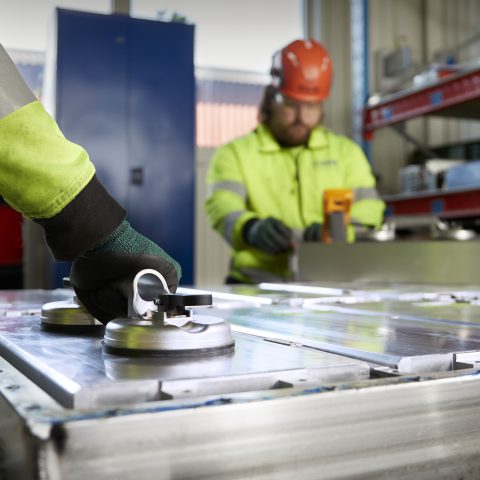
Stena Recycling, Swedish specialist in battery recycling, wants to invest in the construction of a battery recycling plant in the Halmstad area. The Swedish Energy Agency decided to support the company by giving Stena about 6.8 million euros. The facility is expected to initially handle around 10,000 tonnes of batteries per year. This will include lithium-ion batteries from electric cars as well as industrial and consumer products. In addition, battery centers are being established around Europe to ensure an infrastructure for collecting the batteries.
Stena Recycling introducing an advanced technology
«We are very pleased that the Swedish Energy Agency has granted our application and see it as important and natural to contribute to closing the loop of valuable materials contained in batteries. We are introducing an advanced technology and it is exciting that we are now breaking new ground and setting the standard in battery recycling. Our goal is to have the plant operational in the first quarter of 2023», declared Fredrik Pettersson, CEO of Stena Recycling Sweden.
Potrebbe interessarti

UK, Britishvolt and Glencore will cooperate to enhance battery recycling
«Electrification is a crucial piece of the puzzle in the work for a fossil-free society where batteries will be a central part of the future energy system. This important project means that we can create a battery value chain that is sustainable and circular from environmentally and climate- smart production to recycling, so we are not just shifting emissions from one activity to another», added the Swedish Energy Agency’s Director General Robert Andrén.
Stricter requirements on battery recycling
Stena Recycling’s investment in battery recycling aims to meet the substantial increase of batteries predicted in society, and to stay ahead of the EU directive that is scheduled to come into force from 2025. The directive will impose stricter requirements on battery recycling and the recovery of valuable materials such as cobalt, lithium and nickel, which in turn will reduce the need for the extraction of virgin minerals and metals. Stena Recycling has chosen a new technology for the recycling of lithium-ion batteries that is expected to provide a higher recycling rate and a lower climate impact than existing melting furnace technology. In short, the technology is based on grinding batteries in an inert environment. This is followed by an advanced process to separate the different fractions in order to recover valuable metals.