
SVOLT begins series production of 100 kWh semi-solid-state batteries in China
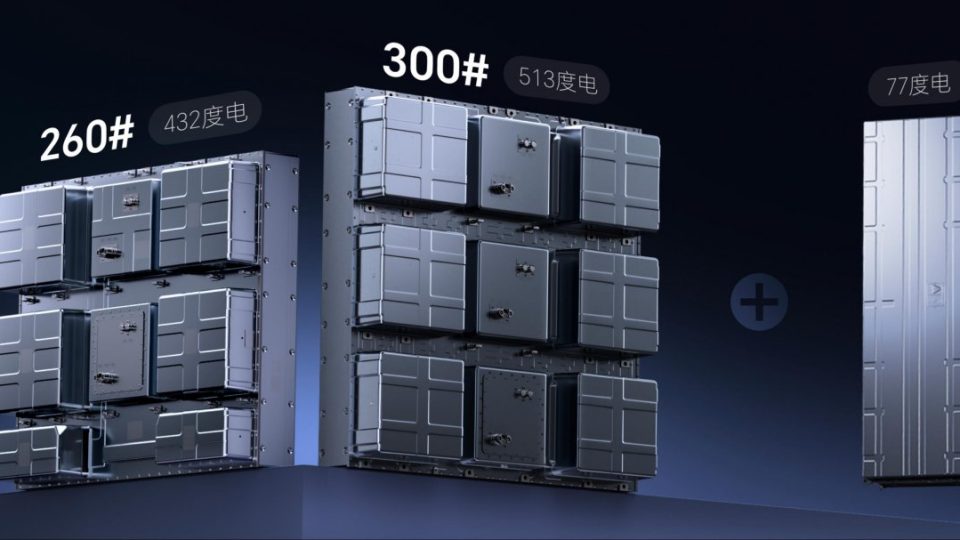
Chinese battery manufacturer SVOLT has produced its first batch of 100 kWh semi-solid-state battery packs at its Changzhou facility. The new Dragon Armor battery features a 900V architecture, supports 6C fast charging and represents a further step towards the commercialisation of next-generation battery technologies.
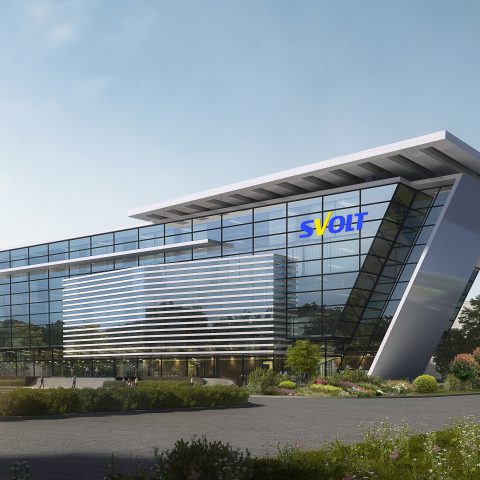
Chinese battery manufacturer SVOLT Energy has announced the start of series production of its 100 kWh semi-solid-state battery packs, marking an important milestone in the development of next-generation energy storage technologies for electric vehicles.
The first batch of the company’s Dragon Armor battery packs rolled off the production line in Changzhou, in China’s Jiangsu province, on October 26. The announcement was made by SVOLT Chairman and CEO Yang Hongxin, who also confirmed that the new battery has been selected for several vehicle programmes, although the names of the customers and the models involved have not yet been disclosed.
Originally established as the battery division of Great Wall Motor before becoming independent in 2018, SVOLT develops battery cells, packs and energy storage solutions.
What are semi-solid-state batteries?
Semi-solid-state batteries, also known as solid-liquid hybrid batteries, represent an intermediate technological approach between conventional lithium-ion batteries and fully solid-state batteries.
While traditional lithium-ion batteries rely on liquid electrolytes to transport ions between electrodes, semi-solid-state batteries combine liquid and solid electrolyte components. The objective is to improve characteristics such as safety, energy density and durability while maintaining manufacturing processes that can be adapted more readily to industrial production.
Fully solid-state batteries, by contrast, aim to replace liquid electrolytes entirely with solid materials. Although this technology is widely regarded as promising, significant challenges remain before it can be manufactured economically on a large scale.
SVOLT considers semi-solid-state technology more than a temporary solution. According to Yang Hongxin, hybrid solid-liquid batteries could become a mainstream technology in the long term, particularly for electric vehicles using ternary lithium-ion battery chemistries.
Dragon Armor: 900V architecture and 6C charging
The new 100 kWh Dragon Armor battery pack incorporates several technical features designed to support fast charging, safety and long service life. According to SVOLT, the battery uses a proprietary separator transfer-printing process at cell level, combined with a high-speed stacking manufacturing technique.
The pack features liquid cooling systems on both its upper and lower sides, helping manage the heat generated during high-power charging. It supports a 900V electrical architecture and a maximum charging rate of 6C, which theoretically corresponds to charging a battery at six times its rated capacity per hour.
SVOLT claims that the technology could replenish enough energy to cover 500 kilometres in approximately 12 minutes. However, the company has not disclosed the vehicle configuration, test cycle or charging conditions underlying this figure.
The manufacturer also reports a cycle life exceeding 3,000 charge-discharge cycles, corresponding to a theoretical vehicle operating distance of more than one million kilometres. These figures have not been accompanied by detailed information on the testing procedures.
In terms of mechanical protection, the Dragon Armor pack incorporates six protective layers underneath the battery, which SVOLT claims provide impact resistance three times higher than the requirements of the relevant Chinese national standard.
From automotive applications to the future of electric commercial vehicles
The beginning of series production represents a significant development for semi-solid-state batteries, although the scale of SVOLT’s initial manufacturing output has not been disclosed.
The company had previously indicated that production of the new battery technology would begin in 2026, with manufacturing costs potentially comparable to those of conventional lithium-ion batteries using liquid electrolytes.
For the commercial vehicle sector, improvements in charging performance, durability and battery safety could also prove relevant, particularly in applications requiring high daily mileage and intensive vehicle utilisation.
However, there is currently no confirmation that the new Dragon Armor battery packs will be used in electric trucks or vans. Their suitability for heavy-duty applications would also depend on factors such as pack scalability, energy density, operating conditions and total cost of ownership.
For now, SVOLT’s announcement signals progress towards the industrialisation of semi-solid-state battery technology. The next steps will be to establish actual production volumes, identify the first vehicle applications and demonstrate whether the claimed performance can be consistently achieved under real operating conditions.