

Thermo King, electrification and efficiency in refrigerated transport: our interview with Claudio Zanframundo
Claudio Zanframundo, President of Thermo King EMEA, discusses how refrigerated transport is evolving and why solutions must be tailored to customers’ operational needs. From telematics and artificial intelligence to energy-saving technologies, the focus is on efficiency and integration.
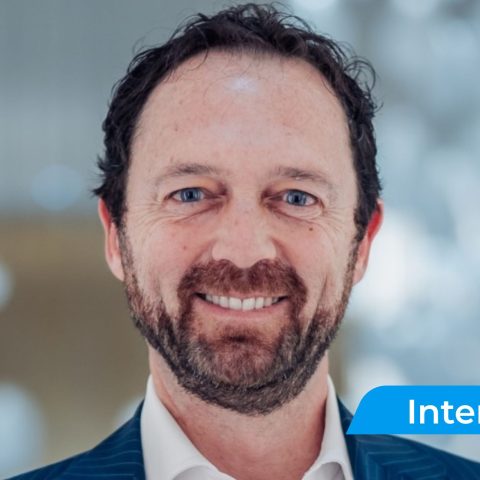

Thermo King’s strategy is increasingly focused on offering different solutions according to each customer’s transport operations, logistics requirements and available resources. We discussed this approach with Claudio Zanframundo, President of Thermo King EMEA, looking at the technologies behind it: from energy recovery with AxlePower to telematics and artificial intelligence.
Claudio Zanframundo (Thermo King): one electric product in every segment
How is Thermo King’s electrification strategy progressing across the different segments of refrigerated transport?
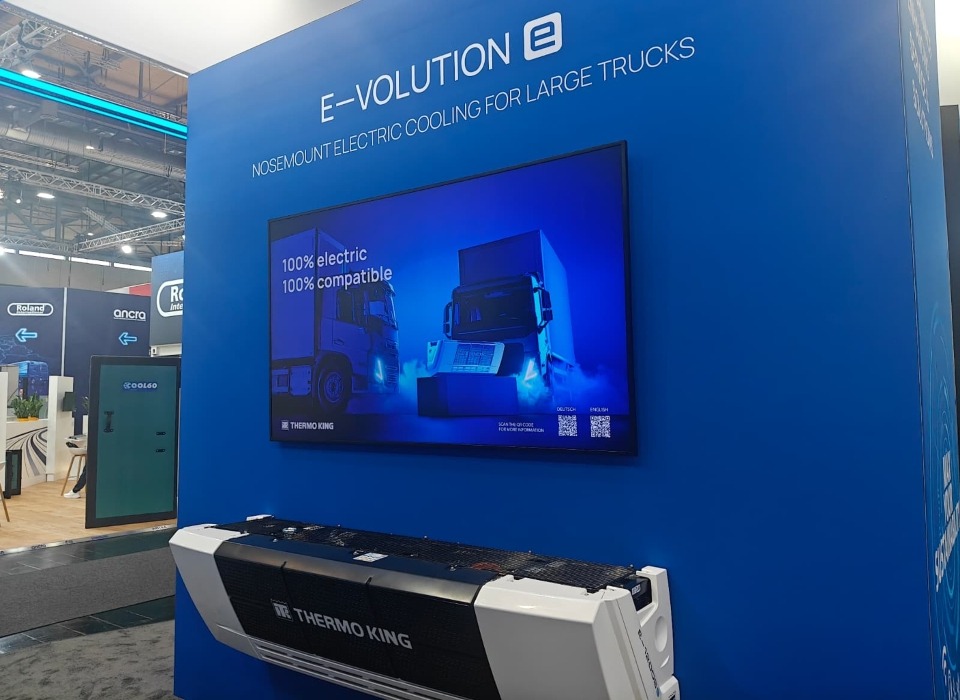
We have at least one electric product for every segment and application in refrigerated transport: from vans and light-duty trucks to heavy-duty vehicles and semi-trailers, as well as maritime and intermodal transport. There is, however, an important distinction to make: a conventional vehicle with an internal combustion engine can still be equipped with an electric refrigeration unit. This allows for a gradual transition, more closely aligned with customers’ needs. Our strategy is to offer a broad range of solutions and then identify the most suitable one based on the duty cycle, operating area, type of transport, logistics requirements, budget and any corporate electrification policies.
How does that work?
We start by using telematics data, where customers already have the systems in place. The data helps us guide their decisions and optimise how they use the equipment. We monitor temperatures, the goods being transported, logistics patterns, the number of stops and starts, and how often the cargo compartment doors are opened and closed. This allows us to build a tailored operating profile, helping customers make better use of their equipment and consume less energy. In practical terms, that means lower operating costs.
The AxlePower project
What are the latest developments concerning AxlePower for semi-trailers?
We are investing in rental, a new business for us that we launched about a year ago. It allows us to draw on both Thermo King’s direct distribution and service network and our independent dealer network, while introducing more customers to AxlePower. Customers who need more time to be convinced of the solution’s benefits can rent a semi-trailer equipped with the system. We are helping to stimulate demand for a solution that, in my view, will eventually become standard in long-haul transport, because it eliminates combustion-related emissions from the refrigeration unit and enables intelligent energy recovery.

When a vehicle combination weighing 40 tonnes or more brakes, energy is dissipated as heat through the braking system. With AxlePower, this energy is recovered, converted into electricity and stored in batteries to power the refrigeration unit. The ultimate aim is not only to reduce energy consumption, but also to deliver an economic benefit for customers facing regulatory requirements, CO₂ reduction targets and fuel costs.
How difficult is it to convince more traditional customers of the benefits of these solutions?
There is a psychological barrier when it comes to unfamiliar technologies. Many customers, though not all, initially prefer what they have always used. Some sectors are more conservative than others. We try to overcome that resistance through initiatives such as rental, but also by demonstrating in practical terms how transport operations can become more efficient.
We also organise consulting sessions with customers, during which we display their fleets in real time. We show the average fuel consumption of their refrigeration units, the number of door openings, average mileage, and whether the units operate in single-temperature or multi-temperature mode. Transport operators know their business better than anyone else. We can add value by helping them gain an even better understanding of how their units are performing and how to optimise their operation.
So it is almost an educational approach…
Educational, yes, but always based on data from the customers’ own fleets. We are not inventing anything: we can display their 10, 100 or 500 units operating across Europe on a screen, explain what is happening and show how they could save fuel by using the units differently. This gives customers an immediate financial benefit, at no additional cost. And today, we do not even need to be there in person, because our telematics systems are connected to artificial intelligence. Through the fleet management platform, customers can ask questions directly of the Thermo King system to which their units are connected.
The recent agreement with Volvo Trucks
Thermo King recently announced an agreement with Volvo Trucks to control refrigeration units through the trucks’ infotainment systems. What is the aim of this initiative, particularly in terms of safety and ease of use?
We want to make our products easy to use, with an intuitive interface. In our cars, we are used to systems such as Apple CarPlay and Android Auto. The idea is to bring the refrigeration unit’s functions onto the display inside the truck cab, making them easy to view and control. We started with Volvo, which has been particularly receptive, but we expect this approach to gradually become standard. We are talking with all truck manufacturers about using the same platform and technology, because this is a need shared across the industry. This kind of integration brings benefits to customers.
We have mainly discussed electric refrigeration units. Are you still focusing on biodiesel for non-electric systems?
Yes, we remain committed to biodiesel because there is demand for it, and we listen to our customers’ needs in this area as well. For conventional diesel systems, one of the main innovations we have introduced is EcoMode, which can reduce the fuel consumption of a conventional unit by up to 50%. This is a positive development for CO₂ reduction goals and can have an immediate economic impact for transport operators.
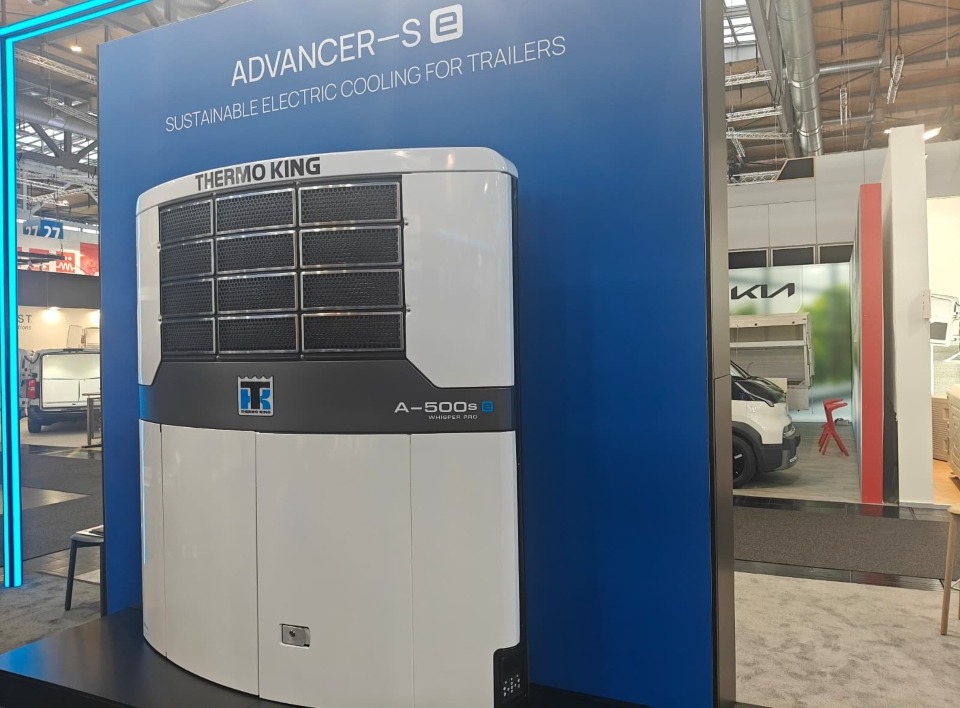
At IAA, we also presented Advancer S, with the S standing for Sustainability, designed for the low-GWP R-454A refrigerant. GWP stands for global warming potential. With this solution, we reduce the refrigerant’s GWP by 90%, bringing it below 300 while maintaining the same efficiency as the conventional Advancer.