

Kempower cuts 2026 outlook and plans restructuring amid weaker charging market demand
Kempower has lowered its 2026 revenue and profitability forecasts amid slowing investment in charging infrastructure. The Finnish company is planning a restructuring that could affect up to 120 employees worldwide. Meanwhile, its technology continues to support new projects, including a major public electric truck charging hub in the UK.


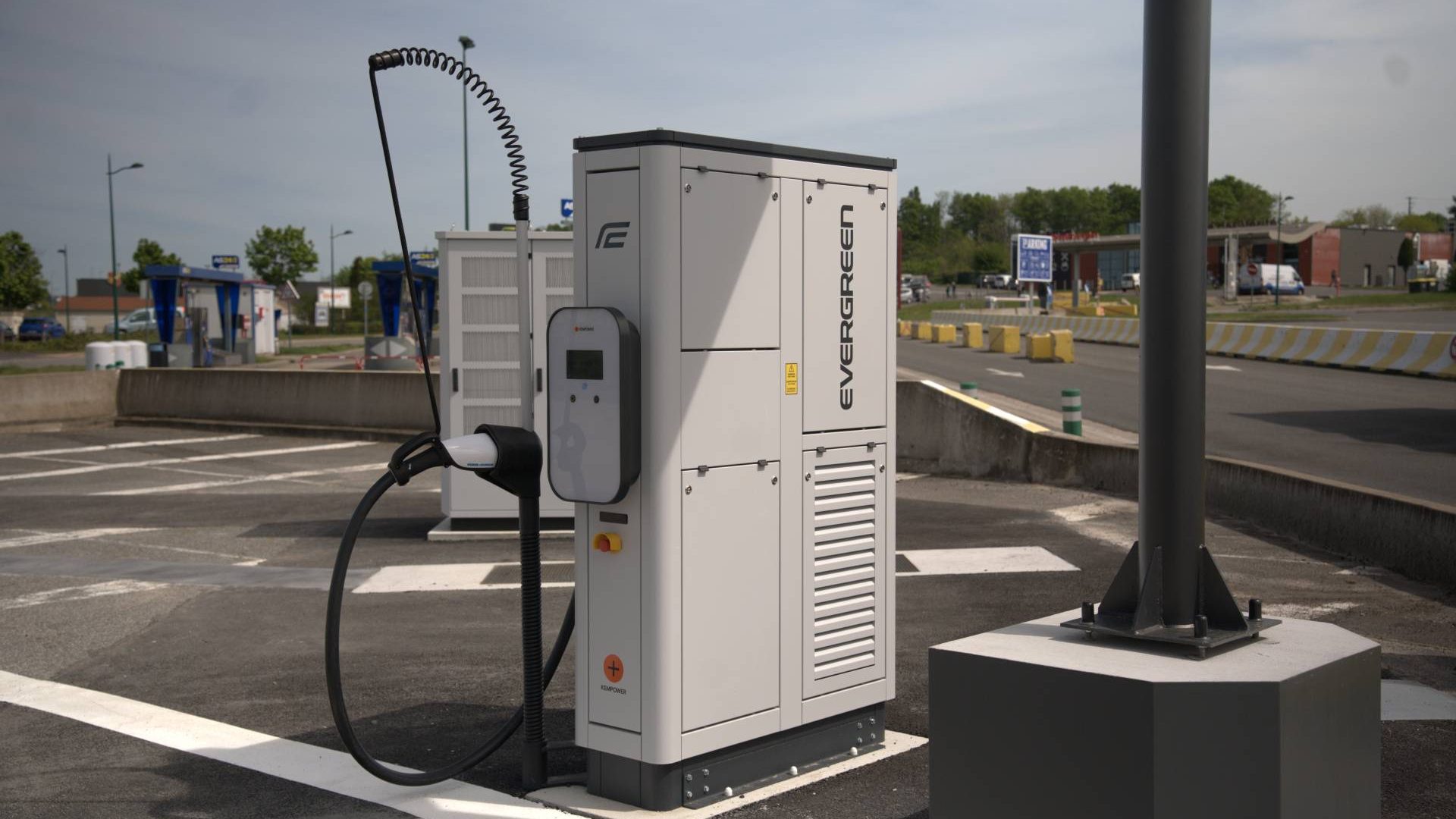
Finnish charging infrastructure manufacturer Kempower has revised its financial outlook for 2026, citing weaker-than-expected market demand and delays in customers’ investment decisions. The company now expects revenue to grow by approximately 5% compared with 2025, significantly below its previous forecast of 10% to 25% growth.
The revision, announced on November 3, also affects profitability. Kempower now expects its operative EBIT to be lower than in 2025, when it recorded a loss of €12.4 million. Previously, the company had anticipated a significant improvement.
The announcement was followed on November 4 by a restructuring plan involving potential workforce reductions and a substantially expanded cost-saving programme.
The developments reflect a challenging period for the European charging infrastructure industry, even as new projects continue to be deployed, particularly in the electric commercial vehicle sector.
Kempower’s Q3 results: revenue down 10%, orders fall 19%
The financial figures published by Kempower highlight the recent slowdown. In the third quarter of 2026, revenue decreased by 10% to €66.2 million, compared with €73.7 million in the corresponding period of 2025. Order intake fell by 19%, from €74.7 million to €60.8 million, while operative EBIT deteriorated to a loss of €1.7 million, compared with a positive €0.2 million a year earlier.
The picture for the first nine months of the year is somewhat different. Revenue increased by 12% to €201.7 million, while operative EBIT improved to a loss of €7.1 million, compared with a loss of €8.8 million in January-September 2025.
According to Kempower, the deterioration in market conditions has been particularly evident among charge point operators (CPOs), which are increasingly prioritising the utilisation and profitability of existing charging networks rather than investing in new installations.
Consolidation within the charging sector has also contributed to delayed investment decisions. Demand from fleet operators continues, but the company reports longer sales processes and the postponement of some projects. Kempower expects these challenging market conditions to persist in the near term.
Restructuring plans: up to 120 jobs at risk
In response to the weaker market environment, Kempower has announced plans to restructure its organisation and revise its operating model as part of its Kempower 2.0 strategy.
The measures could lead to a reduction of up to 120 employees worldwide, out of a total workforce of 870 at the end of September 2026.
In Finland, where the company employs approximately 600 people, negotiations are scheduled to begin on November 11. They will involve around 420 office employees and could result in up to 80 job reductions. Production employees are not included in these negotiations. No final decisions have yet been taken.
The restructuring is part of a broader cost reduction programme, with Kempower now targeting annual savings exceeding €15 million, compared with the previous target of more than €5 million. The new organisational structure is expected to take effect in January 2027, while the full annualised impact of the savings is expected from the third quarter of 2027.
According to CEO Bhasker Kaushal, the objective is to align the company’s cost base with current market demand and improve competitiveness while reallocating resources towards strategic priorities.
Meanwhile, Kempower technology powers a major UK truck charging hub
Despite the revised financial outlook, Kempower continues to participate in the development of charging infrastructure projects, including those specifically designed for heavy-duty electric vehicles.
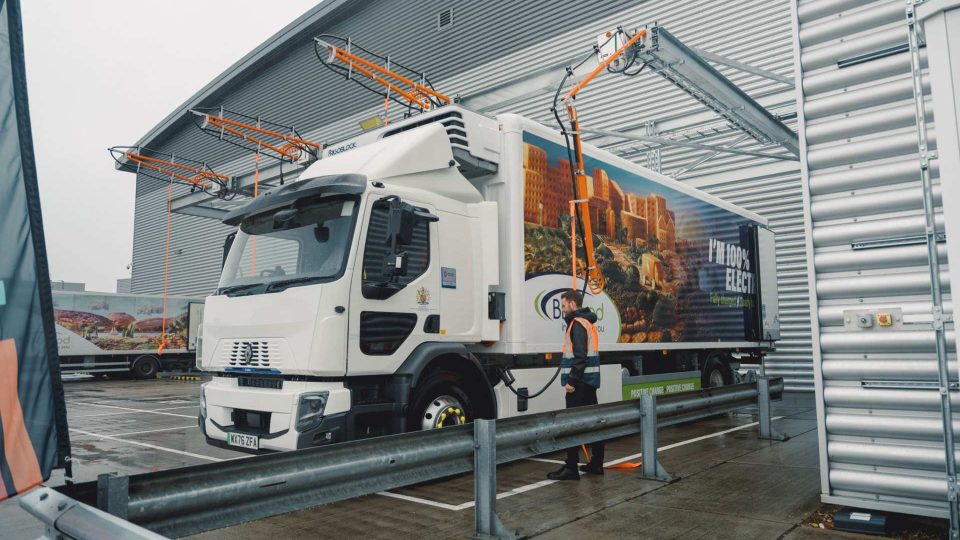
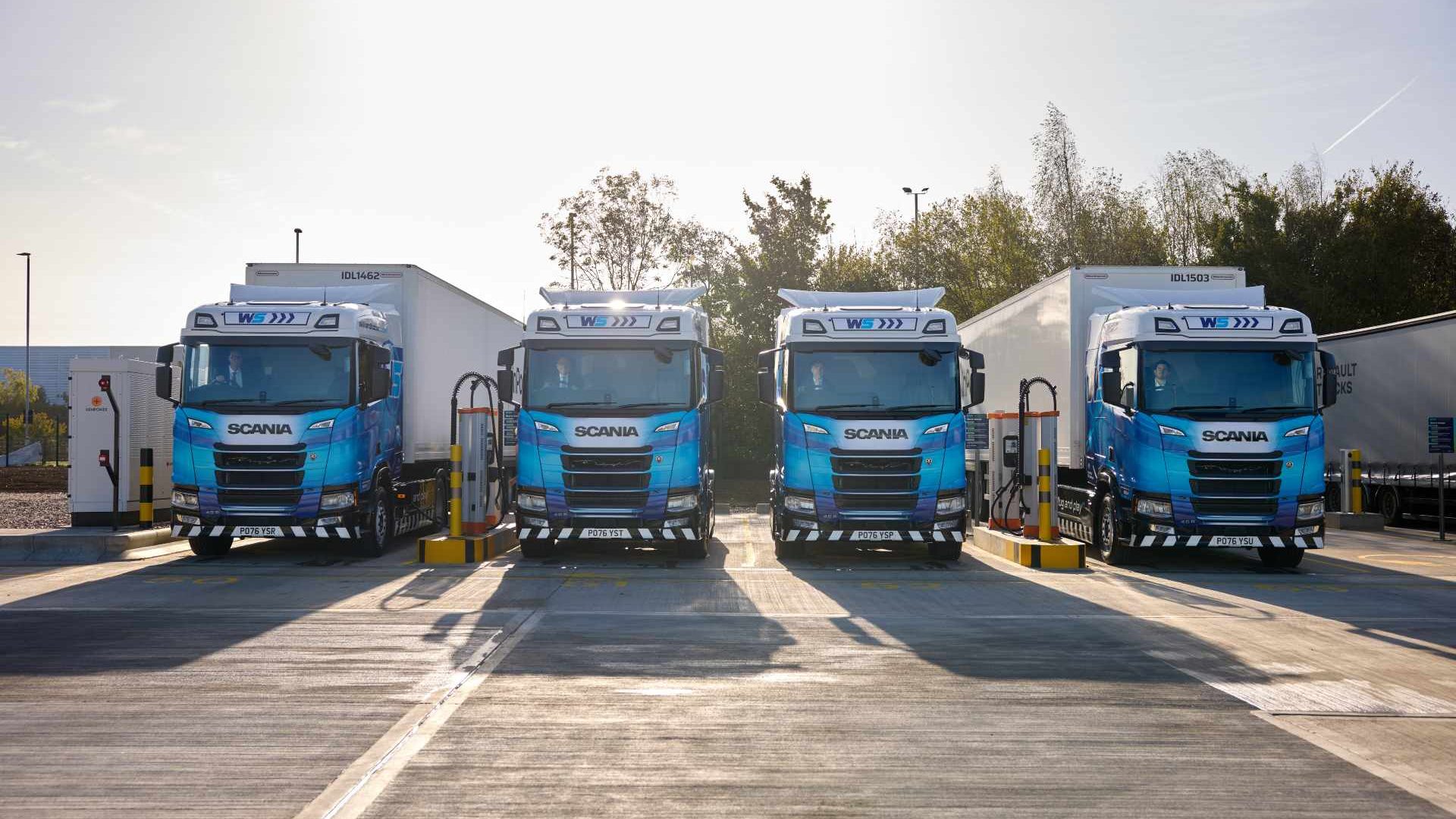
One recent example is Electroway, a new public electric truck charging hub at Magna Park in Lutterworth, Leicestershire, officially opened in October.
The site is located within one of Europe’s largest logistics and distribution parks, with approximately 50 warehouses and connections to major British motorway routes.
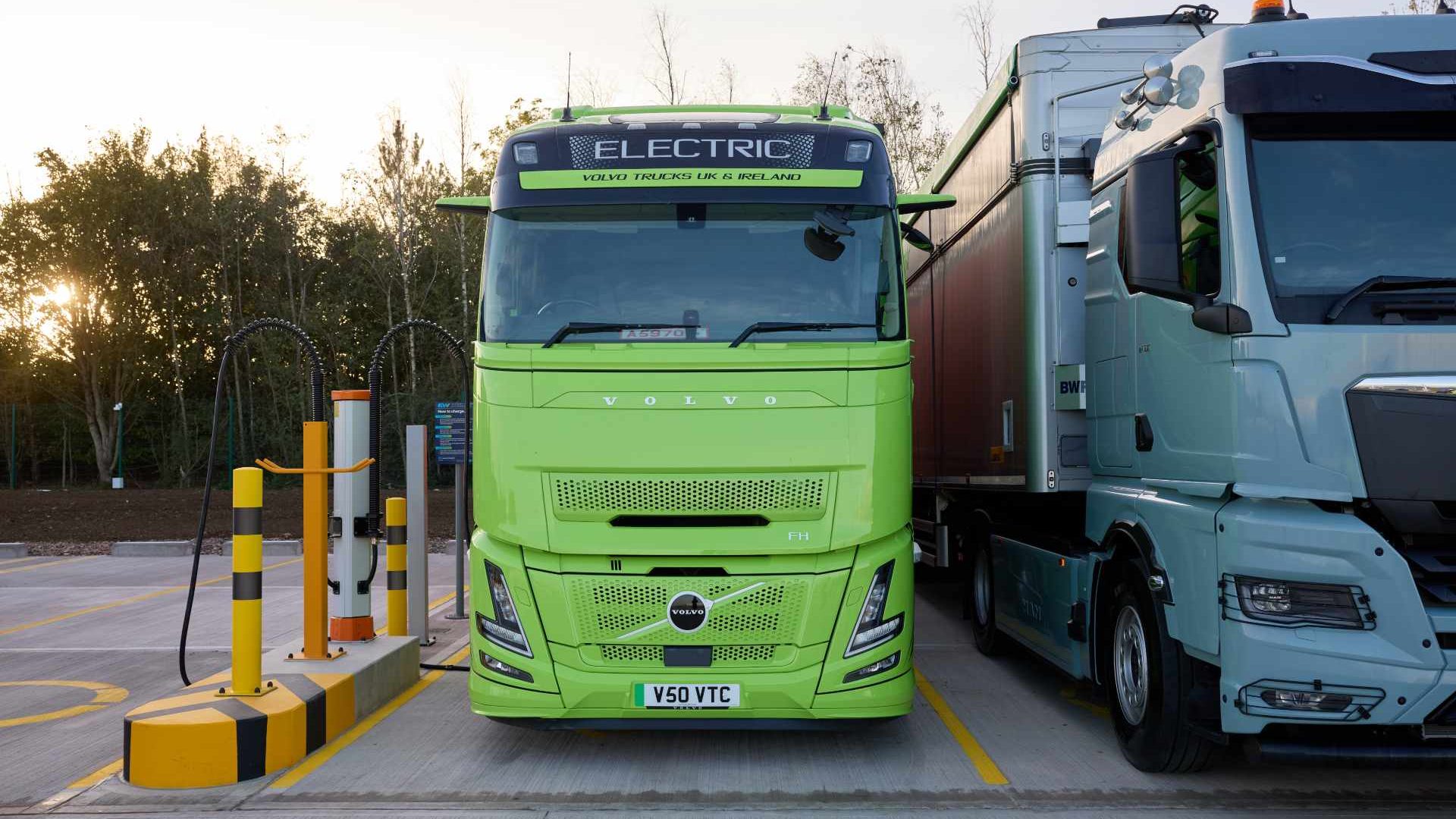
Operated by Keoma Energy and funded by Guardian Smart Infrastructure Management, the facility features 32 DC charging bays equipped with Kempower technology, together with 180 secure truck parking spaces.
The charging infrastructure provides a total installed capacity of 2.4 MW, dynamically distributed across the site, with individual charging power of up to 400 kW.
The project was delivered by CX Energy, while Kempower’s sales and service partner Charge Hub supplied the charging equipment.
The facility is designed for further expansion. A second development phase, expected in 2027, could introduce charging power of up to 1.2 MW, while the longer-term plan envisages approximately 200 charging connectors. The hub also includes facilities for truck drivers, including a lounge, showers and laundry services.
A changing market for charging infrastructure
The contrast between Kempower’s financial outlook and the opening of new charging facilities highlights the different dynamics currently affecting the sector.
On the one hand, the company is facing weaker demand, longer investment cycles and growing pressure to reduce operating costs. On the other, projects such as Electroway show that investment in dedicated electric truck charging infrastructure is continuing.
Importantly, the UK project is operated and financed by other companies, with Kempower acting as a technology supplier rather than the direct infrastructure investor.
For the electric transport industry, the developments raise a broader question: how quickly will charging infrastructure investment grow as electric vehicle adoption increases, and how will suppliers adapt to a market where customers are becoming more selective about capital expenditure? Kempower’s latest announcements suggest that this adjustment is already underway.