
Toyota formally joins cellcentric as fuel cell alliance moves from intent to execution
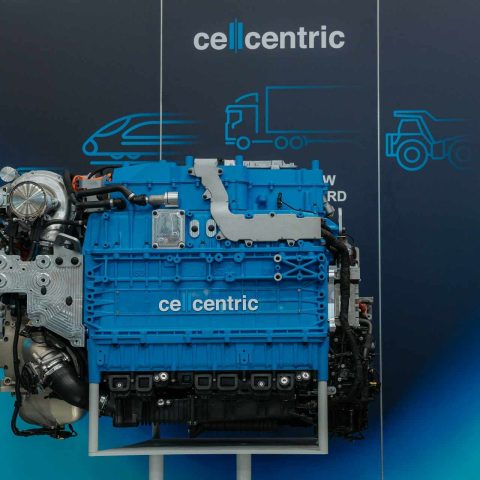
Following the non-binding agreement announced in March, Toyota, Daimler Truck and Volvo Group have now signed the binding agreement that will make the Japanese manufacturer an equal shareholder in cellcentric. The move reinforces the partners' long-term commitment to scaling hydrogen fuel cell technology for heavy-duty transport.
When Toyota, Daimler Truck and Volvo Group announced in March that the Japanese manufacturer intended to join cellcentric as an equal shareholder, the move was widely seen as another sign of growing industrial cooperation in hydrogen fuel cell technology. As Sustainable Truck&Van reported at the time, the parties had signed a non-binding agreement outlining Toyota’s planned entry into the joint venture.
Now, that plan has moved a significant step forward. The three companies have signed the binding agreement that will make Toyota an equal one-third shareholder in cellcentric, alongside Daimler Truck and Volvo Group, subject to regulatory approval. The transaction is expected to close around the end of 2026 or the beginning of 2027.
From memorandum to binding agreement
The latest announcement does not change the ownership structure immediately, but it transforms the partners’ intentions into a formal commitment.
Once completed, Toyota will join Daimler Truck and Volvo Group on equal terms, with all three companies holding one-third of the fuel cell joint venture. According to the partners, the objective is to strengthen cellcentric’s technological leadership, industrial scale and competitiveness in heavy-duty fuel cell systems, while supporting the development of the broader hydrogen ecosystem through collaboration across the value chain.
Building industrial scale for hydrogen
Beyond the governance milestone, the agreement underlines that the three manufacturers continue to view hydrogen fuel cells as a strategic technology for long-haul and heavy-duty transport.
Rather than operating as a captive supplier, cellcentric will continue as an independent company, serving customers beyond its three shareholders across heavy-duty on-road and off-road applications, as well as coaches, rail, stationary power generation and other industrial sectors.
The move also reflects a broader industrial strategy. By combining Toyota’s fuel cell expertise with Daimler Truck’s and Volvo Group’s commercial vehicle experience, the partners aim to give cellcentric the scale required to accelerate the development and commercialization of fuel cell systems at a time when battery-electric trucks are advancing rapidly, while hydrogen remains the preferred long-term solution for certain long-haul and high-duty-cycle applications.