
Vector launches new DC charging solution for electric truck and bus depots
Vector has recently introduced vSECC.InPlug, a new communication controller designed to provide greater flexibility in the layout of DC charging infrastructure for electric truck and bus depots. By integrating charging communication directly into the connector, the system enables distances of up to 100 metres between the vehicle and power electronics.
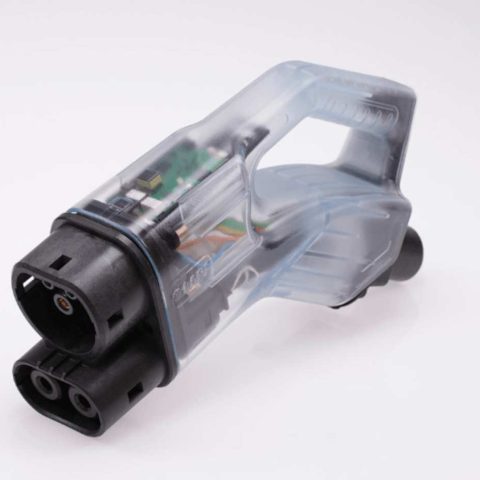
Vector is expanding its portfolio for electric commercial vehicle charging with vSECC.InPlug, a new communication controller designed for DC charging infrastructure in truck and bus depots.
The solution moves charging communication from the charging station directly into the connector, allowing significantly greater distances between the vehicle charging point and the associated power electronics. According to Vector, cable runs of up to 100 metres are possible, compared with around 7.5 metres in conventional DC charging architectures.
The concept is particularly relevant for large electric commercial vehicle depots, where charging points may need to be distributed across numerous parking bays while the power electronics are installed centrally in another part of the site.
Greater flexibility for electric truck depots
In conventional DC charging systems, the Supply Equipment Communication Controller (SECC), power electronics and charging connector are typically located close together. However, this architecture can become restrictive in large depots, where the position of trucks or buses is dictated primarily by vehicle dimensions and operational requirements.
One of the limiting factors is Power Line Communication (PLC), used for communication between the vehicle and charging infrastructure. Signal attenuation over long cable runs limits the distance between the controller and charging point.
With vSECC.InPlug, Vector relocates the connector-side communication hardware into the DC charging connector itself. The central vSECC controller continues to handle session management, protocols, power electronics control and backend communication, while vSECC.InPlug handles communication at the connector.
This allows the power electronics to be located centrally – potentially even in a containerised installation – while charging connectors are distributed around the depot according to operational requirements.
The approach can also help reduce the need to install dedicated power electronics at every individual charging point. Combined with Vector’s Smart Power Distribution, centrally installed power modules can be dynamically allocated to active charging sessions rather than remaining tied to a single connector.
From charging hardware to depot management
Vector’s approach extends beyond the physical charging infrastructure. The company’s vCharM portfolio provides charging, load and energy management, while vCharM.DMS addresses depot operations and vehicle scheduling.
For truck and logistics depots, this means coordinating charging around variables such as vehicle schedules, available grid capacity and the high charging power required by heavy-duty vehicles. Bus operations, meanwhile, generally have more predictable timetables and fixed departure windows.
Together, the different systems are intended to provide a scalable architecture as commercial vehicle fleets move from initial electric vehicle deployments towards larger numbers of battery-electric trucks and buses.
Charging infrastructure designed around the depot
The main advantage of vSECC.InPlug is therefore architectural rather than simply an increase in charging power.
By extending the possible distance between charging points and central power electronics to 100 metres, Vector aims to give depot designers greater freedom to build charging infrastructure around the operational requirements of the fleet rather than around the physical constraints of conventional DC charging systems.
The solution supports the main DC charging communication standards, including ISO 15118-2 and ISO 15118-20, while the wider Vector architecture also supports OCPP communication and scalable charging and energy management.