
Wireless charging solves a key challenge for electric truck fleets [Video]
As electric commercial vehicle fleets grow, grid capacity, depot space and charging operations are becoming increasingly important constraints. Electreon argues that wireless charging can help distribute energy demand across depots, terminals and routes, reducing reliance on conventional plug-in charging infrastructure.

Five electric vans is a procurement decision. Fifty is an infrastructure project, and the gap between the two is where much of commercial fleet electrification currently stalls. As electric truck and van fleets scale up, charging infrastructure is increasingly becoming as important as the vehicles themselves.
The German automotive association VDA has put the shortfall in numbers: close to 14 GW of truck charging power needed by 2030 against public plans covering around 2.6 GW, leaving more than 11 GW to come from private sites. Expanding a grid connection at a large site can take up to ten years.
This is not a German peculiarity. The IEA’s Global EV Outlook 2026 identifies grid connection as a major bottleneck for electric bus and truck depots, where limited substation capacity, permitting and network reinforcement can hold a site up for several years, slowing fleet renewal directly.
Space is the constraint that gets discussed less and often bites sooner. Decade Energy, which has assessed more than 1,500 logistics sites since 2024, finds most were never laid out for charging. A yard sized for the fleet it runs today cannot absorb a charger at every bay: each one costs a parking space, and the cabinets and cables between them cost the room to manoeuvre.
Electrification does not end with the vehicle
Then there is the daily cost, measured in hours. Someone connects and disconnects every van, every cycle. Cables wear, get damaged and lie across a working yard, and a plug missing at the end of a shift becomes a vehicle missing from the morning schedule.
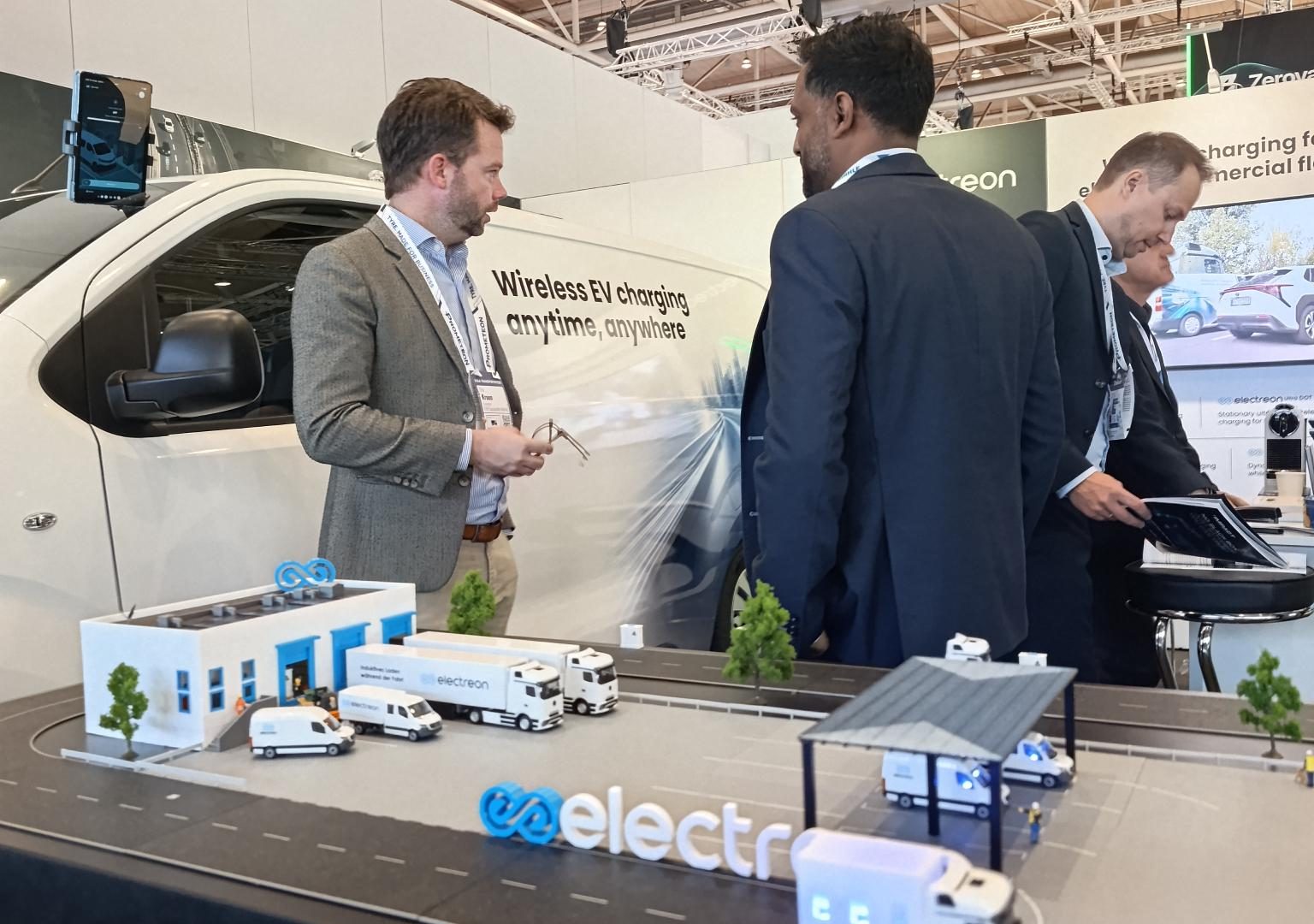
These are not three separate problems. They are one design choice seen from three angles—a fleet’s entire energy demand concentrated into a single location, a single overnight window, and one cable too many. Electreon’s wireless charging eliminates all three constraints with one solution—charging fleets seamlessly, wherever and whenever they need energy.
Potrebbe interessarti

Wireless charging: Electreon and Xos Trucks test the innovative solution in Detroit
That is where wireless charging starts, and the premise Electreon has built its systems around: energy transferred without a connector, so the plug, the cable and the person handling them drop out of the daily cycle.
Charging becomes part of operational planning
Where the energy goes in then becomes a planning question. Charging can sit in depots, at terminals and loading bays, or along the route, depending on duty cycles, dwell times and available power. Wireless transfers it by induction between a coil beneath the surface and a receiver on the vehicle.
The company builds five configurations:
- an above-ground pad for depots and logistics hubs;
- an in-ground system for vehicles parked overnight or briefly stopped;
- a high-power version for terminals and ports;
- a semi-dynamic system for vehicles idling or crawling;
- a dynamic system that charges while driving, deployed on the A10 near Paris and the A6 Autobahn in Germany.
An alternative for high-utilisation operations
It matters most where vehicles run long routes or stay in service most of the day. Rather than depending on one overnight window, energy enters during dwell time the operation already has, reducing the number of charge points a yard needs and taking hardware out of the ground plane.
It also changes the size of the connection a site needs. A depot running 50 to 100 electric trucks can require double-digit megawatts, where the connection and transformer station alone run from several hundred thousand euros into the millions. Peak demand sets that figure, and the IEA puts a number on what moving the load does about it: shifting charging into daytime or off-peak periods can cut a depot’s maximum power demand by up to 60%.
The same logic applies where there is no driver. Electreon is integrating its system with autonomous vehicles built by ATLoS, which will run a fixed route at a production facility and charge wirelessly at loading docks. A driverless vehicle cannot plug itself in.
The next step is not a bigger plug. It is charging that happens inside the operation – on the route, at the dock, under the bay – so that taking on energy stops being something the fleet stops for. Electreon’s systems are already running commercially, and the range of applications is widening. The company takes the argument for what comes next to IAA Transportation 2026.
Demo registrations available here.