

CATL launches Tectrans II, new sodium-ion battery for light commercial vehicles
CATL says it is the first sodium battery for light commercial vehicles to reach mass production, specifically engineered for severe cold. The pack offers 45 kWh of capacity and can be connected for charging at temperatures as low as -30°C.
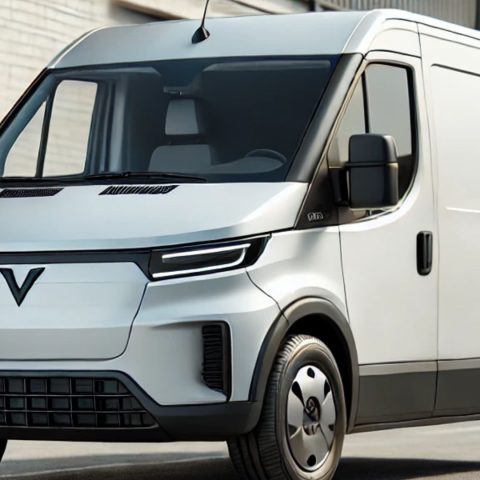
CATL has presented a new sodium-ion battery aimed at accelerating real-world adoption of the chemistry within 2026. The company revealed the Tectrans II series power batteries at an event on Thursday, with a clear focus on light commercial vehicles such as small vans and micro trucks.
CATL, new sodium-ion battery
The low-temperature version of Tectrans II uses sodium-ion technology. CATL says it is the first sodium battery for light commercial vehicles to reach mass production, specifically engineered for severe cold. The pack offers 45 kWh of capacity and can be connected for charging at temperatures as low as -30°C. CATL adds that at -40°C the battery still preserves 90% of its usable capacity.
This is CATL’s most significant sodium-ion step so far this year. Previously, at a supplier conference held on December 28 in Ningde (Fujian), CATL stated that sodium batteries will move into large-scale use in 2026 across battery swapping, passenger cars, commercial vehicles, and energy storage—alongside lithium-ion cells in what it described as a “dual-star” trajectory.
Beyond sodium-ion, the Tectrans II family includes an ultra-fast charging option that replenishes from 20% to 80% in 30 minutes at -15°C. A high-temperature fast-charge version is said to add 60% driving range in 18 minutes, while reaching 5,000 cycles at 45°C. The long-range variant goes up to 253 kWh for an asserted 800 km range. CATL also introduced swap-compatible modules: the #20 (42 kWh), #25 (56 kWh), and #35 (81 kWh).