
Building the backbone of e-truck charging in EU. Interview with Alexandre Hélibert (Milence)
The newly-announced “Power to Go Further” Electric tour starts on April 15 from Paris, to reach Berlin on April 23. The initiative wants to show how actual e-truck charging corridors are already available in Europe. Starting from this initiative, which involves e-trucks from five European manufacturers, we had a chat with Alexandre Helibert, Head of South Europe at Milence, dealing with several interesting technology and market topics.

From 15 to 23 April, as part of the so-called “Power to Go Further” Electric tour from Paris to Berlin, a convoy of five electric heavy-duty trucks will travel more than 1,000 km across France, Belgium, the Netherlands and Germany. Along the route, Milence will host a series of media moments and stakeholder discussions bringing together European policymakers, industry leaders, logistics operators and shippers to highlight the significant progress made in recent years in electrifying road transport. You can find the program of the event at this post. With the aim to learn more about the targets of the initiative, we had a chat with Alexandre Helibert, Head of South Europe at Milence. With him, we also discussed the trends, challenges and technological requirements involving the entire Milence project.
The “Power To Go Further” tour, starting on April 15
What’s the meaning, and what are the targets, of the “Power To Go Further” tour that Milence is organizing in Europe?
We’re organizing the event in collaboration with some of the biggest OEMs, it will be about 1,000 km, along with truck makers such as Daimler Truck, MAN, Volvo Trucks, Scania and Renault Trucks. The idea is not to have a symbolic journey, but rather real-world proof that we can actually use operationally electric trucks in the current world. In other words, the event highlights the economic viability of electric transport, in addition to its environmental impact.

How will the trucks be managed during the tour?
All the trucks are going from one hub to the other, and they’re all going to charge as they need to charge. We have obviously modeled the route of the tour to also showcase our Milence hubs. But the idea is really to have this convoy with several trucks going together from point A to point B, and we also know that sometimes some other OEMs or potentially some customers are going to also join the tour, either for one hub visit or for a part of the tour.
Why is it important to show that an European corridor is possible and is feasible nowadays for all those companies which are engaged in international transportation?
Our aim is to show that electric trucks work, and the current network that we have already allows users to cross huge parts of Europe. If you consider the point of view from a decision maker in the transport industry, what it shows to them is that these routes can potentially be electrified with the current network that we’re already offering and with the range that the trucks are already offering to the market. To sum up, what really shows is maturity and the fact that it’s financially viable for a transport company to use electric trucks for long routes.
The differences between Northern and Southern Europe…
We often say that there’s a big difference between Northern Europe and Southern Europe in terms of infrastructure development. Do you agree? Given your role in managing the Southern Europe market, what are the main reasons?
I totally agree with you on that. One of the main reasons that we can look at is not necessarily something we can do much about. Some of the countries like Sweden or the Netherlands, they are quite small countries, so they were the easiest to electrify, and that was a huge advantage for them. But that’s not the only reason. If you look at Germany, for instance, there you already have a lot of electric trucks and you already see a lot of demand, which extends to charging at the public hubs.
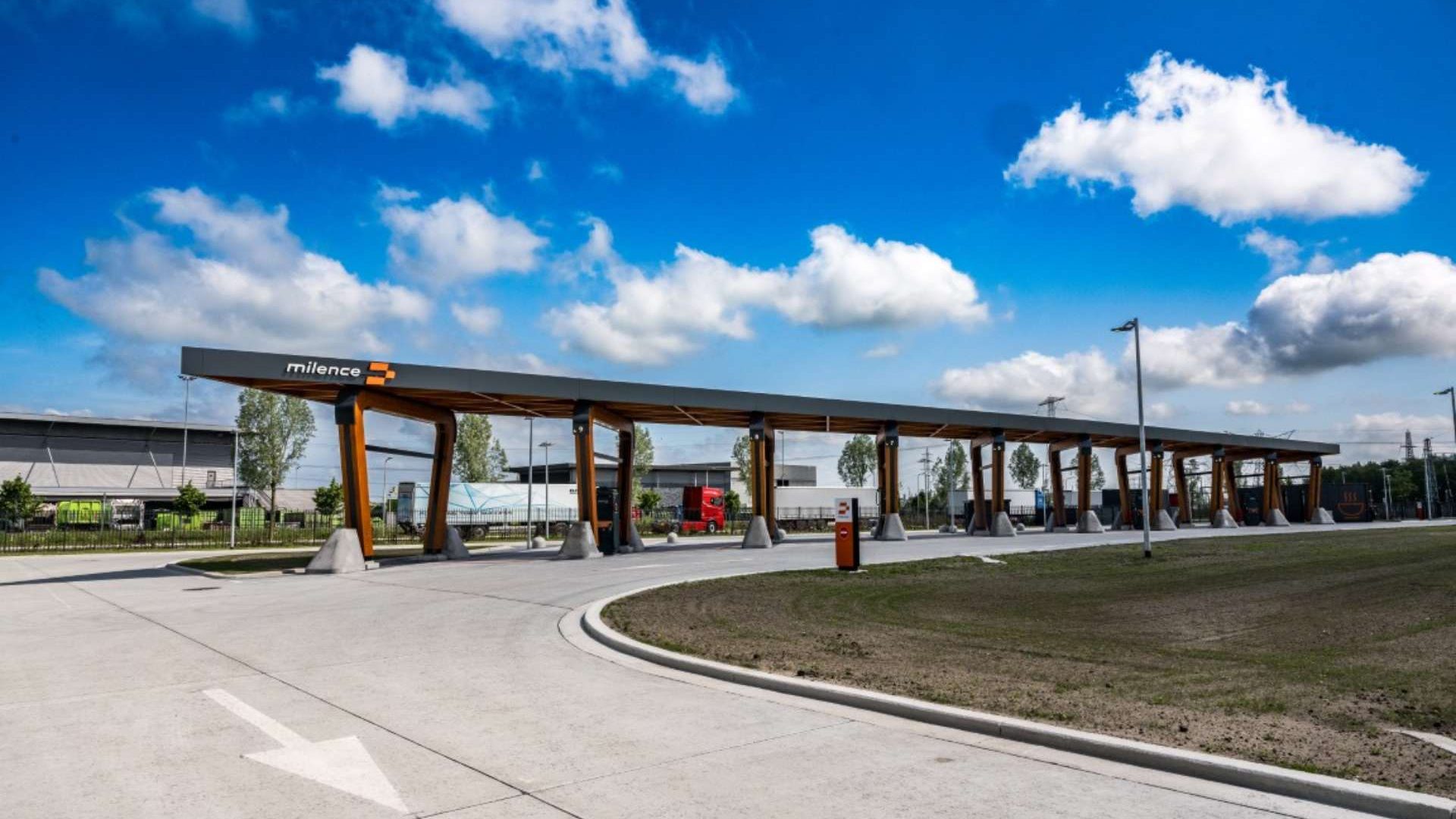
I do believe subsidies, also in the form of favorable tolling conditions, are important, with some governments not pushing enough for electrification. This results in a scenario where bigger companies have potentially the resources to invest, while small and medium companies often need a bit more help to promote the transition. Price difference between diesel trucks and electric trucks is still huge, but if you look at it from a business point of view, electric trucks can become a good option in terms of TCO over several years.
Especially in Italy, we’ve seen that it’s not easy to have e-trucks charging at the hubs, as the market is still very slow. What’s happening in other countries? Is Milence worried about the ROI?
No, we’re not. If you look at our current deployment strategy, we haven’t changed the strategy. We’re still electrifying Europe, we’re still building the corridors, but we’ve adapted to the market, and we have also adapted the speed of deployment to the market. If you look at the hubs in Italy, for instance, then Bagnolo San Vito and Piacenza, we have pretty good utilization numbers on those hubs.
It may take a bit longer for it to happen than we anticipated, but that’s okay because we can always modulate the speed of our rollout and that’s what we’re doing. I can add that we have financial stability to make that happen and to wait for it to happen.

Looking at the future of electric heavy-duty transportation, do you believe that public hubs will be part of a broader network, also including private and semi-public charging stations? What’s the most likely scenario for Europe?
It can be a viable scenario, yes. Some transport companies rely on a mix of public charging and depot charging. But one of the things that we see is that several companies find it a bit difficult to electrify their existing depot. So, they come to public charging hubs, like ours, and negotiate a price, especially on one given site because they bring a lot of volume and they almost only use us for their charging.
But we always had the vision that we need to have both public and private charging, depot charging both needs to be there for the whole market to electrify at scale. And when it comes to semi-public hubs, that’s also a business case that we see coming up in Europe.
What’s Milence doing differently from other players, right now in Europe?
We stay open to the public and will always be. The idea behind that is that we do not want to just electrify one transport company or two, but the whole region and the whole companies who could use that corridor. That’s why we are in discussion with transport company, as well as shippers, as we can build the hub either on their plot of land or right next to it, so that the transport companies who are going to work for that shipper can use it. In this case, it’s a win-win situation, as we make volumes, they have cheaper electricity, or at least they have electricity, which is not always the case. So, let me say, if anyone reading your article wants to contact us directly because they have a requirement, we are more than happy to help.
The crucial matter of prices. Here, Milence has got an actual strategy
Talking about prices, we know that Milence has a very good price for electricity. Are you willing to keep that price even in the future?
Yes, but I’m going to go even further than that. We have our public price at 0.399 Euros per kWh before taxes. What we offer to companies is that beyond that public pricing, we can provide tailored prices based on their needs. The price can be set based on volumes, or on how many hubs they need, or whether or not they’re going between several countries. We can also work on that. The idea is to provide transport companies with a price that is normally below the public price if they commit to volumes. In a few words, the more they use the hub, the less they pay for the charging.
We know that nearly every Milence charging hub is expected to be equipped with MCS at a later stage. Indeed, a few of them already have ultra-fast charging points. How important is it to have such technology for the development of electric heavy-duty trucks?
We are willing to indeed make those financial investments, and we are doing them. We already have some hubs open, namely in the Netherlands and Belgium with MCS operating there. For us, MCS is an operational enabler that significantly impacts the operations of our customers. However, the most difficult part here is finding the balance between demand from the customers, and charging power required by the MCS charger.
Potrebbe interessarti
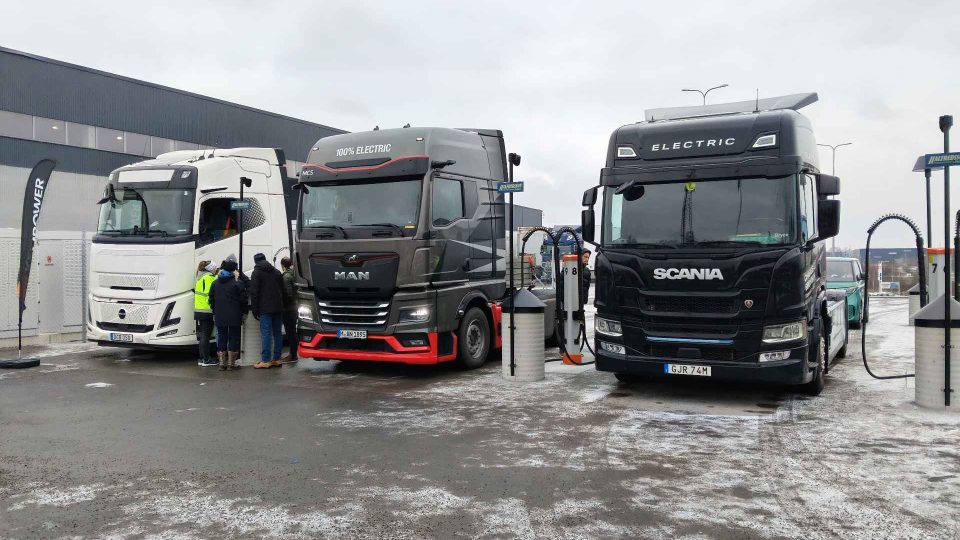
Megawatt charging, here we go! Our report from the first Kempower Live Winter Days in Norrköping
How’d the current demand of MCS charging?
Nowadays, the demand is not high, but we expect it to grow quite rapidly in the next few years. Indeed, the latest trends that we see, especially since the beginning of 2026, is that we are being approached a lot by transport companies who are ordering the MCS trucks and they are trying to give us kind of some information on when they’re going to get them and where they’re going to use them so that we can prioritize those hubs in the MCS rollouts. But as I said, one of the big bottlenecks there is grid connection. This means we are trying to find the right places to deploy them.