
Kempower brings overhead truck charging to Bidfood’s UK depot
UK food wholesaler Bidfood has installed a Kempower overhead charging system at its Slough depot. With four charging points and 600 kW of available power, the solution enables electric trucks to recharge during loading operations without sacrificing valuable parking space. The project was designed and delivered by Erinion, the depot charging specialist belonging to the Scania Group and a sales and service partner of Kempower.
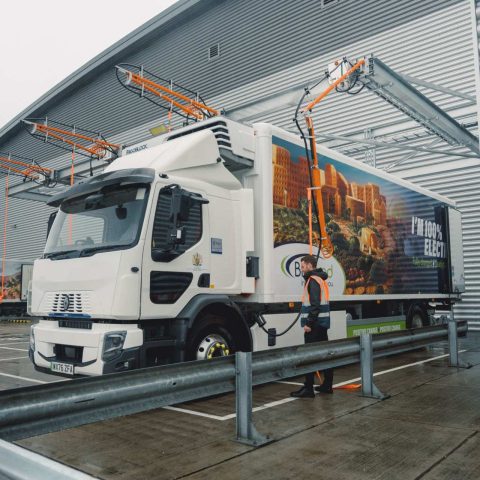
Electrifying existing truck depots is not just a matter of installing charging equipment. Available space, vehicle movements and loading schedules are equally important factors. At its Slough facility, near London, UK food wholesaler Bidfood has addressed these challenges with an overhead DC charging solution supplied by Finnish manufacturer Kempower.
The installation allows electric trucks to recharge during their scheduled loading stops, without requiring additional ground space for charging equipment. The project represents the first electrified depot for Bidfood, which currently operates two electric trucks at the site and has a fleet of more than 1,200 vehicles across the UK.
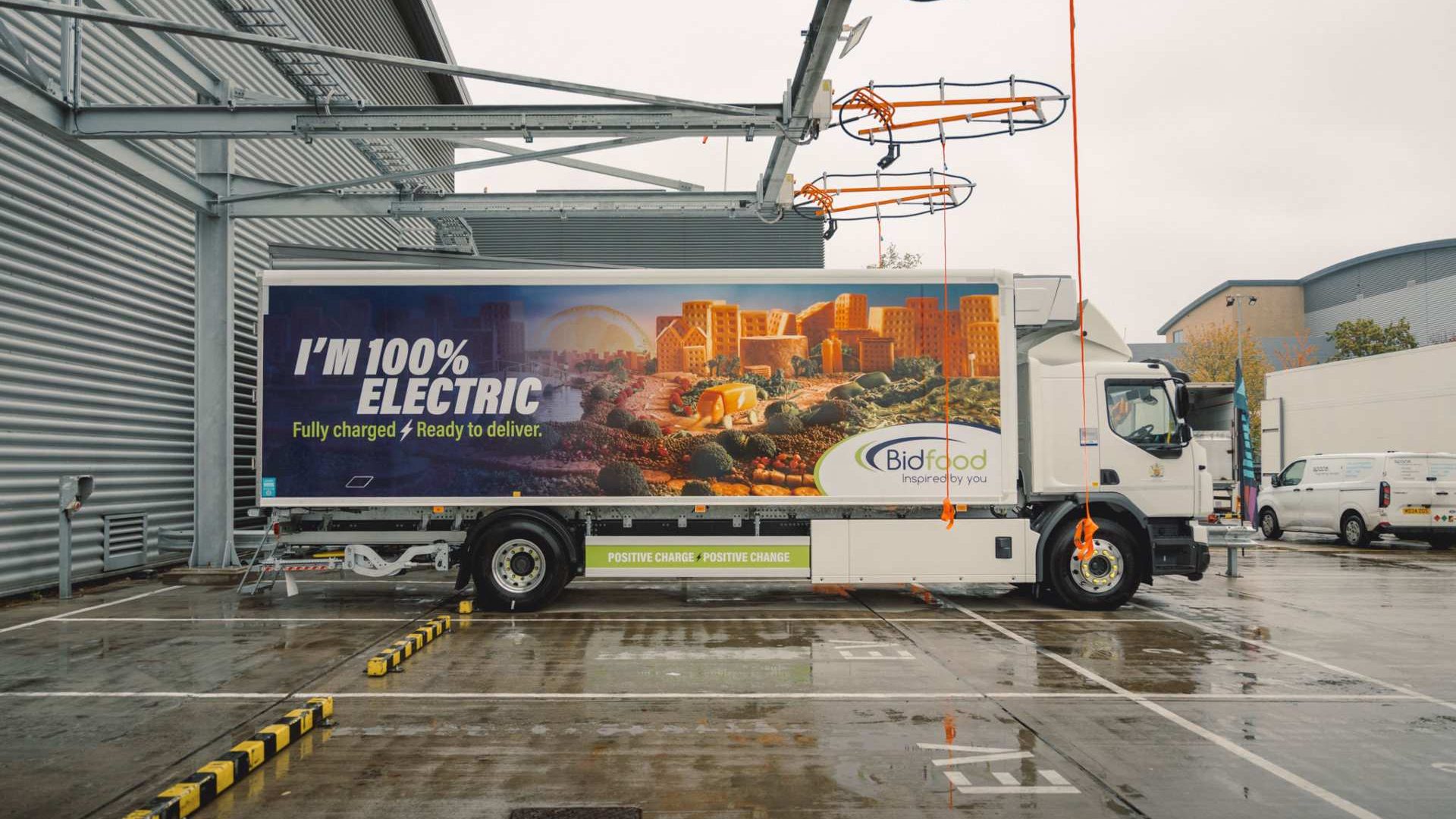
Four charging points powered by a 600 kW Kempower unit
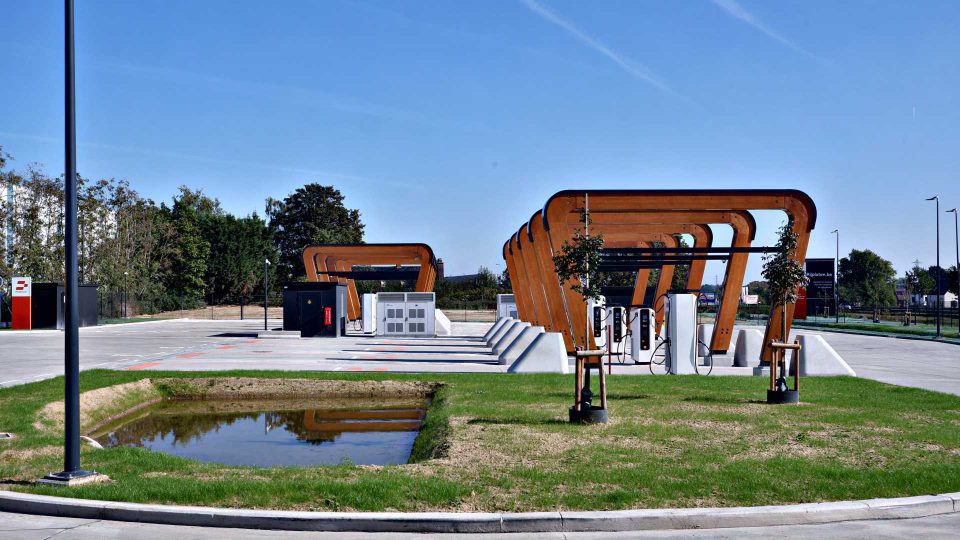
The new infrastructure consists of four charging bays integrated into the depot’s existing loading areas. Instead of conventional ground-mounted dispensers, four Kempower Control Units have been installed on an overhead gantry, each equipped with a Kempower Cable Arm that allows drivers to access the charging connector from above.
All four charging points are connected to a single 600 kW Kempower Power Unit, which dynamically distributes the available power according to demand. Each Control Unit can deliver up to 160 kW, with the total output shared across the four charging points.
According to Kempower, this configuration enables electric trucks to recover a significant amount of energy during typical loading windows of between 45 minutes and two hours, reducing the need for additional charging stops during daily operations.
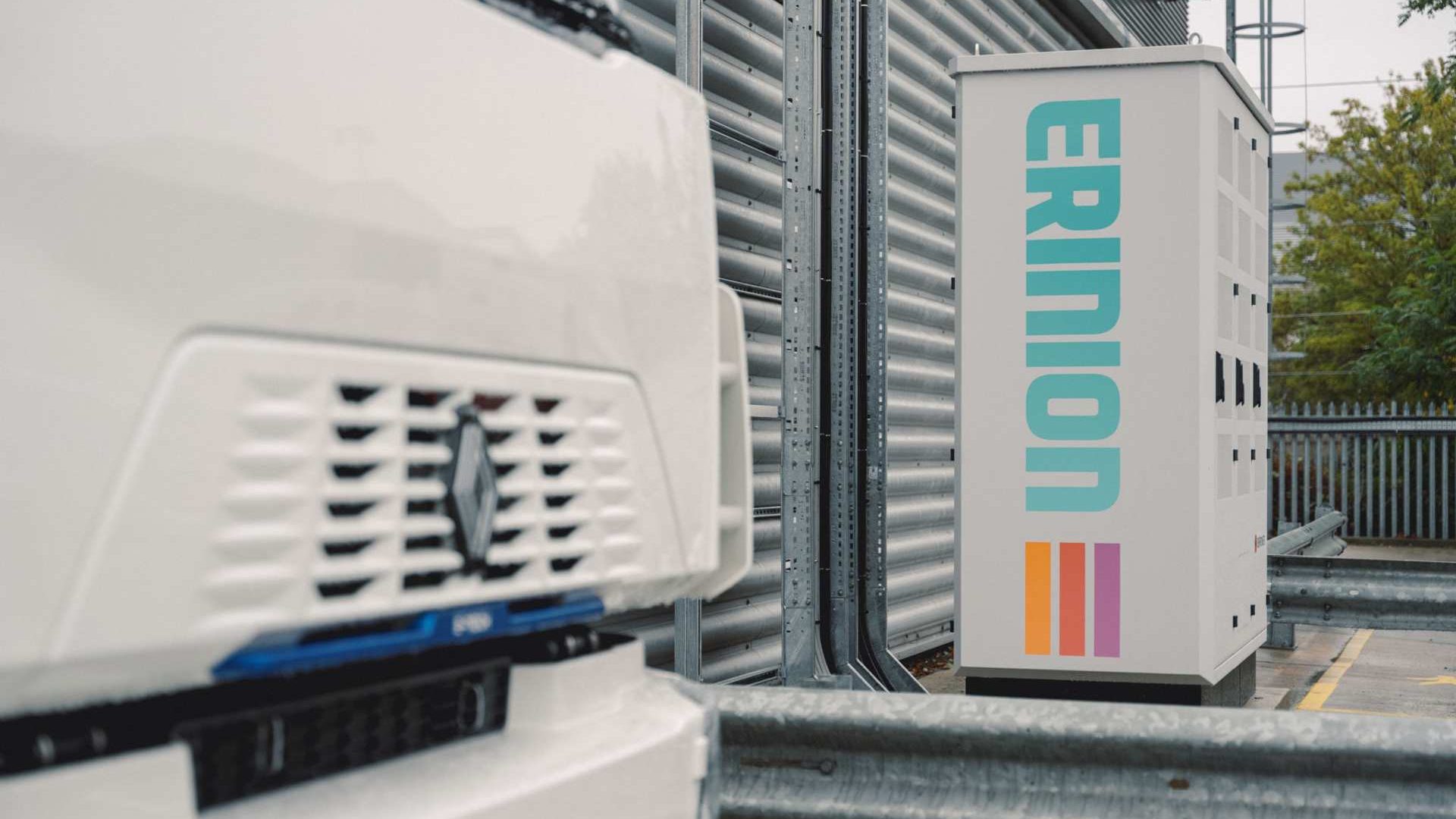
The project was designed and delivered by Erinion, the depot charging specialist belonging to the Scania Group and a sales and service partner of Kempower. The overhead structure has been developed with a modular approach, allowing Bidfood to expand its charging capacity as the number of electric trucks increases.
A charging infrastructure designed around logistics operations
The Slough depot is also Bidfood’s headquarters and a strategic distribution hub serving Greater London and the Thames Valley. The installation was supported by the UK Government’s Depot Charging Scheme and was officially unveiled in October alongside an 18-tonne electric truck from Renault Trucks.
One of the main advantages of the overhead configuration is its ability to preserve the existing depot layout. According to Bidfood, the charging infrastructure was installed without removing any parking spaces or disrupting daily operations.
The project is part of the wholesaler’s broader decarbonisation strategy, which includes a commitment to reduce absolute carbon emissions by at least 90% by 2045.
Looking ahead, Bidfood is also considering the possibility of opening its charging facilities to inbound suppliers. Such an approach could extend the benefits of the installation beyond the company’s own fleet, enabling the depot to serve as shared charging infrastructure for other transport operators.
For Kempower and Erinion, the Slough project provides an example of how charging infrastructure can be integrated into existing logistics facilities, combining power management, modularity and operational flexibility. Rather than requiring a complete redesign of the depot, the solution adapts electric truck charging to the site’s existing activities.