

Megawatt charging, here we go! Our report from the first Kempower Live Winter Days in Norrköping
We cound attend the Kempower Live Winter Days in Norrköping, a couple of hours by car from Stockholm. The event marks a watershed moment in awareness of the potential of ultra-fast charging for heavy vehicles. Stars of the show were three megawatt-ready road tractors from MAN, Scania, and Volvo.
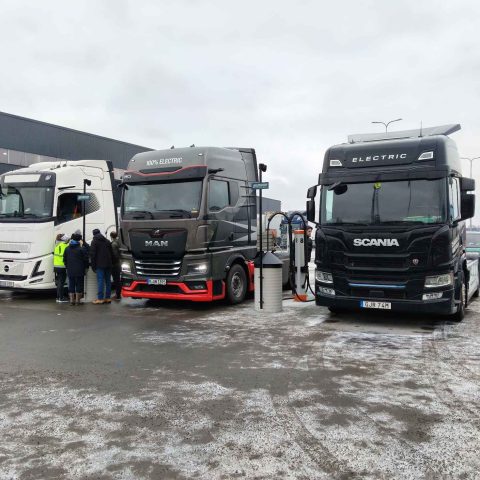
The participation in the first edition of the Live Winter Days organized by Kempower allowed us to see that megawatt charging—which offers an effective charging power of over 1MW—is already available. Among the charging system manufacturers that have been able to develop ultra-powerful charging stations, Kempower wanted to demonstrate in a practical and concrete way that, under the right operating conditions, it is already possible today to charge an electric truck in a time roughly corresponding to the mandatory break for drivers.
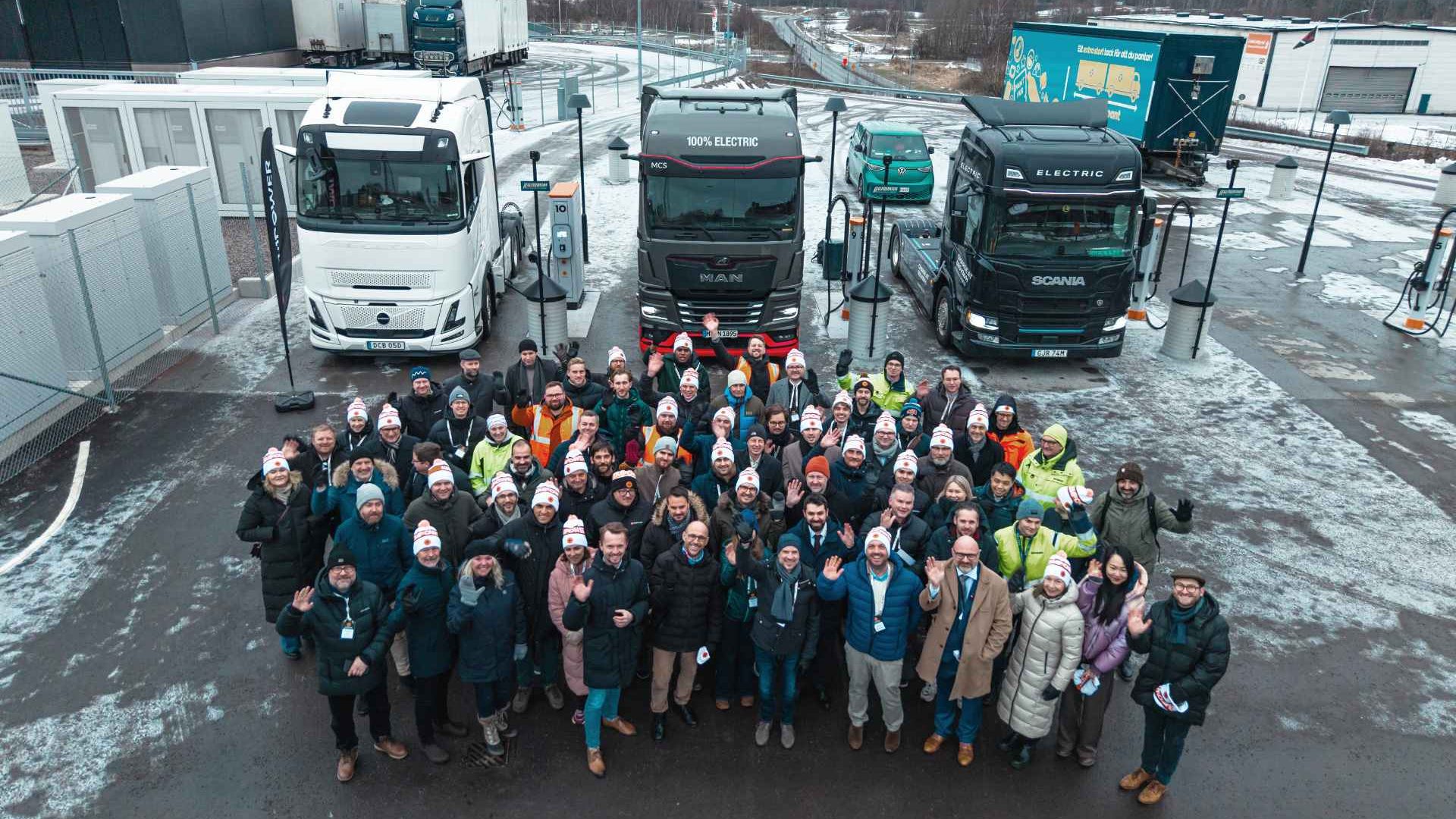
Technologically speaking, the event represents quite a watershed for the future of heavy transport in Europe. At the Alfredsson Transport company, which operates internationally and is based in Norrköping, less than two hours’ drive from Stockholm, three electric tractors designed for megawatt charging were charged: namely, a Volvo FH, a Scania, and an electric TGX from MAN. On the same topic, Mercedes has just announced a test of ultra-powerful charging that will be carried out with two eActros 600s in several European countries, from Germany to Sweden itself.
Kempower’s recipe for megawatt charging
From a technical point of view, what we saw with our own eyes was the ability of the system developed by Kempower to supply energy to batteries at a power level that had truly never been seen before. Depending on the model, once the connector was plugged in, the truck received energy at the maximum power that could be absorbed by the electrical circuit in a matter of seconds: in the case of Scania, for example, it reached almost 700 kW with an intensity of 1,000 amps (the power achieved by other models was slightly lower). At present, therefore, the limitation to reaching the effective megawatt of charging lies precisely in the relationship between intensity and voltage: manufacturers promise advances in this regard in the coming months.
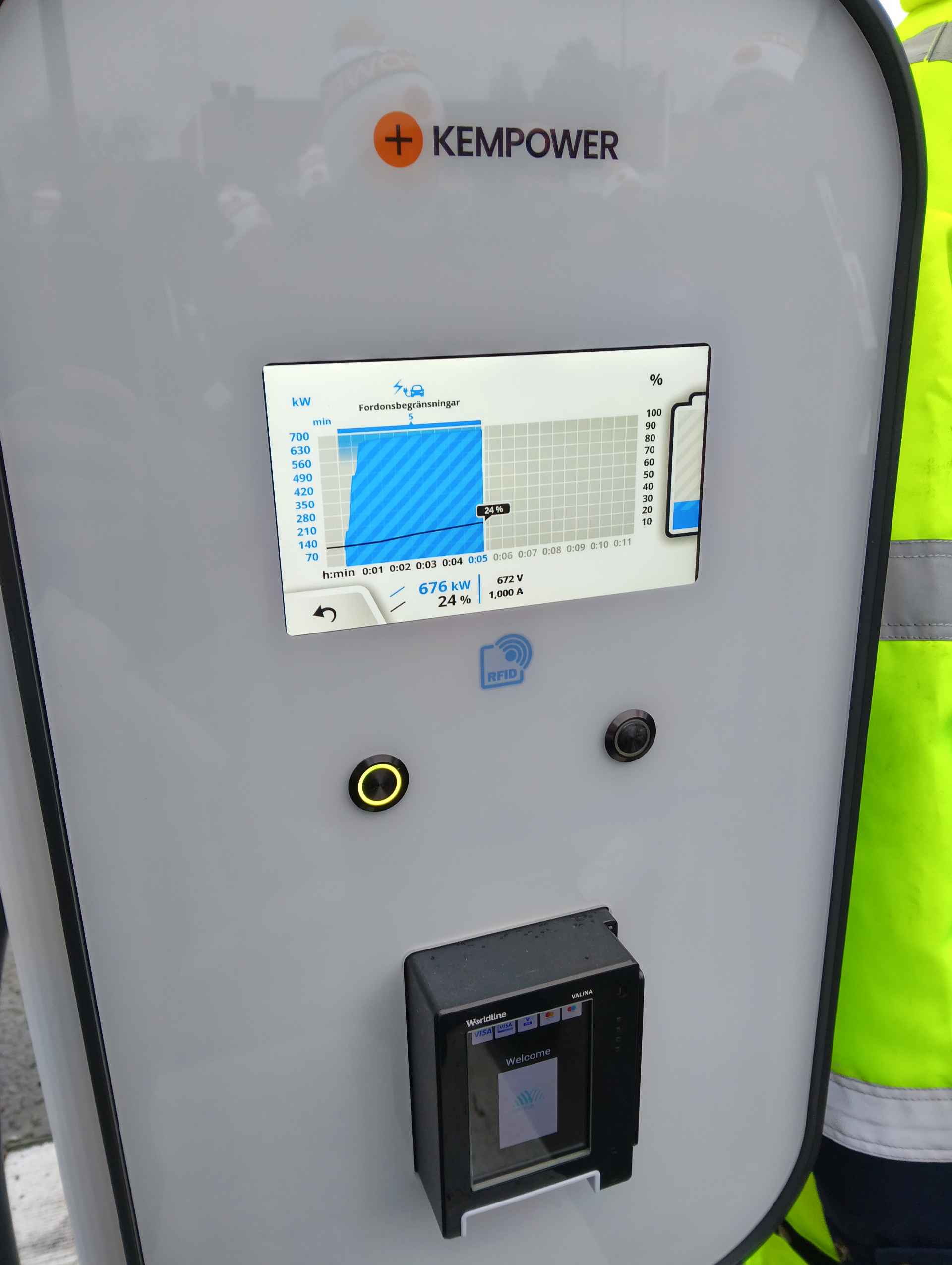
The charging system developed by Kempower, on the other hand, is the result of combining two 600 kW central units, thus ensuring a maximum charging power of 1.2 MW. The energy is supplied by the ‘mega’ satellite with a current intensity of up to 1,500 amps and a voltage of 150 to 1,000V. The cable is much larger than the more conventional CCS and has a maximum length of 2.7 meters. The entire system is liquid-cooled. Kempower, which manufactures charging systems in Lahti, Finland, for the European market and in Durham, North Carolina, for the North American market, unveiled its first megawatt charging system in April 2024 and made its first delivery in December of the same year.
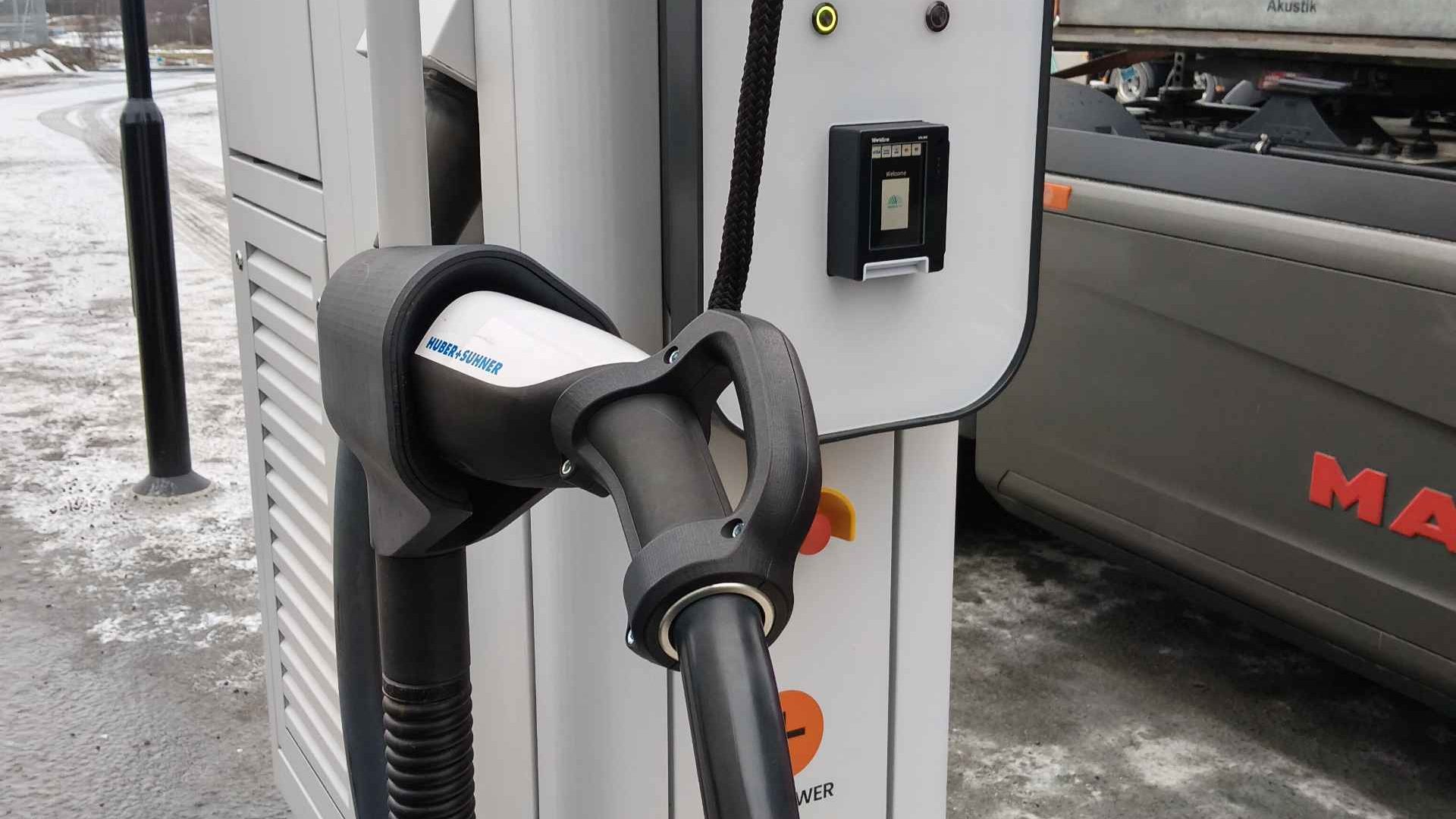
The charging hub Alfredsson Transport set up in Norrköping
The system we saw at Alfredsson Transport’s headquarters in Norrköping was installed in August 2025 and completes a charging hub with a total of 12 charging points for heavy vehicles up to 34 meters in length (Nordic parameters, as we know, are different from other European countries) with power ranging from 400 kW to 1.2 MW. The connection to the grid ensures Alfredsson has a total of 2.4 MW available, to which up to another 2,240 MWh of capacity can be added thanks to storage batteries. A 400kW solar panel system also contributes to the power supply. Overseeing the entire system is the ‘smart’ power distribution management made possible by software developed by Kempower.
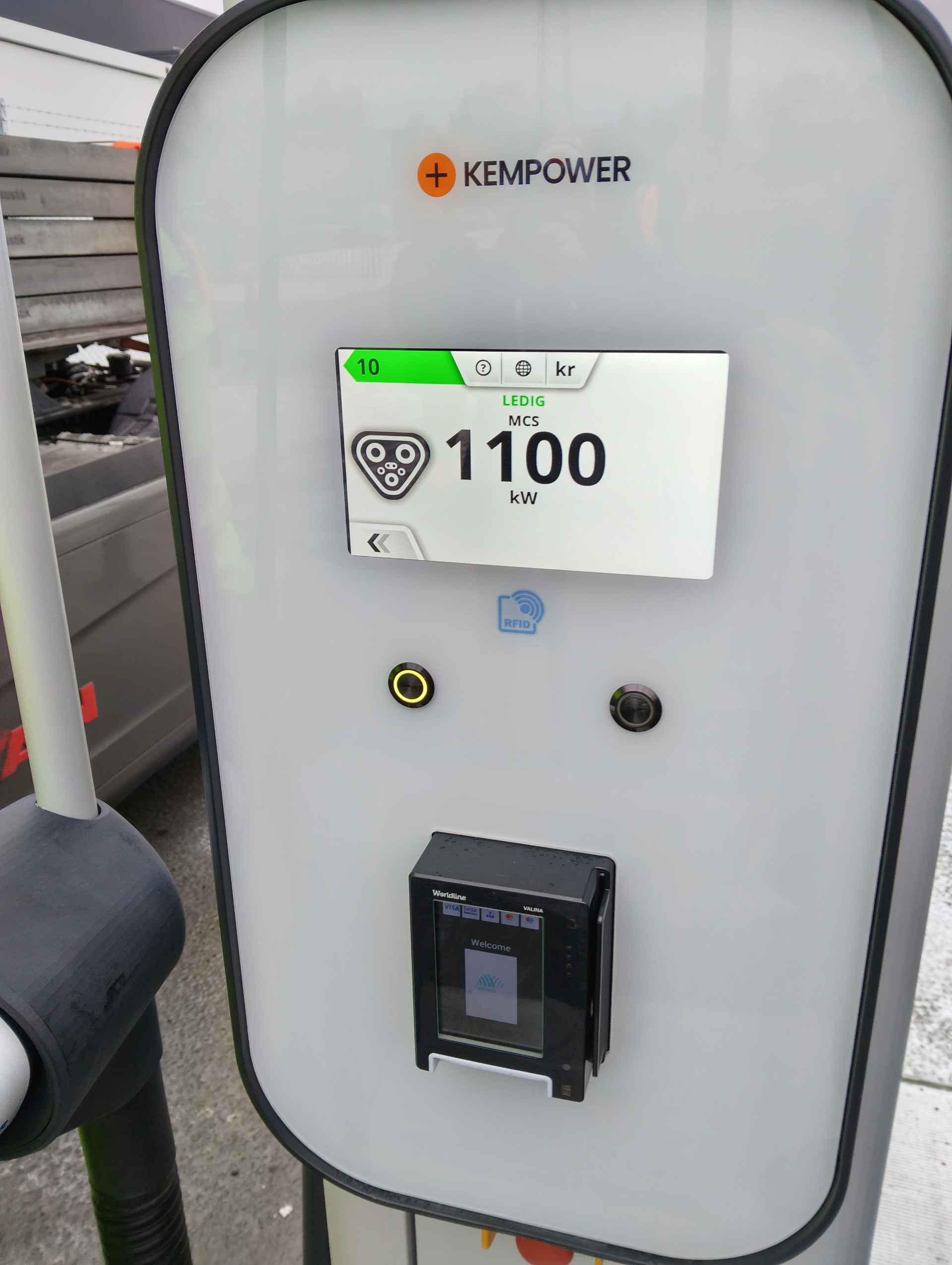
The charging hub, which is no small detail, is semi-public: this means that Alfredsson also makes it available to other transport companies, for a fee, of course. This is an interesting model that is becoming increasingly popular in Europe as a way of overcoming the objective difficulties of the public charging network.
A virtuous example, certainly. Not easily replicable, it’s true, but feasible, as we have seen in Sweden. And not the only one in Europe: Kempower has already installed megawatt charging systems in Norway, Denmark, and Finland, as well as a mega hub in a port environment inaugurated last December in England, equipped with 12 megawatt connectors and a total available power of 11 MW.
The full report will be available on the next issue of Sustainable Truck&Van Magazine!