
Milence starts construction of new charging hub in Frankfurt (Oder)
Located close to the German-Polish border, the site is expected to support cross-border electric road transport on the strategic east-west route linking the North Sea ports of Rotterdam and Antwerp with Germany and Warsaw. The hub is being developed within Log Plaza Frankfurt (Oder), an industrial and logistics park.
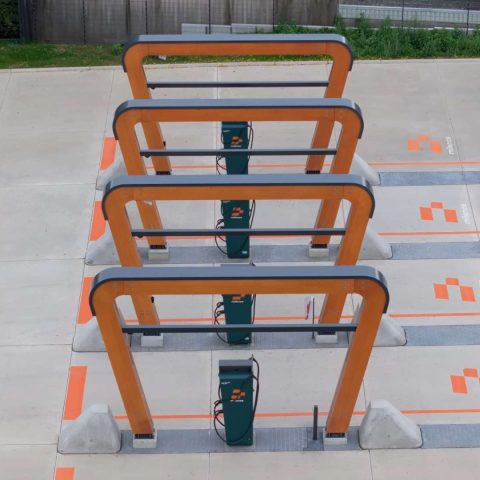
Milence has started construction of a new charging hub for battery-electric trucks in Frankfurt (Oder), Germany, further expanding its European charging network along one of the continent’s busiest freight corridors.
Located close to the German-Polish border, the site is expected to support cross-border electric road transport on the strategic east-west route linking the North Sea ports of Rotterdam and Antwerp with Germany and Warsaw. The hub is being developed within Log Plaza Frankfurt (Oder), an industrial and logistics park owned by ALCARO Invest GmbH and situated approximately 300 metres from the A12 motorway.
Milence’s new hub in Frankfurt: two phases
The first phase of the project will include four high-power CCS charging points delivering up to 400 kW and five dedicated charging bays for heavy-duty battery-electric vehicles. According to Milence, the facility has been designed to allow further expansion as demand for electric truck charging grows.
The new site adds another location to Milence’s fast-growing European network, which is focused on enabling long-haul zero-emission freight transport through strategically positioned charging hubs. The Frankfurt (Oder) facility is expected to play a key role in supporting international freight flows between Western and Eastern Europe, particularly for logistics operators serving the German and Polish markets.
Milence said the hub will open in the coming months, although no specific commissioning date has been announced. The project reflects the joint venture’s strategy of deploying charging infrastructure along major European transport corridors, in line with the increasing rollout of battery-electric heavy-duty vehicles and the requirements of the EU’s Alternative Fuels Infrastructure Regulation (AFIR).