
Milence opens new Dutch charging hub, showcasing zero-emission construction
Milence has expanded its European charging network with a new hub in Deurningen-Hengelo, the company's fourth site in the Netherlands. Besides strengthening the North Sea–Baltic freight corridor, the project marks a first for the joint venture, having been built using zero-emission construction equipment.
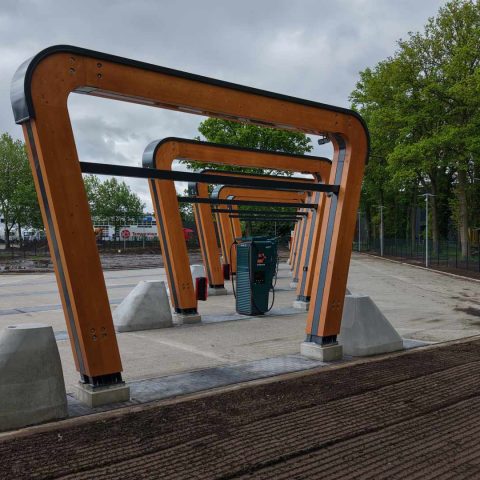
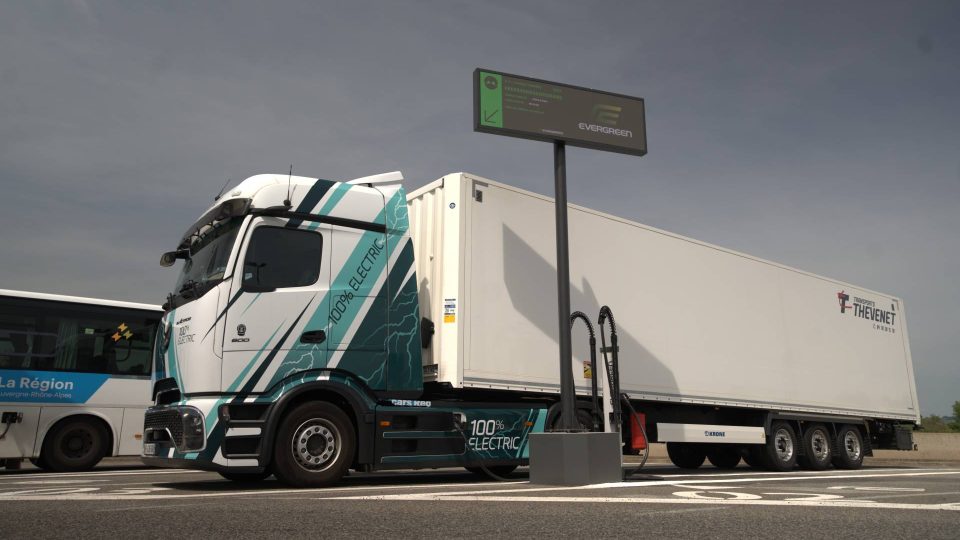
Milence has inaugurated a new public charging hub for battery-electric heavy-duty trucks in Deurningen-Hengelo, in the eastern Netherlands. Strategically located along the A1 motorway at the Frans op den Bult truck stop, the site reinforces the North Sea–Baltic TEN-T corridor, one of Europe’s key cross-border freight routes linking the Netherlands, Germany and beyond.
The new facility is Milence’s fourth operational hub in the Netherlands and offers five charging bays equipped with 400 kW CCS chargers. Like other sites in the network, it has been designed to allow future expansion as demand for electric heavy-duty transport continues to grow.
Milence’s new charging hub in the Netherlands
What sets the Deurningen-Hengelo hub apart from previous Milence projects is the way it was built. According to the company, it is the first charging hub in its European network constructed using electric construction equipment, supported by low-emission logistics and more sustainable building materials. Milence says the project served as a practical test case to assess how zero-emission construction methods can be applied to future charging infrastructure developments.
The hub also benefits from the services already available at the Frans op den Bult truck stop, including secure parking, restaurant facilities and driver amenities, allowing truck operators to combine high-power charging with mandatory rest periods.
With each new opening, Milence continues to fill strategic gaps along Europe’s main freight corridors. The Deurningen-Hengelo project also signals a broader shift: as the rollout of charging infrastructure accelerates, attention is increasingly turning not only to where hubs are built, but also to how they are constructed and the environmental footprint of the construction process itself.