
New Eagle’s single-controller EV platform for megawatt charging
the NX3 extends New Eagle’s unified, and patented, Raptor and OpenECU platform, enabling new levels of system integration, scalability, and development efficiency across electrified vehicle programs.
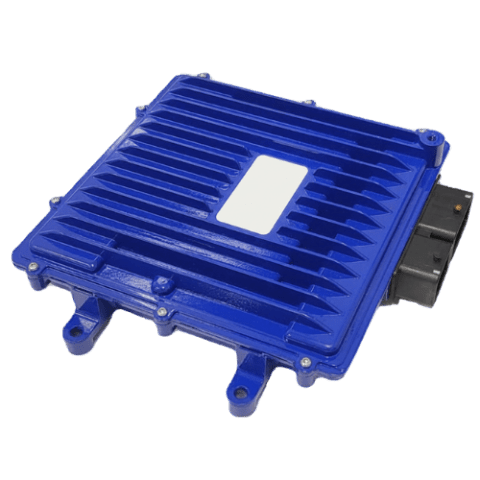
At ACT Expo 2026, New Eagle, a leading company in embedded control systems for intelligent vehicles and machines, presented the patented OpenECU NX3, a next-generation control platform designed to simplify electrified vehicle architectures by consolidating charging and supervisory control into a single ECU. Indeed, the NX3 extends New Eagle’s unified, and patented, Raptor and OpenECU platform, enabling new levels of system integration, scalability, and development efficiency across electrified vehicle programs.
The aforementioned solution combines Megawatt Charging System (MCS) and Combined Charging System (CCS) protocols with full vehicle supervisory control, eliminating the need for multiple controllers and significantly reducing system complexity, wiring overhead, and failure points.
New Eagle: key features of the newly-unveiled product
Built on the OpenECU platform and integrated with New Eagle’s Raptor toolchain, the NX3 enables seamless development from model-based design through production deployment. According to the manufacturer, key capabilities of the product now include:
- Dual-Inlet Charging Control: MCS and CCS support from a single ECU, eliminating redundant controllers
- Full Vehicle Supervisory Control: Integrated management of powertrain, charging, and auxiliary systems
- Production-Ready Safety & Security: Designed to meet ASIL-D functional safety and ISO 21434 cybersecurity requirements
- Flexible Development Environment: Support for model-based development and C-code workflows
In addition to the NX3, New Eagle is introducing new charge control and driveline solutions, including the Charge Control Unit (CCU) and DLC-12, expanding its portfolio of scalable, production-ready controllers for electrified vehicle systems. “The OpenECU NX3 is designed to simplify vehicle control systems architecture,” commented Kevin Alley, chief commercial officer at New Eagle. “We’re eliminating multi-controller complexity and delivering a single, production-ready platform that accelerates deployment of next-generation EV systems.”