

Scania completes its first MCS charging session in Italy at up to 750 kW
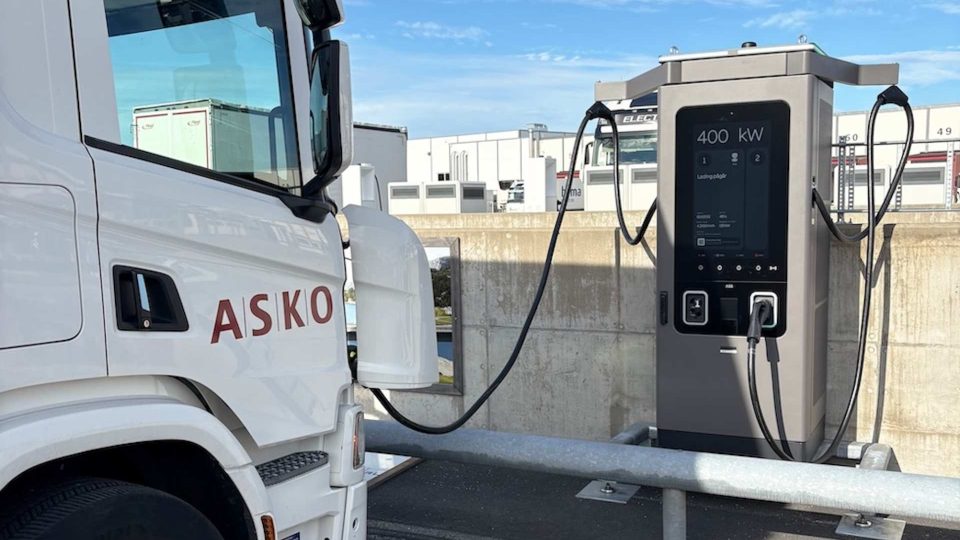
Scania has completed its first Megawatt Charging System session in Italy with a 40 R electric truck, using charging infrastructure at Bolzano South and Varna along the Brenner corridor. The truck can accept up to 750 kW and 1,000 amps, with Scania claiming around 400 km of range can be recovered in 30 minutes.
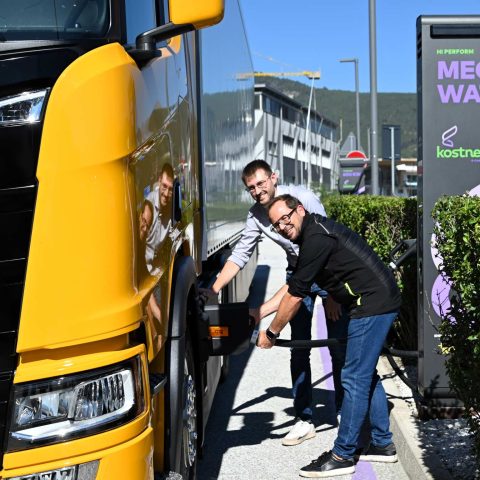
Just a few days ago, on behalf of our sister platform Vado e Torno, we had the opportunity to drive this very Scania 40 R electric truck on the motorway. Now, the same vehicle has reached another significant milestone, completing Scania’s first Megawatt Charging System (MCS) session in Italy.
The test took place at two charging locations along the Brenner corridor: the facility at the A22 Bolzano South motorway exit, operated by Autostrada del Brennero, and the station in Varna, near Bressanone, developed by Ide2n and operated by kostner SERVICE STATIONS.
The development is particularly relevant for long-haul electric transport. Compared with CCS2, currently the most widespread charging standard for electric trucks, MCS is designed to handle considerably higher power and current, reducing the time required to put substantial amounts of energy back into a truck’s battery.
In the case of the Scania 40 R used for the test, maximum MCS charging power is 750 kW at up to 1,000 amps. With CCS2, the same truck can accept up to 375 kW and 500 amps.
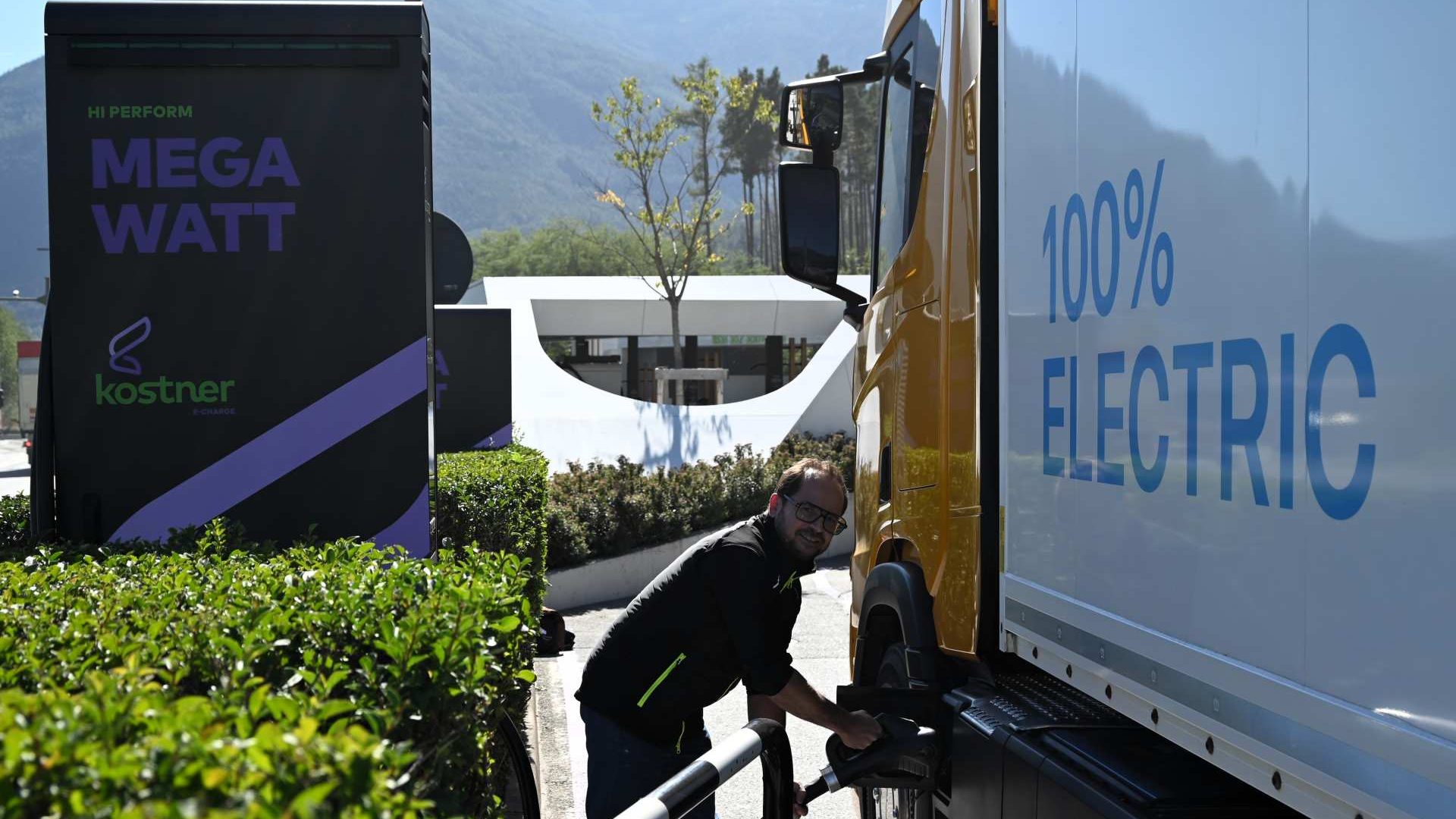
Scania: around 400 km of range in 30 minutes
According to Scania, MCS can provide enough energy for around 400 km of driving in approximately 30 minutes. The idea is to increasingly align charging with the mandatory break after 4.5 hours of driving, thereby limiting the impact on truck operations.
“The Megawatt Charging System is the standard developed to enable fast charging of electric heavy-duty vehicles travelling long distances,” said Simone Martinelli, E-mobility, Urban & Construction Sales at Scania Italy.
MCS itself is designed to support currents potentially reaching 3,000 amps, although Scania’s current system operates at up to 1,000 amps.
The 40 R involved in the test is equipped with five battery packs providing 445 kWh of installed capacity and 400 kWh of usable capacity. Its EM C1-4 electric motor delivers 400 kW (around 540 hp) and is paired with a four-speed transmission. The tractor has a stated kerb weight of 9,690 kg.
Alpitronic HYC1000 provides up to 1 MW
The charging infrastructure uses the Alpitronic Hypercharger HYC1000, whose Power Cabinet can deliver a maximum of 1,000 kW.
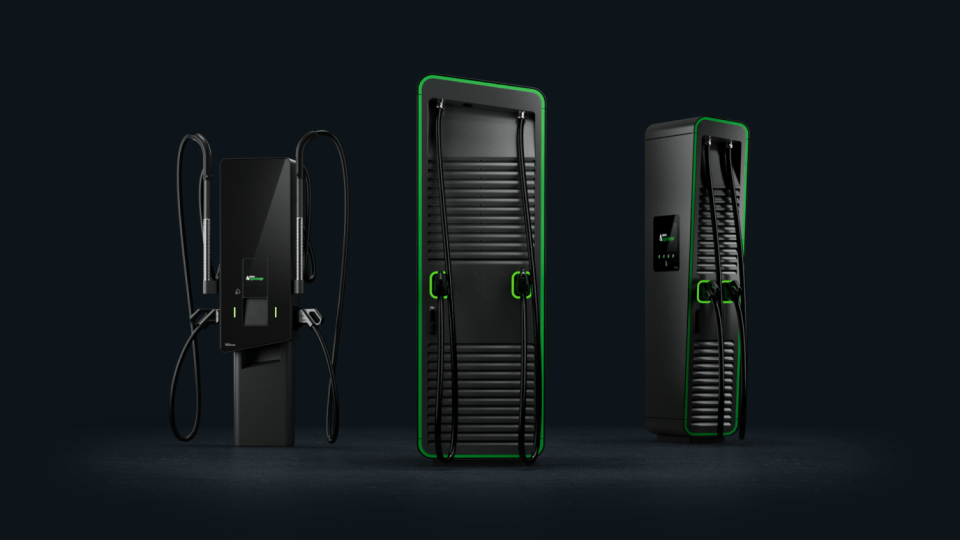
The system supports MCS charging at up to 1 MW and CCS2 at up to 600 kW, using eight power modules with dynamic power distribution in 62.5 kW increments.
The Bolzano South site, located at the Firmian parking area, is particularly significant. According to Scania, it is Italy’s first public charging infrastructure for electric trucks equipped with MCS technology. Its position on the A22 also places megawatt charging directly on one of the main freight corridors connecting Italy with Central Europe.
At Varna, meanwhile, kostner SERVICE STATIONS has installed an MCS charging station supplied entirely with electricity from renewable sources, partly generated by the group’s own photovoltaic systems and partly supplied by its clean-energy provider KOSI.
The charging sessions therefore brought together an MCS-ready electric truck and high-power infrastructure already installed along a major European freight corridor. This is an important step for long-haul electric trucking, where fitting high-power charging into drivers’ mandatory rest periods could substantially reduce the operational impact of battery charging.