
Toyota reveals in UK the brand-new Hilux pick up equipped with fuel cells
Hydrogen is stored in three high-pressure fuel tanks, giving the prototype Hilux an expected driving range of more than 600 km. The project, supported by UK Government funding, is shared with Ricardo.
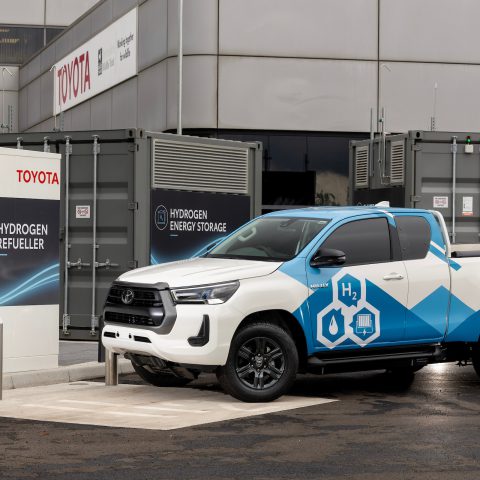
The hydrogen fuel cell version of the Toyota Hilux pick up was lately revealed in UK, at Toyota Manufacturing vehicle plant located in Derby, England, where the vehicle itself has been developed in a joint project with consortium partners, supported by UK Government funding.
More into technical details, the new powertrain uses core elements from the Toyota Mirai hydrogen fuel cell electric sedan – technology that has proved its quality in almost 10 years of commercial production. When driven, the fuel cell produces no tailpipe emissions other than pure water. Moreover, hydrogen is stored in three high-pressure fuel tanks, giving the prototype Hilux an expected driving range of more than 600 km.
Toyota Hilux with fuel cells: the project and partners
Prototype construction began on June 5 this year, working to Toyota Production System principles in a dedicated area within the TMUK facility. The first vehicle was completed just three weeks later, the first of 10 that will be built by the end of this year. These will undergo rigorous testing to ensure safety, dynamic performance, functionality and durability meet the high standards required of a production model.
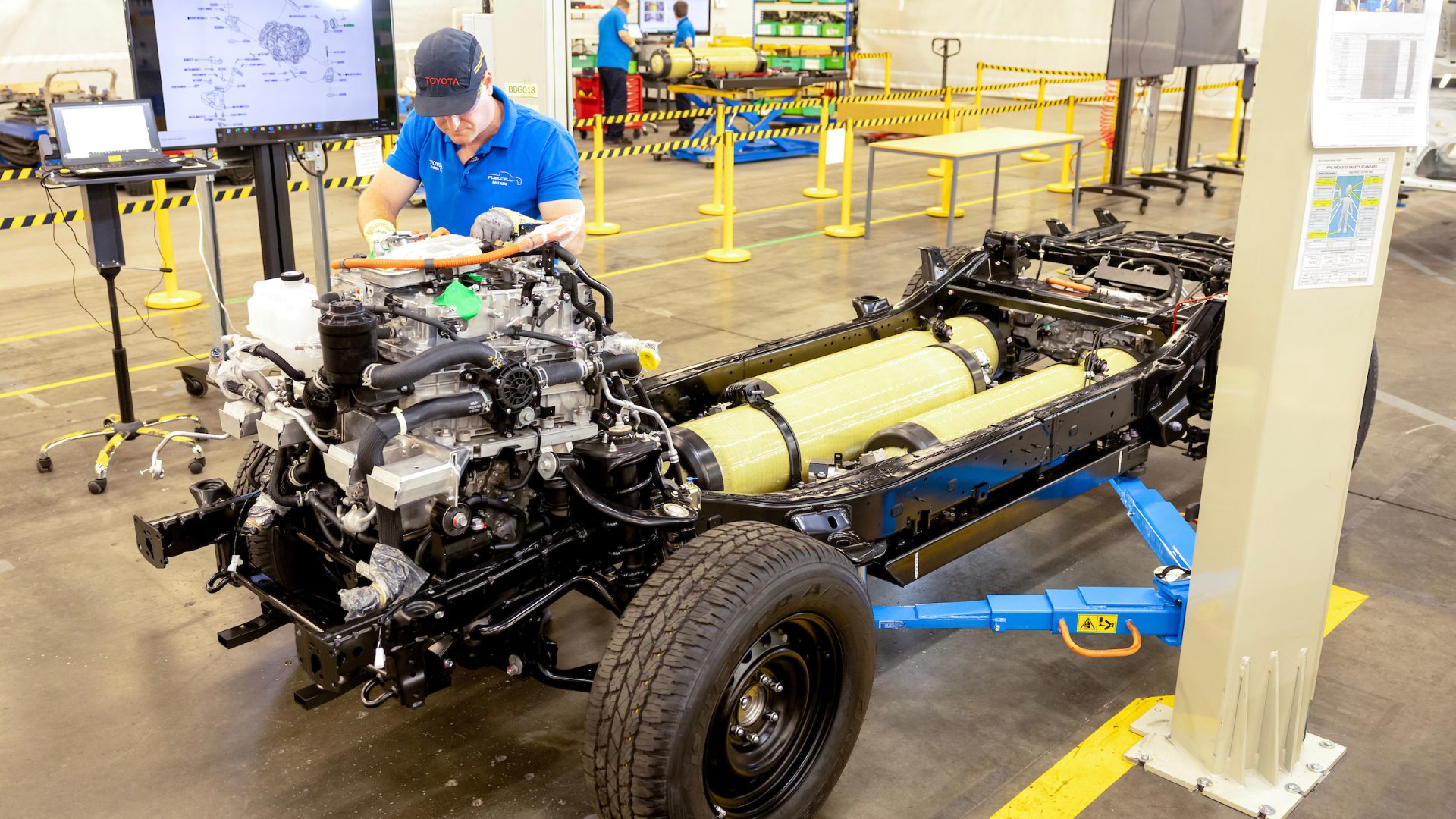
Engineering company Ricardo has supported preparations for the prototype build, carrying out design and development tasks and confirming the complete manufacturing process in parallel with teams at TMUK. Ricardo will undertake complete evaluation of the vehicle over the coming months, prior to a decision on a potential production model being introduced in the second half of this decade.