
EV charging in Europe is getting faster, but Kempower data reveals a significant power gap
Kempower has analysed public charging data collected between 2022 and 2025 across 11 European countries. Peak charging power increased by 32% and energy delivered per session by 12%, while charging times fell slightly. However, a significant gap remains between peak and average power actually delivered.
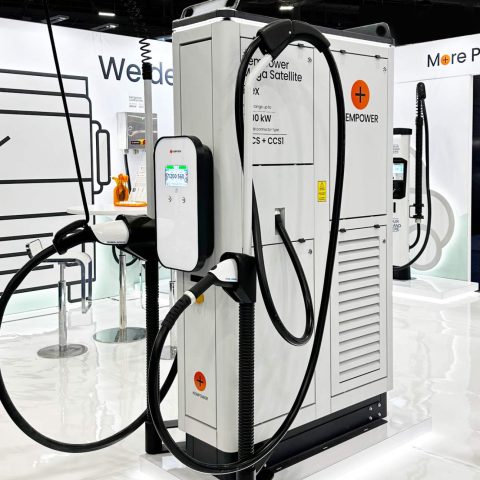
Europe’s public EV charging infrastructure is delivering more energy at higher power and in slightly less time than just a few years ago. This is the main finding of an analysis released by Finnish charging infrastructure manufacturer Kempower, based on data collected through its ChargEye platform between 2022 and 2025.
The dataset covers charging operations in 11 European countries: Norway, Sweden, Finland, Denmark, the United Kingdom, the Netherlands, Belgium, France, Spain, Portugal and Italy.
Over the period analysed, peak charging power increased by 32%, while the amount of energy delivered during an average charging session rose by 12%. Charging sessions became around 3% shorter, with an average duration of approximately 35 minutes.
More charging power, but how much is actually used?
Perhaps the most interesting finding, however, concerns the difference between the maximum power reached during a charging session and the average power actually delivered. Kempower identified a significant gap in all 11 markets analysed. In the UK, for example, peak charging power reached 79 kW, compared with an average delivered power of 52.9 kW.
According to the company, this difference indicates that further improvements in charging performance will increasingly depend not only on installing higher-power hardware but also on managing available power more efficiently.
Distributed charging architectures and dynamic power allocation can, for example, redirect available capacity between several charging points according to actual vehicle demand. This could allow operators to serve more vehicles without necessarily increasing the maximum installed power by the same proportion.
Nordic countries still lead Europe’s charging market
Significant regional differences remain. According to Kempower’s data, the Nordic countries continue to represent Europe’s most mature charging markets, recording both the highest peak power levels and the shortest charging times.
Other European markets are nevertheless catching up. Southern European countries showed improvements in both peak charging power and energy delivered, while the UK recorded the highest average amount of energy delivered per charging session, at 30 kWh.
The figures were collected through Kempower ChargEye, the company’s cloud-based charging management platform, which monitors charging sessions and charger performance.
For Kempower Chief Product Officer Jussi Vanhanen, the results suggest that the industry may now be moving beyond a phase primarily focused on maximum charging speed. As network utilisation increases, he argues, the relevant metric will increasingly become how many vehicles an infrastructure can efficiently serve with the available power.
This shift could become particularly relevant as charging infrastructure expands to applications with high and simultaneous energy demand, including commercial vehicle and truck fleets, where effective power allocation between multiple charging points can be as important as the maximum output of an individual charger.