

Mercedes-Benz NextGenH2: almost half of the 100 hydrogen trucks already allocated
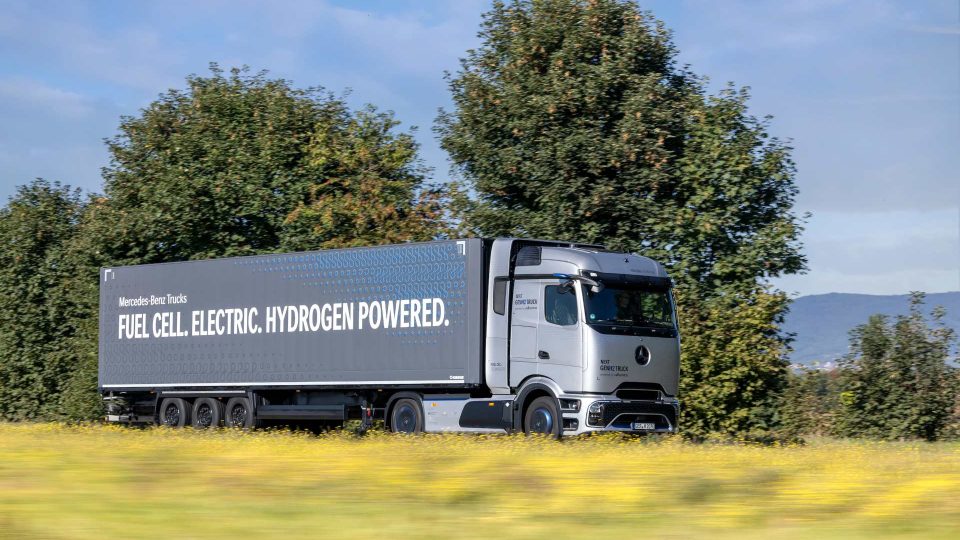
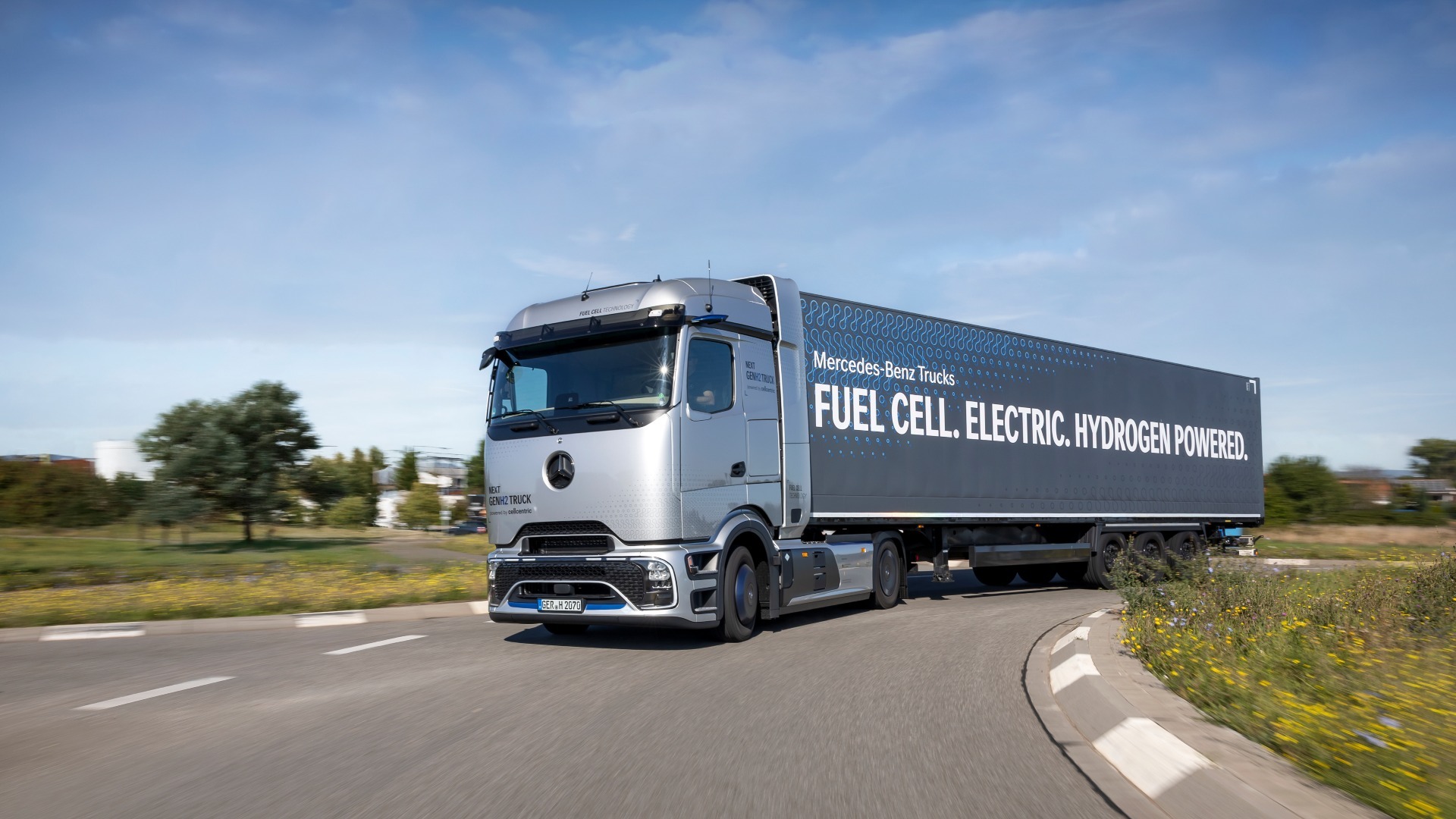
Mercedes-Benz Trucks plans to start small-series production of the NextGenH2 at its Wörth am Rhein plant in 2027. The manufacturer claims a range of well over 1,000 kilometres at full load and refuelling times of 10–15 minutes. However, the availability of hydrogen refuelling stations along transport routes remains a key challenge.
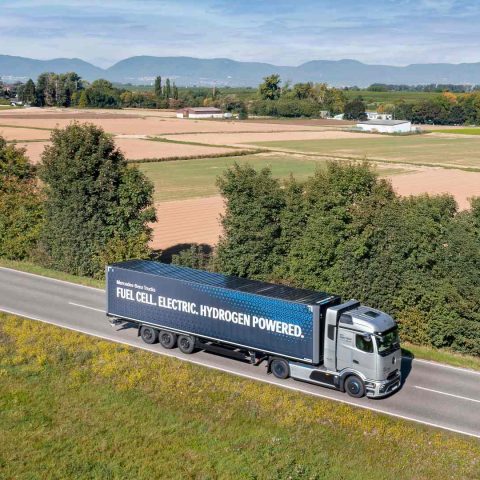

Almost half of the 100 Mercedes-Benz NextGenH2 trucks scheduled to be deployed with transport operators from 2027 have already been allocated, according to Daimler Truck.
The new generation of fuel cell trucks will be manufactured in small series at the company’s Wörth am Rhein plant in Germany. With this programme, the manufacturer is pursuing hydrogen technology alongside battery-electric trucks for long-haul transport.
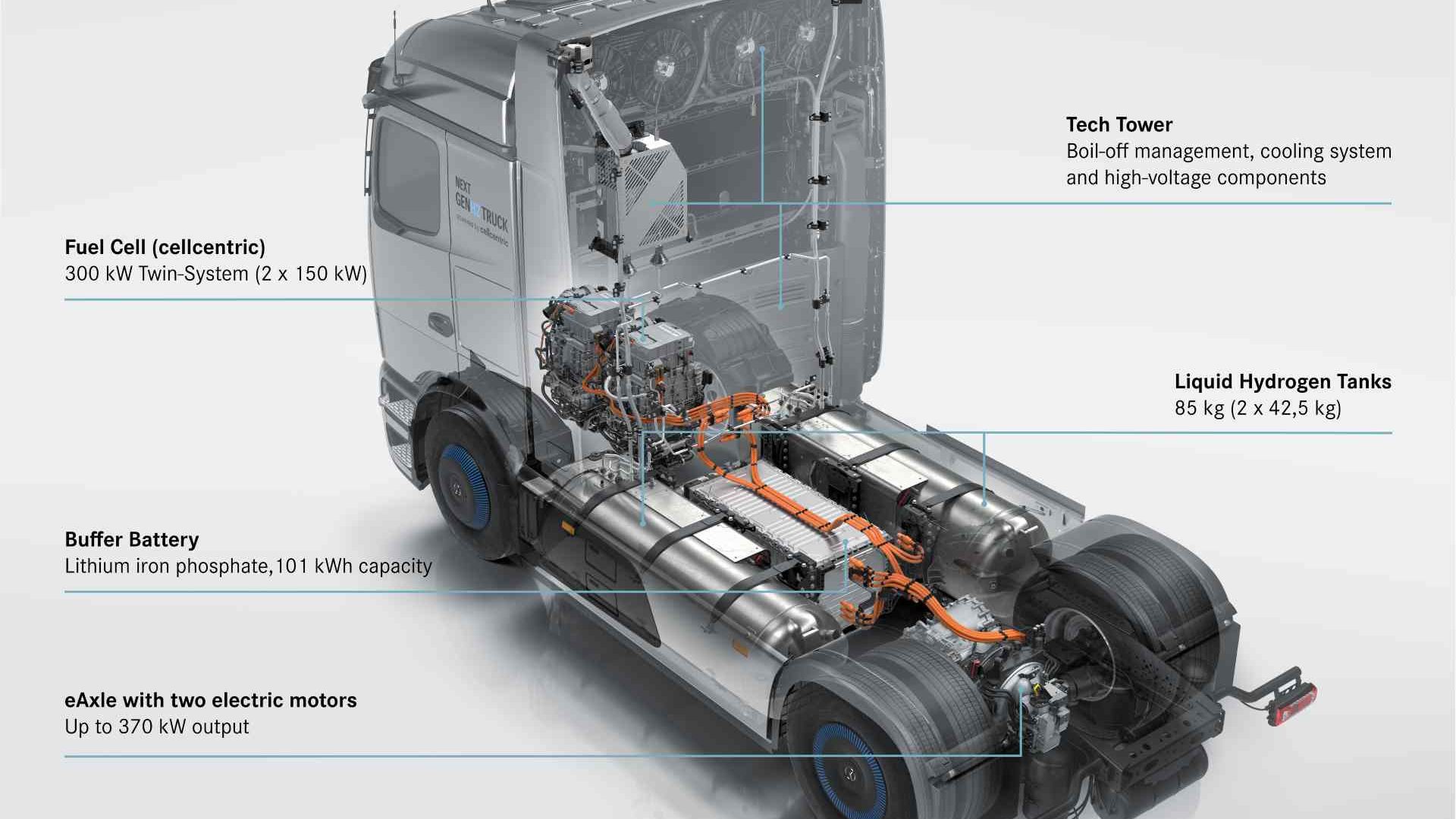
In the NextGenH2, fuel cells use hydrogen stored onboard to generate the electricity required to power the electric motor.
Why Mercedes-Benz Trucks has chosen liquid hydrogen
The NextGenH2’s tanks can store up to 85 kg of liquid hydrogen, maintained at a temperature of approximately −253°C. Compared with compressed gaseous hydrogen, liquid hydrogen requires less storage space for the same driving range.
The manufacturer also points to a potential weight advantage compared with battery-electric solutions, although actual payload capacity depends on the vehicle configuration and the weight of the other powertrain components.
Daimler Truck claims a driving range of well over 1,000 kilometres at full load for the NextGenH2. However, the road test cited by the company was conducted with the previous-generation model.
In September 2023, a GenH2 Truck covered 1,047 kilometres on a single tank, with a gross combination weight of approximately 40 tonnes.
For the NextGenH2, the manufacturer indicates a refuelling time of around 10–15 minutes, using a procedure based on the ISO 13984 standard.
More than 600,000 kilometres in customer trials
Since summer 2024, five first-generation GenH2 trucks have covered a combined distance of more than 600,000 kilometres in trials involving ten customers. The vehicles operate on predefined routes, relying on hydrogen refuelling infrastructure in Wörth am Rhein and the Duisburg area.
For transport operators, the possibility of organising driving schedules and refuelling stops in a way comparable to diesel trucks therefore depends on the availability of liquid hydrogen stations along their actual routes.
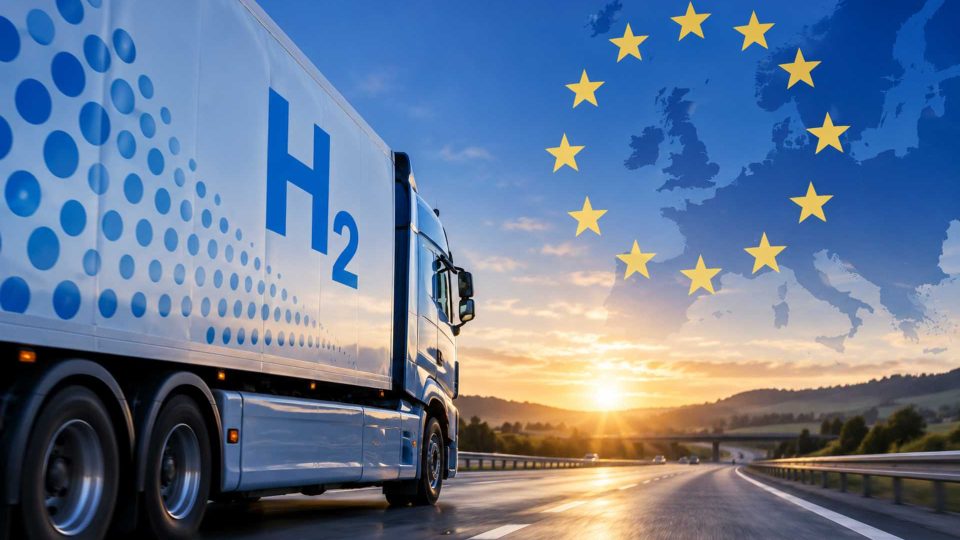
At IAA Transportation 2026 in Hanover, Daimler Truck, Volvo Group, Toyota, Bosch, Air Liquide, TotalEnergies, TEAL Mobility and MB Energy presented a joint initiative to develop hydrogen refuelling infrastructure along Europe’s main transport corridors, in parallel with the deployment of hydrogen-powered fleets.
According to Daimler Truck, achieving a competitive total cost of ownership (TCO) will also require competitively priced hydrogen and lower vehicle acquisition costs. To address the latter, the group is counting on increasing production volumes.