

Honda to supply fuel cell systems for the next hydrogen-powered Isuzu truck
Isuzu and Honda believe that fuel cell technology, utilizing hydrogen as fuel resulting in no CO2 emissions, will be effective to achieve carbon neutrality of heavy-duty trucks which are required to address large load capacity, long-time use, long-distance driving and the need for quick refueling.
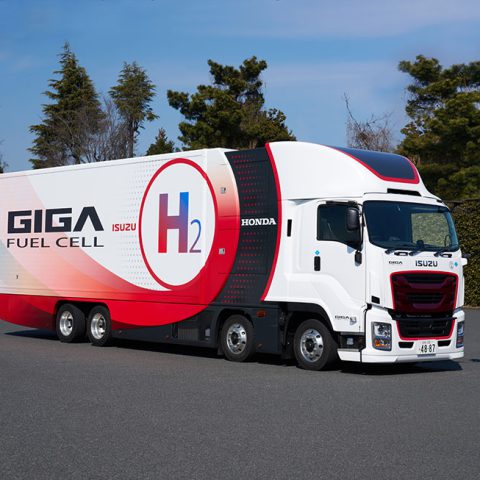
Isuzu chose Honda as a supplier of fuel cell systems for the next hydrogen-powered truck to be developed by the Japanese brand, with the target to have it ready by 2027. As stated by the two companies from the Far East, “Isuzu and Honda believe that fuel cell technology, utilizing hydrogen as fuel resulting in no CO2 emissions, will be effective to achieve carbon neutrality of heavy-duty trucks which are required to address large load capacity, long-time use, long-distance driving and the need for quick refueling”.
Isuzu is working on hydrogen-powered trucks
More into details, the two companies are currently planning to start demonstration testing of a prototype truck on public roads before the end of the current fiscal year (ending March 31, 2024). By fully leveraging experience and knowledge gained through the joint research, the two companies will continue making progress in the development of products that fulfill the performance and conditions required for heavy-duty trucks and satisfy customers.