

Marks & Spencer expands e-truck fleet with DAF XD as refrigerated transport goes diesel-free
Marks & Spencer is expanding its electric heavy-duty fleet with ten DAF XD Electric trucks. The rollout marks the retailer's transition from pilot projects to wider deployment and includes the UK's first DAF truck capable of powering a refrigerated trailer directly from its traction battery.
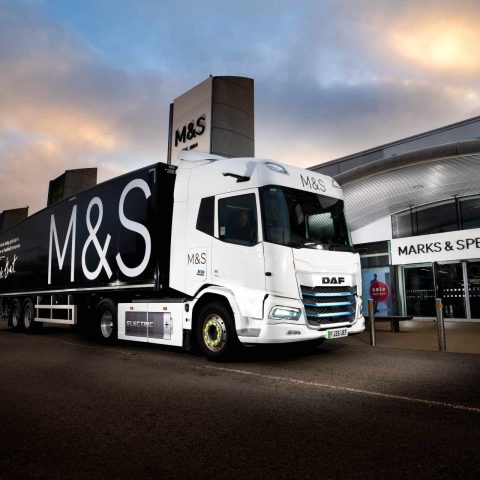
Marks & Spencer (M&S) is expanding the electrification of its logistics operations with the deployment of ten DAF XD Electric tractor units, reinforcing its strategy to decarbonise road transport across the UK. Beyond the fleet expansion itself, the rollout includes what the retailer describes as a UK first: a refrigerated trailer powered directly by the truck’s traction battery, eliminating the need for a separate diesel-powered refrigeration unit.
The new trucks will operate between M&S distribution centres and stores, supporting the retailer’s ambition to achieve Net Zero across its entire value chain by 2040 while reducing emissions from heavy-duty transport.
From pilot projects to large-scale deployment
For M&S, the latest investment represents more than another electric vehicle trial. According to the company, the new fleet marks the transition towards wider operational deployment of battery-electric trucks within its logistics network.
“We’re not just trialling electric anymore – we’re scaling up,” said Andrew Woolfenden, Head of Group Transport at Marks & Spencer, underlining how electric heavy-duty vehicles are becoming part of the company’s day-to-day operations rather than limited demonstration projects.
The trucks are expected to deliver significant CO₂ savings while maintaining the operational performance required for regional distribution activities.
Electrifying refrigerated transport
One of the most notable aspects of the deployment is the integration of a refrigerated trailer whose cooling system draws power directly from the truck’s battery pack. By removing the conventional diesel-powered refrigeration unit, M&S aims to further reduce emissions and noise while simplifying the vehicle’s overall energy management.
Refrigerated transport has long been considered one of the more challenging applications for heavy-duty electrification because of the additional energy required to maintain temperature-controlled cargo. The new configuration demonstrates how battery-electric trucks are beginning to address increasingly demanding logistics applications beyond standard freight distribution.