
ACEA urges EU to accelerate automotive package, calling for greater flexibility on van emissions
European vehicle manufacturers are calling on EU institutions to speed up negotiations on the automotive package and reach an agreement in early 2027. ACEA is seeking more flexible CO₂ targets, specific provisions for light commercial vehicles and stronger incentives for European production, while maintaining the industry's decarbonisation objectives.
The European Automobile Manufacturers’ Association (ACEA) has urged EU policymakers to accelerate negotiations on the automotive package, warning that manufacturers need greater regulatory certainty to plan investments and remain competitive.
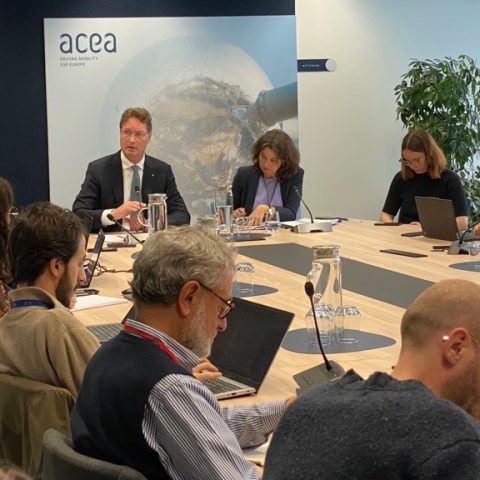
In a statement released on 14 October, following a meeting of its Light Duty Vehicle Board in Brussels, the association called for substantial progress in the coming months, with the aim of finalising the package in early 2027.
Although the proposals concern the automotive industry as a whole, light commercial vehicles feature prominently in ACEA’s requests, particularly regarding CO₂ emission targets and incentives for electric vehicle production.
“Now it’s time for the EU to reform the legislative framework so that it will help achieve the triple goal of decarbonisation, economic security and job preservation,” said Ola Källenius, ACEA President and CEO of Mercedes-Benz.
ACEA calls for a different CO₂ trajectory for vans
According to ACEA, the regulatory framework must offer more realistic conditions and greater flexibility for manufacturers to meet emissions reduction targets, while recognising the potential contribution of renewable fuels and lower-carbon materials.
One of the association’s main proposals is a five-year averaging mechanism starting in 2028, designed to provide greater flexibility in meeting CO₂ targets while rewarding early electric vehicle sales.
ACEA also argues that the emissions reduction trajectory for vans should be adjusted separately from passenger cars, reflecting the lower starting point of the electric light commercial vehicle market.
The association’s position is that regulatory penalties alone cannot accelerate the transition without sufficient market demand and conditions supporting vehicle adoption.
Made-in-Europe incentives and industrial competitiveness
Another central element concerns the proposed Industrial Accelerator Act (IAA), which ACEA believes should include realistic implementation timelines aligned with European supply chain capabilities.
The association is calling for additional regulatory incentives, including super-credits for battery-electric cars and vans manufactured in the EU, alongside further benefits for small electric cars produced in Europe.
ACEA also wants the geographical scope of the proposed framework to reflect manufacturers’ investments in neighbouring countries, explicitly calling for a solution that includes the United Kingdom. The requests come amid continuing discussions on Europe’s industrial competitiveness and its trade relationship with China.
ACEA maintains that the transition towards zero-emission mobility must combine decarbonisation objectives with industrial investment, employment protection and conditions that support demand for electric vehicles.