

Mercedes-Benz introduces new VAN.EA modular EV architecture for midsize and large vans from 2026
Mercedes-Benz Vans targets an EV share of up to 20% by 2026 and more than 50% by 2030. With VAN.EA, Mercedes-Benz Vans focuses on efficiency and performance in every aspect of the vehicle, including aerodynamics, drivetrain, tires and chassis.
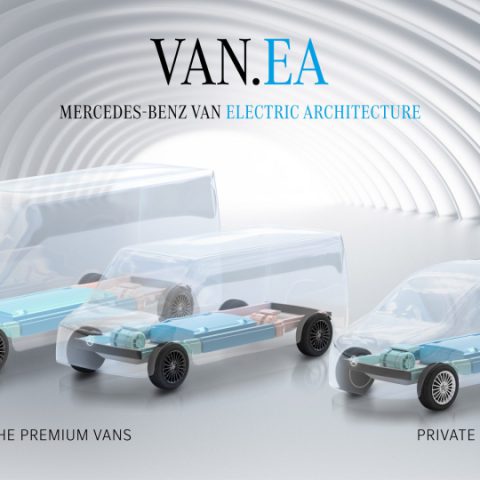
Starting 2026, all midsize and large Mercedes-Benz vans will be built on a new modular and scalable EV architecture, namely VAN.EA. The latter has been developed from scratch as a purpose battery electric vehicle. With the VAN.EA one architecture strategy, Mercedes-Benz Vans will achieve a comprehensive complexity reduction in its purpose-built EV product portfolio translating into significant economies of scale. It is planned to reduce the portfolio variants by more than 50% compared to current vans with an internal combustion engine (ICE) while covering the same use cases for the customers.
The new Mercedes-Benz EV architecture
Also, Mercedes-Benz Vans targets an EV share of up to 20% by 2026 and more than 50% by 2030. With VAN.EA, Mercedes-Benz Vans focuses on efficiency and performance in every aspect of the vehicle, including aerodynamics, drivetrain, tires and chassis. The goal is to achieve a high range with an optimal battery capacity, which is directly related to vehicle weight and costs.
More into technical details, the new architecture is based on three different modules. The front module consists of the electric powertrain and the front axle. The module is the same in all VAN.EA variants, in an optimized common parts strategy. The differentiation relevant to the customer takes place in the two other modules. The center module scales the vehicle length. This is also where the standardized battery case is placed. High-voltage batteries with different capacities are installed within the case.
The rear module will be available in two versions. With an electric motor for the all-wheel-drive variants of VAN.EA and without electric motor for the front-wheel drive variants. Based on these three modules, VAN.EA allows for a clear differentiation between privately and commercially used vans as well as for maximum synergies.
Reorganising global production to support EV boost
As we’ve already written here, Mercedes-Benz Vans is reorganising the global production network with its first pure electric light commercial vehicles (eLCV) plant in Jawor, Poland. The plant aims to set new standards in terms of productivity, lean operations and sustainability for the manufacturing of premium eLCVs worldwide. The production site for the VAN.EA-based large vans will be net carbon neutral just like all own plants of Mercedes-Benz Vans. For the first time, Mercedes-Benz Vans plans to cover 100% of its energy needs through renewable energy.