
According to Scania, battery electric vehicles have lower environmental impact than ICE ones
The battery cells stand for a bit over 40 percent of the carbon emissions coming from production of battery electric vehicles. There is however a big potential for improved emission levels from the production of battery electric vehicles as the battery industry continuously decarbonizes and the use of green electricity continuously increases.
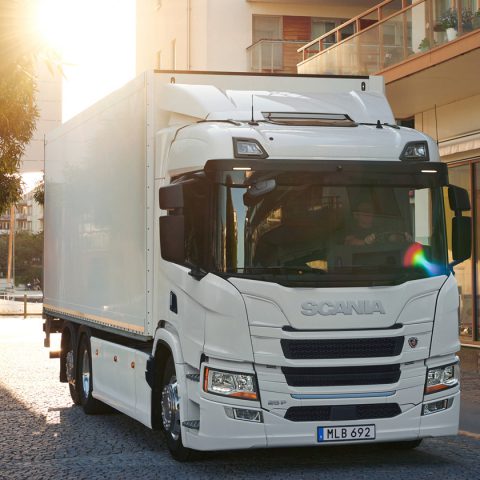
The overall environmental impact of battery electric vehicles is «significantly lower» than ICE-powered vehicles, says Scania after publishing a life cycle assessment of distribution vehicles. Life cycle assessment (LCA) is a certified method to calculate the environmental impacts of products, covering the entire life cycle from cradle to grave, starting at the extracting and refining of raw materials and ending at the recovery of, in this case, the vehicles.
Scania: a study on environmental impact of vehicles
Despite the increased production burden, the total life cycle impact on climate change is dramatically better for the battery electric vehicles, thanks to the much lower carbon impact from the use phase. More into details, «for trucks operating in EU, we reduce life cycle carbon emissions by 38% (EU mix 2016) to 63% (prognosed EU mix 2030). If we switch to green electricity, we reach a carbon emission reduction over the life cycle of 86%. The battery electric vehicle has the potential to have less climate impact than the one with an internal combustion engine already within one or two years of operation. This covers all investigated electricity mixes in the report», stated Scania, which has just celebrated the fifth Green Truck Award in a row.
Scania has already communicated the Group’s intention to reach a Zero Emission Truck goal by 2030.
As the heavy commercial vehicle industry converts into a higher share of battery electric vehicles, we have to ask ourselves, are the battery electric vehicles truly good for the environment when we look over the full life cycle? With this study, we have the clear answers
Andreas Follér, Head of Sustainability at Scania
First of all, let’s decarbonize
The battery cells stand for a bit over 40 percent of the carbon emissions coming from production of battery electric vehicles. There is however a big potential for improved emission levels from the production of battery electric vehicles as the battery industry continuously decarbonizes and the use of green electricity continuously increases.
«We expect that the total cost of operation for the majority of our customers will be positive for battery electric vehicles during this decade and half our volumes might well have an electric driveline by 2030. The race towards zero emissions will be about decarbonizing the processes and materials needed to assemble the future truck and buses», commented Andreas Follér, Head of Sustainability at Scania.