

Bosch to dive into new business: up to €500 million will be invested in hydrogen electrolysis
Bosch forecasts that the global market for electrolyzer components will increase to a volume of around 14 billion euros by 2030, with Europe set to see the highest rates of growth.
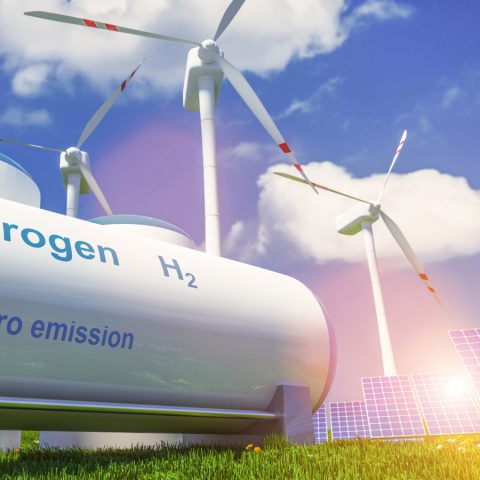
Bosch will be investing up to 500 million euros by 2030 in the business of hydrogen electrolysis. More precisely, the company announced the intention to develop and manufacture components for electrolyzers in order to support «the rapid expansion of hydrogen production in Europe», as declared by Stefan Hartung, chairman of the board of management of Robert Bosch at the presentation of the company’s annual figures.
Let’s remind that electrolyzers are crucial for hydrogen production, as they use electrolysis to split water into hydrogen and oxygen. Ideally, the electricity for this purpose is generated from renewable sources such as wind or photovoltaic power, in which case the result is known as green hydrogen.
Potrebbe interessarti
Green hydrogen, INEOS willing to invest 2 billion euro in electrolysis projects
Bosch Mobility Solutions will be in charge of hydrogen electrolysis projects
Bosch will assign the development of electrolyzer components to the Mobility Solutions business sector. In light of energy diversification, the move away from fossil fuels, and the need to reduce CO2 emissions, demand for green hydrogen is growing rapidly. Bosch forecasts that the global market for electrolyzer components will increase to a volume of around 14 billion euros by 2030, with Europe set to see the highest rates of growth.
The role of stacks
As in the fuel cell, the key component of an electrolyzer is a stack, which comprises several hundred individual cells connected in series. In each of these cells, electricity is used to split water into hydrogen and oxygen. This is the reverse of what takes place in a fuel cell, where electricity is generated by combining hydrogen and oxygen. In both cases, the chemical reaction is facilitated by means of a proton-exchange membrane (PEM).
Potrebbe interessarti
Bosch to partner with Italian specialist OMB Saleri for hydrogen tank components
Bosch is collaborating with a number of partners to develop a way of combining the electrolyzer stack with a control unit, power electronics, and various sensors to create a “smart module”. According to the German company’s plans, the Bosch smart modules will be mass produced.
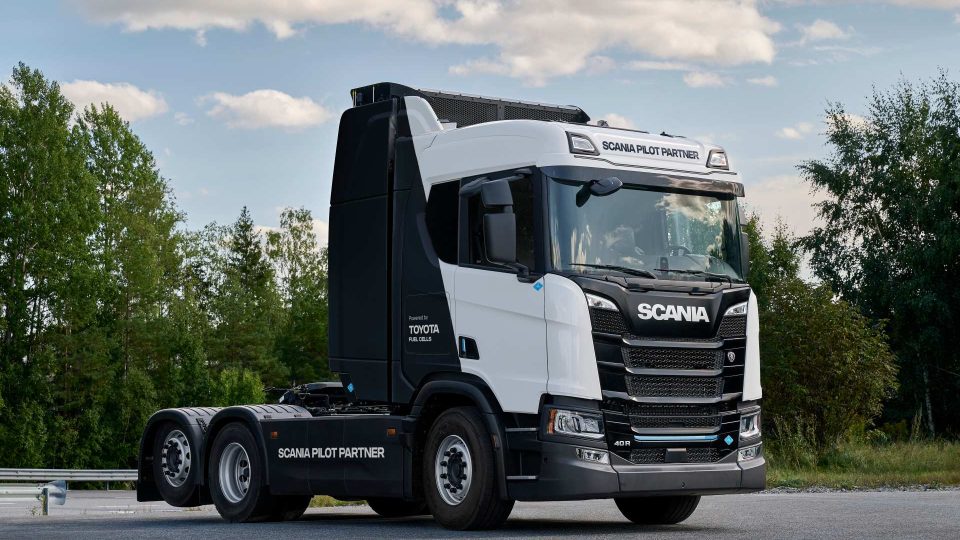
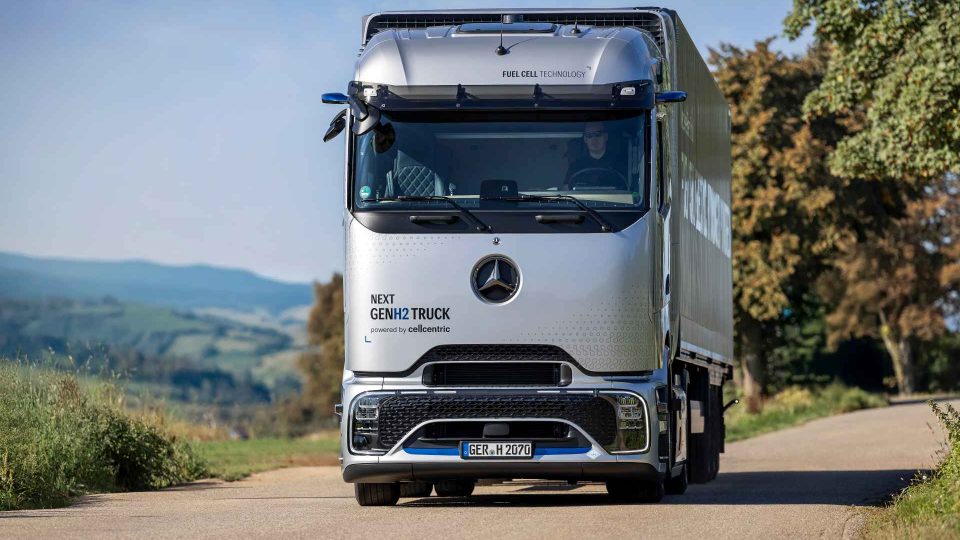
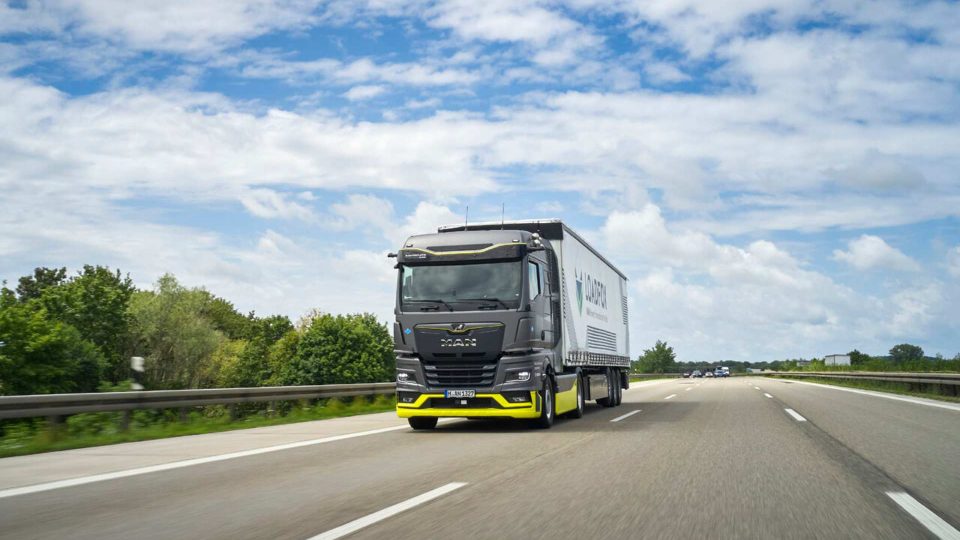
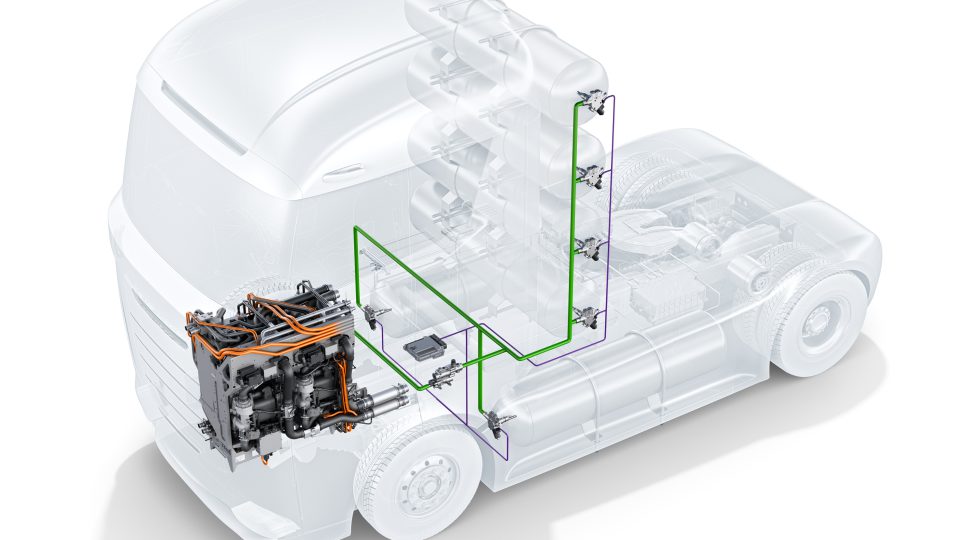
As for fuel cell development, Bosch plans to use mobile fuel cells to facilitate the climate-neutral shipping of goods and commodities, initially by truck. The company’s portfolio of vehicle-related products in this field ranges from individual sensors to core components such as the electric air compressor, the stack, and complete fuel-cell modules. Production is expected to start this year.